New Delhi, April 3 : Global crude oil prices rose on Friday after US President Donald Trump warned of possible military strikes on Iran within two to three weeks, stoking fresh concerns over supply disruptions from the West Asia region.
Brent crude futures traded at $109.24 per barrel, up 8 per cent, while US West Texas Intermediate (WTI) futures were at $111.54 per barrel by 3:39 am (local time).
Till Friday, US WTI futures jumped 11.94 per cent from the previous Friday's close during the week, while Brent crude declined 3.14 per cent over the same period.
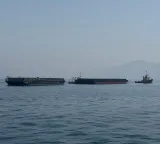
The ongoing conflict in West Asia, now entering its fifth week, has removed millions of barrels per day from the global market, driving energy prices to multi-year highs and causing fuel shortages in countries dependent on supplies routed through the Strait of Hormuz. Around 20 per cent of the world's oil typically flows through the critical chokepoint.
Trump, in a speech earlier this week, vowed to hit Iran "extremely hard" in the coming weeks but stopped short of outlining a plan to reopen the strait, suggesting instead that other nations take the lead in clearing it for shipping traffic.
Analysts noted that any further escalation in West Asia could sustain pressure on crude prices, the Indian rupee and foreign institutional flows into emerging markets.
"Any signs of de-escalation in the West Asia conflict may provide relief through softer crude prices and currency stability, while further escalation could prolong risk aversion and sustain pressure on foreign flows," an analyst said.
On the precious metals front, COMEX gold futures traded at $4,679.70, a decrease of 0.48 per cent on Friday, as investors sought safe-haven assets amid heightened geopolitical uncertainty.
Meanwhile, domestic commodity markets remained closed in the morning session on account of Good Friday.
Moreover, domestic equity markets ended lower for the sixth consecutive week amid escalating geopolitical tensions in West Asia and sharp currency fluctuations, with both headline indices ending in the red during a shortened trading week.
West Asia conflict drives crude oil prices to multi-year highs, Brent up 8 pc

Advertisement