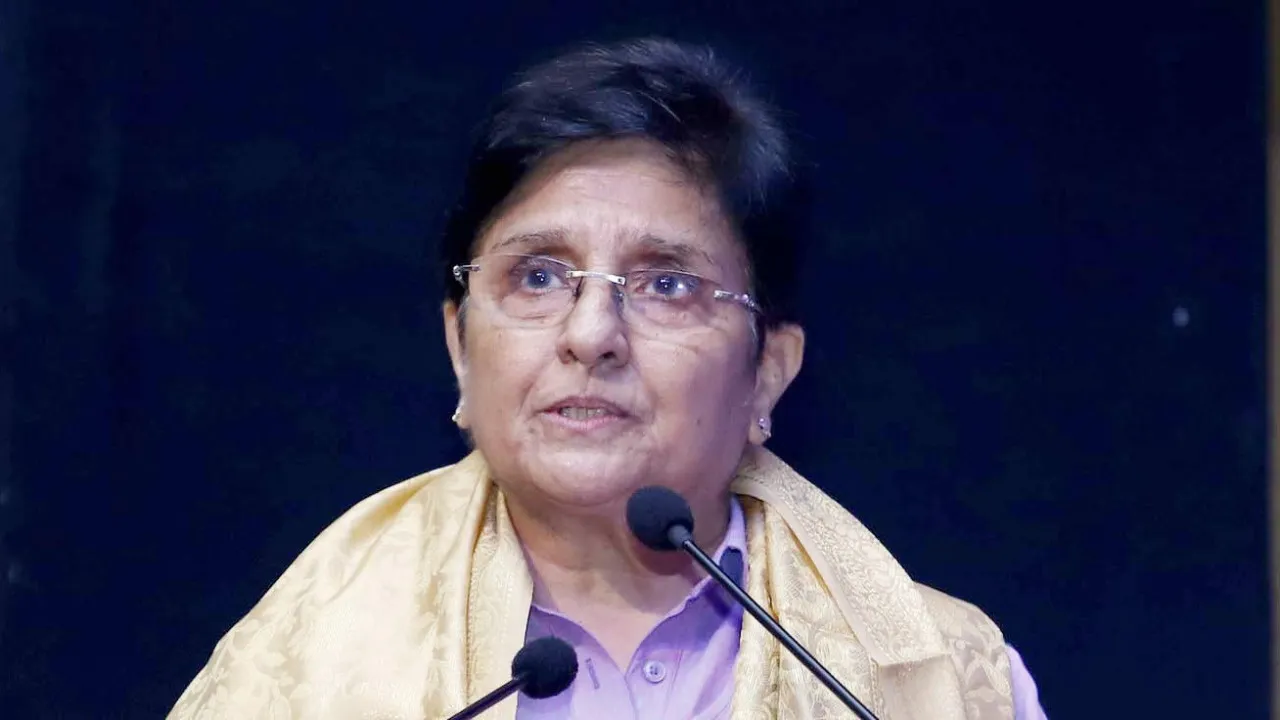
New Delhi, April 17 : Former IPS officer and ex-Lieutenant Governor of Puducherry, Kiran Bedi, on Friday said that if Parliament fails to pass the Women’s Reservation Bill, women voters may decisively support those who commit to ensuring one-third representation in the 2029 Parliament and State Assemblies. She emphasised that women are now demanding a genuine role in governance and policymaking.
Taking to social media platform X, Bedi wrote, “If Parliament misses passing the #WomensQuotaBill, women voters may decisively back those who commit to ensuring one-third representation in the 2029 Parliament and State Assemblies."
She further stated, “It’s now clear - women are a decisive electoral force. Symbolic appeasement won’t suffice. They seek a real seat at the table and a direct role in shaping India’s future.”
Meanwhile, voting in the Lok Sabha on three key bills aimed at amending the women’s reservation law and establishing a delimitation commission is scheduled to take place on Friday.
The introduction of the Constitution (One Hundred and Thirty-First Amendment) Bill, 2026, which seeks to enable women’s reservation and facilitate delimitation, was approved in the Lok Sabha on Thursday following a division of votes.
Minister of State for Law and Justice Arjun Ram Meghwal said that Lok Sabha seats across all states would be increased by 50 per cent as part of the exercise to implement the women’s quota along with the delimitation process.
If the Bill is passed, the number of seats in several states will rise significantly. Uttar Pradesh is expected to have 120 seats, Tamil Nadu 59, West Bengal 63, Kerala 30, and Gujarat 39.
Opening the discussion in the Lok Sabha, Meghwal said, “The Women’s Reservation Bill was passed in 2023, providing for implementation of its provisions based on the census after 2026 and subsequent delimitation. There will be a 50 per cent increase in the strength of Lok Sabha members, taking the total to 815 seats, of which 272 will be reserved for women, amounting to one-third of the House. There will be no loss to male MPs or any state, and all will retain their strength.”
However, the Opposition has expressed reservations over the delimitation aspect while supporting the Women’s Reservation Bill in principle. Congress MP Manish Tewari alleged on Thursday that the proposed delimitation exercise is being “dressed up” as the Women’s Reservation Bill.
He argued that if delimitation is carried out in the proposed manner, several states may lose their political influence in the Lok Sabha. “This is delimitation legislation which has been presented as the Women’s Reservation Bill,” Tewari said.
He further pointed out that the Women’s Reservation Bill had already been passed in 2023, with its implementation linked to the first census conducted after 2023, followed by delimitation.
Questioning the BJP-led Central government, Tewari said that while it had earlier referred to a post-2023 census, it now appears to have reverted to using the 2011 census data.
According to him, “The Bill nowhere states that the number of seats will be increased by 50 per cent.”
If Parliament misses, women voters may decisively back those who committed for 2029, says Kiren Bedi
Advertisement