Madrid, March 31 : Despite the attacks on Saudi Arabia by Iran in recent weeks amid the escalating conflict in West Asia, Islamabad has so far refrained from deploying significant forces to support Riyadh under the bilateral defence agreement.
This inaction has raised questions in diplomatic circles about the practical scope of the pact between Islamabad and Riyadh as well as the conditions required to put it into effect, a report said on Tuesday.
"Recently, Pakistan and Saudi Arabia signed a Strategic Mutual Defence Agreement, a framework that reinforces their long-standing military cooperation. The pact stipulates that, should either face an external threat, the other will provide military support with available resources. However, the current crisis has highlighted the complexities accompanying these strategic commitments," Fatima El Hashimi, a Moroccan researcher and journalist, wrote in Spain-based media outlet 'Atalayar'.
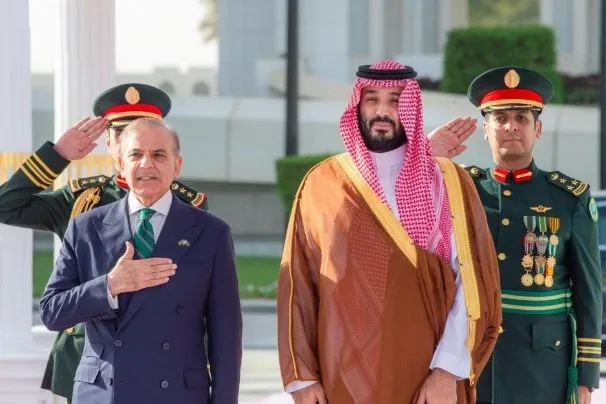
Fatima highlighted that Pakistani Army Chief Asim Munir held direct communication with Saudi Crown Prince Mohammed bin Salman, conveying that Islamabad cannot deploy military personnel to Saudi Arabia at this stage. Pakistan considers security along the Afghan border a national priority.
Citing diplomatic sources, she stressed that Riyadh is closely watching developments in the border region. Some Saudi officials, Fatima said, viewed the "intensification of military activity as a sign that Pakistan has limited capacity or willingness for external intervention" as Riyadh confronts security challenges.
According to the report, the episode reflects a long-standing pattern identified by Pakistani foreign policy analysts for decades -- "Islamabad skilfully balances its alliances to maximise economic, military and diplomatic benefits."
"From the Cold War to the current war on terror, Pakistan has maintained strategic ties with the United States, China and the Gulf monarchies, establishing itself as an indispensable partner, albeit one conditioned by its own interests," it added.
The current situation, the report said, underscores a key challenge of strategic defence alliances, where during times of crisis, pledges are judged not by the language of agreements but by the real capacity to act.
While Saudi Arabia seeks tangible military support, Pakistan is offering mediation and diplomacy -- one distinct from the pact's original expectations.
"Islamabad's renewed military focus on the Afghan border has captured global attention. Analysts debate whether this escalation is driven solely by security imperatives or also responds to broader geopolitical calculations. For Saudi Arabia and other regional actors, the episode prompts reflection on the credibility and scope of strategic alliances in an increasingly uncertain environment," it noted.
The report questioned whether Pakistan's strategic defence commitments to partners facing real threats are limited by its military capacity or driven by a "deliberate political calculation" over when and with whom to fulfil them.
Pakistan's inaction in West Asia under Saudi Arabia defence pact raises credibility concerns: Report
Advertisement