UN chief urges Hezbollah-Israel ceasefire amid severe economic toll on Lebanon
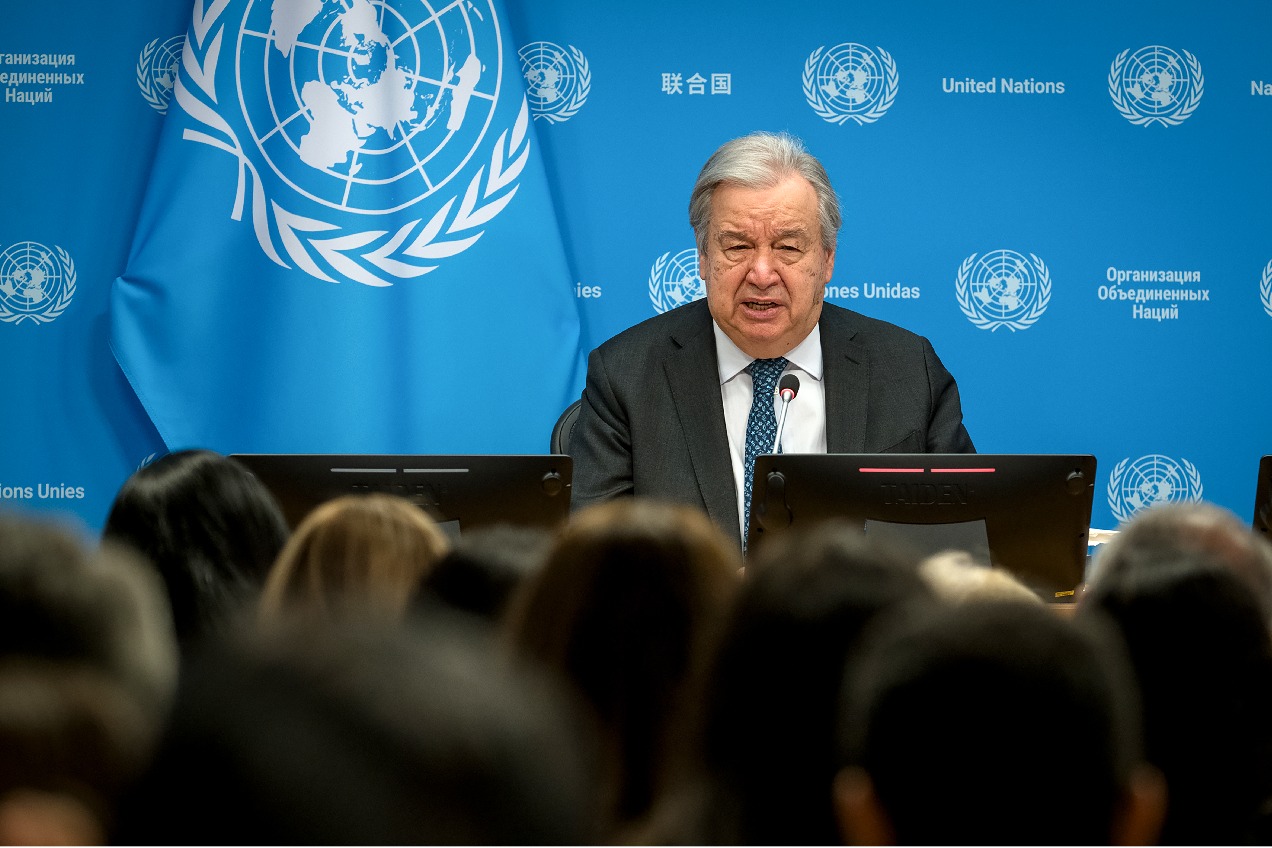
Beirut, March 13 : UN Secretary-General Antonio Guterres on Friday called for a ceasefire between Hezbollah and Israel and restore Lebanon's sovereignty and stability.
Following a meeting with Lebanese President Joseph Aoun in Beirut, Guterres said he was visiting "as a friend of the Lebanese people in full solidarity".
"Unfortunately, Lebanon was dragged into a war that is not a war that its people would be willing to have," Guterres was quoted as saying in a statement released by the UN Information Centre while expressing hope that his next visit would be to "a Lebanon in peace," where the State has the sole control of the use of force and its territorial integrity is fully respected, Xinhua News Agency reported.
"This is no longer the time of armed groups. This is the time of strong states," he added.
For his part, Aoun said over 800,000 people have been displaced by the conflict, stressing the need to address their situation and thanking the UN for its support.
Aoun called for an end to Israeli attacks and voiced hope for stronger international support during what he described as a critical phase.
Meanwhile, a Lebanese economic official, citing data from professional syndicates and economic associations, said Friday that Lebanon's commercial production fell 50 per cent, with non-essential goods sales dropping 60-80 per cent.
The industrial and agricultural production also contracted by about 50 percent and 40 percent respectively, affected by the shutdown of production units across the country, along with disruptions to exports to Gulf countries, said Mohammad Choucair, president of the Beirut and Mount Lebanon Chamber of Commerce.
Regarding tourism, hotel occupancy dropped to 10-15 per cent, while restaurant activity declined by about 90 per cent. Travel agencies also reported an 80-per cent drop in business.
Choucair warned that a prolonged war could force hundreds of businesses to close and thousands of Lebanese to lose their jobs, worsening the country's economic and social crisis.
Since the launch of the US-Israeli attack on Iran on February 28, tensions between Israel and Hezbollah in Lebanon have sharply escalated, with Hezbollah firing rocket barrages at northern Israeli communities and Israel striking sites in southern and eastern Lebanon, which it says house Hezbollah operatives and infrastructure.
The World Health Organisation said Wednesday that 634 deaths and 1,586 injuries had been reported in Lebanon since the beginning of the Middle East conflict.

Following a meeting with Lebanese President Joseph Aoun in Beirut, Guterres said he was visiting "as a friend of the Lebanese people in full solidarity".
"Unfortunately, Lebanon was dragged into a war that is not a war that its people would be willing to have," Guterres was quoted as saying in a statement released by the UN Information Centre while expressing hope that his next visit would be to "a Lebanon in peace," where the State has the sole control of the use of force and its territorial integrity is fully respected, Xinhua News Agency reported.
"This is no longer the time of armed groups. This is the time of strong states," he added.
For his part, Aoun said over 800,000 people have been displaced by the conflict, stressing the need to address their situation and thanking the UN for its support.
Aoun called for an end to Israeli attacks and voiced hope for stronger international support during what he described as a critical phase.
Meanwhile, a Lebanese economic official, citing data from professional syndicates and economic associations, said Friday that Lebanon's commercial production fell 50 per cent, with non-essential goods sales dropping 60-80 per cent.
The industrial and agricultural production also contracted by about 50 percent and 40 percent respectively, affected by the shutdown of production units across the country, along with disruptions to exports to Gulf countries, said Mohammad Choucair, president of the Beirut and Mount Lebanon Chamber of Commerce.
Regarding tourism, hotel occupancy dropped to 10-15 per cent, while restaurant activity declined by about 90 per cent. Travel agencies also reported an 80-per cent drop in business.
Choucair warned that a prolonged war could force hundreds of businesses to close and thousands of Lebanese to lose their jobs, worsening the country's economic and social crisis.
Since the launch of the US-Israeli attack on Iran on February 28, tensions between Israel and Hezbollah in Lebanon have sharply escalated, with Hezbollah firing rocket barrages at northern Israeli communities and Israel striking sites in southern and eastern Lebanon, which it says house Hezbollah operatives and infrastructure.
The World Health Organisation said Wednesday that 634 deaths and 1,586 injuries had been reported in Lebanon since the beginning of the Middle East conflict.