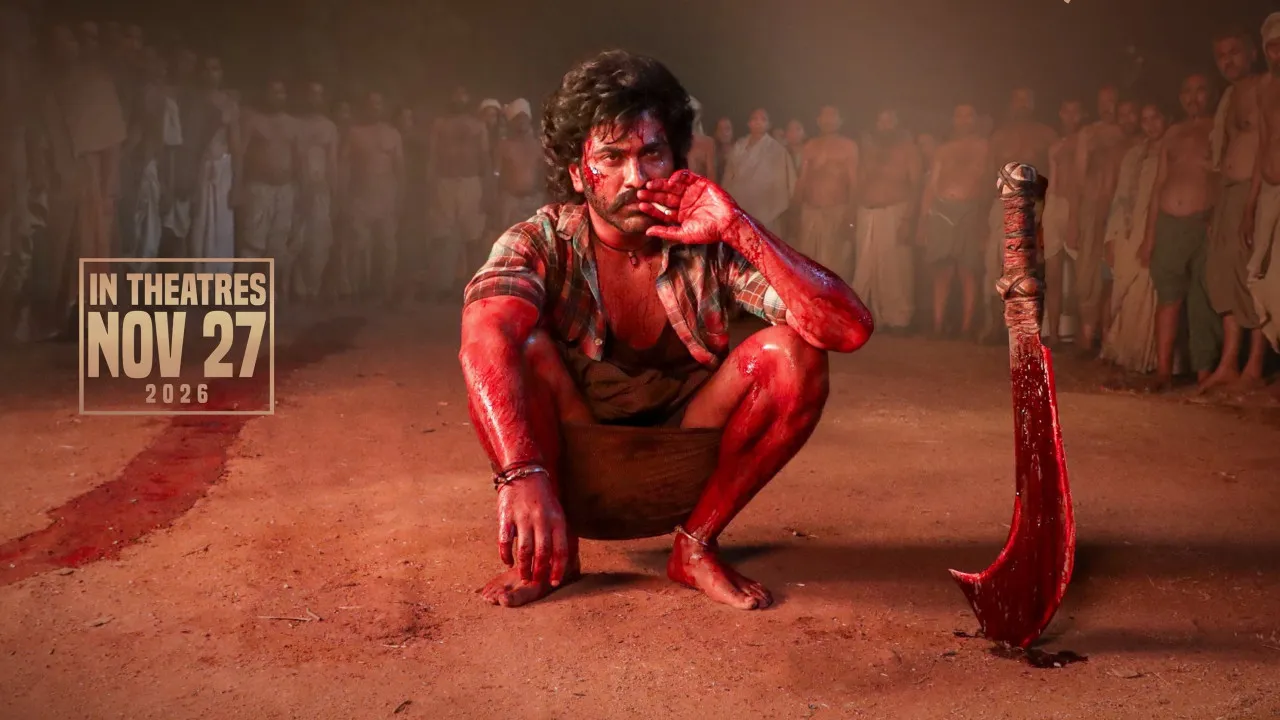
Sharwanand enjoys a solid following among family audiences, largely owing to the relatable stories and characters he picks. Every now and then, he makes an earnest effort to appeal to the mass audience as well. 'Bhogi' is another such attempt from the actor. Directed by Sampath Nandi, the film features Anupama Parameshwaran as the female lead and has now arrived in theatres.
Story
The story is set in a tribal settlement called 'Boggulagutta' in the Adilabad region. Ganga (Sharwanand) lives there with his five younger sisters. A blacksmith by profession, Ganga holds his sisters dearer than life, and to them, their brother is everything. Sulochan (Anupama Parameshwaran), who lives right opposite Ganga's house, makes a living stitching and selling leaf plates. Ganga and Sulochan are in love with each other.
The entire populace of Boggulagutta survives under the dominance of Patel (Sharath Lohithaswa). Supported by a ruthless gang of henchmen, Patel's influence is so formidable that even political ministers think twice before entering his territory. Disturbingly, young maidens disappear from the village on Amavasya (new moon) nights, yet remarkably, nobody in the village dares to speak about them the following morning.
Eventually, the disappearance of these girls comes to Ganga's notice. Upon discovering that they are being targeted for human sacrifice, he takes a firm stand to eradicate this evil practice. Who is conducting these human sacrifices? What is their hidden agenda behind this atrocity? Who are the real masterminds, and what consequences does Ganga face in his quest to uncover the truth? The rest of the Bhogi movie unfolds around these questions.
Analysis
The film is conceived around the bygone era of feudal landlords (Doras) and Patwaris, when innocent tribals suffered immense hardship under authoritative oppression and entrenched superstitions. Bhogi attempts to explore what happens when an ordinary youth rises against a powerful Patel ruling from his 'Gadi'. The narrative blends this conflict with romance and family emotions set against a rustic village backdrop.
Initially, the premise gives the impression of being a young rebel's fight against feudal tyranny. Soon, it hints at political exploitation of tribal hamlets, only to take a sharp turn toward black magic and human sacrifice. With the plot frequently shifting lanes, the audience is left in a state of confusion regarding where the core conflict truly lies.
Logic takes a severe beating throughout the screenplay. It is baffling that the protagonist remains oblivious to over a hundred girls being sacrificed right under his nose, or that his five sisters are whisked away together from their home without anyone noticing. Over-the-top sequences like melting ornaments to forge a weapon, dispatching corpses on bullock carts, and blood splatters forming the word 'INTERVAL' feel excessively staged.
The climactic twists, rather than elevating the drama, end up pushing the narrative into outdated, old-school tropes. While henchmen using bicycles fits the 1960s period setting, kidnapping girls, stuffing them into sacks, and transporting them on bicycles on pitch-dark nights appears bizarre. Although bloody conflicts usually peak near the climax, Bhogi starts its rampage right from the second half with relentless decapitations and bloodshed. However, none of it resonates with the viewer due to a complete absence of genuine emotional grounding.
Performances
Sharwanand sports a somewhat distinct look and gives his best effort, but the weak writing leaves him with little to salvage. Despite Anupama Parameshwaran being the lead actress, her character lacks substance and meaningful screen time. Dimple Hayathi's courtesan role serves no real purpose in advancing the narrative. Furthermore, a seasoned actor like Aadukalam Naren is underutilized, and the sequence involving him feels entirely artificial.
Technical Aspects
On the technical front, Kishore Kumar’s cinematography stands out with well-captured forest visuals. Bheems Ceciroleo’s background score passes muster. Tammiraju’s editing could have been sharper, as several action sequences feel overly stretched. While an interval block is expected to build anticipation for the latter half, the one in Bhogi feels underwhelming, leaving the audience burdened by a lackluster screenplay.
Verdict
On the whole, Bhogi turns out to be a disjointed rural action drama bogged down by excessive violence, dated plot turns, and a lack of emotional connect.
Movie Details
Movie Name: Bhogi
Genre: Action, Drama
Release Date: 27 Nov 2026
Cast: Sharwanand, Anupama Parameshwaran, Dimple Hayathi
Director: Sampath Nandi
PRO: Vamsi-Shekar
Music: Bheems Ceciroleo
Banner: Sri Sathya Sai Arts
Review By: Peddinti