Washington, March 10 : US President Donald Trump said the United States and Israel were “winning very decisively” in the ongoing military campaign against Iran and suggested the conflict could end within days, as he defended the scale of recent strikes and warned Tehran against threatening global energy supplies.
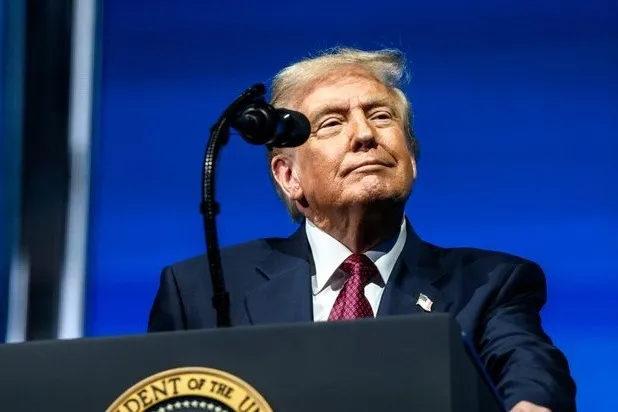
Speaking at a press conference at Trump National Doral Miami, Trump described the joint operation — named Operation Epic Fury — as one of the most extensive military campaigns in recent years.
“Over the past nine days, we've carried out some of the most powerful and complex military strikes and maneuvers the world has ever seen,” Trump said.
The president claimed the campaign had significantly degraded Iran’s military capabilities, including its naval forces, drone infrastructure, and missile launch systems.
“We've wiped every single force in Iran out very completely. Most of Iran's naval power has been sunk. It's at the bottom of the sea,” he said.
Trump said nearly 50 Iranian naval vessels had been destroyed. “It's almost 50 ships. I was just notified. It's 51 ships.”
According to the president, Iranian missile and drone capacity has been sharply reduced as a result of sustained strikes.
“Their missile capability is down to about 10 per cent, maybe less,” he said, adding that drone production facilities were now being targeted.
“We know all of the places they manufacture the drones, and they're being hit one after another.”
Trump said US forces had struck more than 5,000 targets during the campaign, including weapons depots, missile launchers, and production sites.
“We've struck over 5000 targets to date, some of them very major targets,” he said.
The president also credited long-range bombers with destroying key weapons systems.
“Our B-2 bombers recently dropped dozens of 2,000-pound bombs to destroy missile launchers all over Iran and buried deep under Iranian soil.”
Trump argued that the operation had prevented Iran from developing nuclear weapons, referring to earlier strikes under what he called Operation Midnight Hammer.
“If we didn't knock out Midnight Hammer… they would have had a nuclear weapon,” he said. “They would have used it long before.”
The president said Iran had rejected diplomatic offers related to civilian nuclear energy.
“They even turned down an offer for unlimited free nuclear fuel forever. For civilian purposes.”
Trump warned Tehran against disrupting shipping in the Strait of Hormuz, a critical global energy route.
“The Strait of Hormuz is going to remain safe,” he said. “If Iran does anything to do that, they'll get hit at a much, much harder level.”
He also announced that the United States would provide political risk insurance for commercial tankers operating in the Gulf. “In the meantime, during this brief disruption, the United States is offering political risk insurance to any tankers operating in the Gulf.”
Asked how long the conflict could continue, Trump suggested the military phase may conclude soon. “Days, I think soon,” he said when asked whether the war could end this week.
Trump also said he held a call with Russian President Vladimir Putin during the day. “I had a very good call with President Putin,” he said, adding that the two discussed Ukraine and the Middle East.
During the exchange with reporters, Trump acknowledged reports of eight US military fatalities linked to the conflict. He said families of fallen service members had urged him to continue the operation.
“They said to me one thing, every single one, finish the job, sir, please finish the job.”
The United States launched military strikes against Iranian military and nuclear facilities following escalating tensions between Tehran and Israel, which Washington says posed a growing threat to regional stability and global energy supplies.
The Strait of Hormuz, located between Iran and Oman, is one of the world’s most critical oil transit routes. Roughly a fifth of global oil consumption passes through the narrow waterway, making any disruption there a major concern for international markets.
Trump says Iran war nearing end