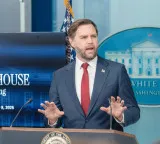
Washington, Jan 30 : US President Donald Trump on declared a national emergency over what he described as an “unusual and extraordinary threat” posed by the Government of Cuba, ordering the creation of a new tariff system that could penalise countries supplying oil to the island.
In an executive order signed at the White House, Trump said the policies, practices, and actions of the Cuban government threaten the national security and foreign policy of the United States and warrant emergency measures under existing law.
“As President of the United States, I have an imperative duty to protect the national security and foreign policy of this country,” Trump said, adding that the situation with respect to Cuba “constitutes an unusual and extraordinary threat, which has its source in whole or substantial part outside the United States.”
The order accuses Havana of aligning itself with and providing support to “numerous hostile countries, transnational terrorist groups, and malign actors adverse to the United States,” including Russia, China, Iran, Hamas, and Hezbollah.
Trump said Cuba “blatantly hosts dangerous adversaries of the United States,” inviting them to base “sophisticated military and intelligence capabilities” on Cuban territory that “directly threaten the national security of the United States.”
He cited what the order described as Russia’s largest overseas signals intelligence facility operating in Cuba and said the island continues to build “deep intelligence and defense cooperation” with China.
The executive order further alleges that Cuba welcomes transnational terrorist groups such as Hezbollah and Hamas, creating a “safe environment” for them to build economic, cultural, and security ties across the region and to attempt to destabilise the Western Hemisphere, including the United States.
According to the order, Cuba has long provided defense, intelligence, and security assistance to adversaries in the Western Hemisphere in ways intended to thwart US and international sanctions designed to uphold regional stability, the rule of law, and US national security interests.
Beyond security ties, Trump accused the Cuban communist regime of supporting terrorism and destabilising the region through migration and violence, while repressing its own population.
“The communist regime persecutes and tortures its political opponents; denies the Cuban people free speech and press; corruptly profits from their misery; and commits other human-rights violations,” the order states. It also cites retaliation against families of political prisoners, harassment of worshippers, restrictions on civil society, prohibitions on a free press, and limits on free expression, including online.
“The United States has zero tolerance for the depredations of the communist Cuban regime,” Trump said, vowing to protect US foreign policy, national security, and national interests while “remaining committed to supporting the Cuban people’s aspirations for a free and democratic society.”
To address the declared national emergency, Trump ordered the establishment of a tariff system under which an additional ad valorem duty may be imposed on imports from any foreign country that directly or indirectly sells or provides oil to Cuba.
Under the order, the Secretary of Commerce, in consultation with the Secretary of State, will determine whether a foreign country is supplying oil to Cuba, including through intermediaries or third countries. Once such a finding is made, the Secretary of State, working with the Treasury, Commerce, Homeland Security, and the US Trade Representative, will determine whether and to what extent additional duties should be imposed.
Trump declares Cuba national security threat, orders tariff regime