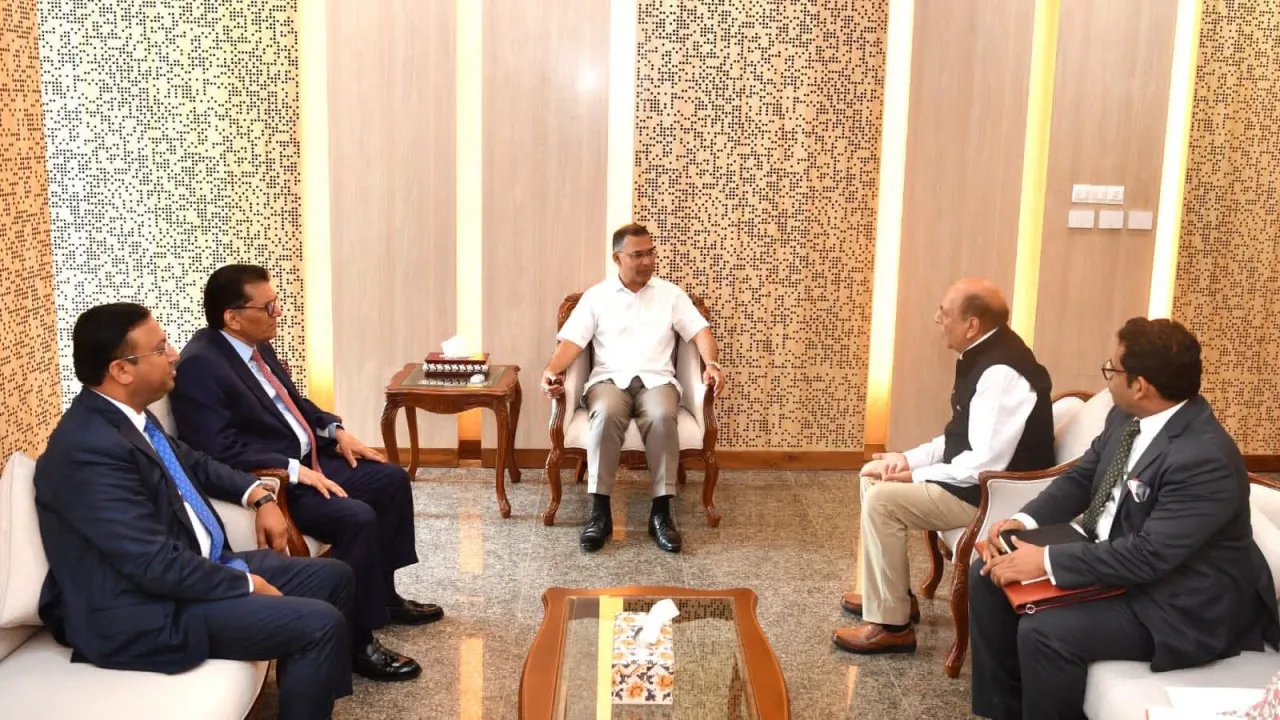
Dhaka, Aug 11 : The meeting between Bangladesh Prime Minister Tarique Rahman and Indian High Commissioner Dinesh Trivedi signals a positive shift following a period of diplomatic strain between the two countries. The cordial engagement suggests a willingness on both sides to set aside recent irritants and place greater emphasis on the broader India-Bangladesh relationship, a report has stated.
“The latest strain in Bangladesh-India relations should concern both governments, but it need not become a crisis of their own making. Geography, history, trade, rivers, security and deep people-to-people ties bind the two neighbours in ways neither can wish away. Political disagreements are inevitable; allowing them to overwhelm the larger relationship is a choice. There are now signs that both Dhaka and Delhi understand the need to prevent that from happening,” a report in Bangladesh’s 'Daily Sun' highlighted.
The report noted that former Bangladesh Prime Minister Sheikh Hasina’s recent address to journalists in New Delhi has triggered strong reactions in Dhaka. However, the Ministry of External Affairs (MEA) reiterated that the Indian government had no involvement in Hasina's recent virtual media interaction and that it does not endorse any remarks made at the event, particularly those concerning the duly constituted government in Dhaka.
According to the report, while the development may not fully address Dhaka’s concerns, diplomacy requires governments to acknowledge and build upon constructive signals when they emerge.
Emphasising that the Indian High Commissioner Trivedi has also adopted a conciliatory approach since assuming office, the report noted that he has stressed the need to address bilateral challenges through mutual understanding and expressed optimism about taking India-Bangladesh relations forward.
The report also highlighted that Bangladesh and India have faced similar challenges in the past, with their history marked by both difficult bilateral disputes and instances of successful diplomacy.
“It required patience, negotiation and political courage on both sides. A problem that had resisted successive governments was resolved because both countries eventually decided that an unsatisfactory status quo was not sustainable. The lesson is clear. Difficult issues are rarely resolved by allowing them to fester,” the report in 'Daily Sun' mentioned.
“The immediate priority should therefore be to make bilateral engagement more regular and predictable. Foreign ministers and senior officials should meet routinely, rather than only when relations come under pressure. Existing mechanisms should be strengthened to deal with political and legal matters, border management, trade, connectivity, security, energy and water resources,” it added.
The report argued that the recent meeting between Rahman and Trivedi merits attention and should not be viewed as merely a routine diplomatic engagement. Rather, it presents an opportunity for Dhaka and New Delhi to build a more constructive momentum in their bilateral relations.
“The invitation to Prime Minister Tarique Rahman to visit India, including the invitation to attend the BRICS Summit in New Delhi in September, provides another potential avenue for high-level engagement. Whether and when such a visit takes place will be a decision for Dhaka. But the larger principle is worth emphasising: opportunities for direct political contact should be used when they can advance national interests,” it stressed.
Bangladesh PM, Indian envoy meeting signals positive shift in bilateral ties