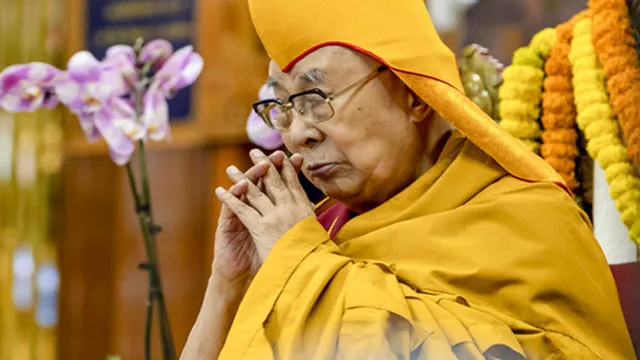
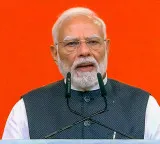
New Delhi, July 6 : Prime Minister Narendra Modi on Monday extended warm birthday greetings to the Dalai Lama and said that his message of peace and harmony has been a guiding force for people across the world.
PM Modi took to social media 'X' and said, "Warm birthday greetings to His Holiness the Dalai Lama. His message of peace and harmony has been a guiding force for people across the world. His moral and spiritual strength and his commitment to global good are commendable. Wishing him a long and healthy life."
The 14th Dalai Lama, Tenzin Gyatso, was born on July 6, 1935, into a farming family in the small village of Taktser in the Amdo region of northeastern Tibet. Born as Lhamo Dhondup, he was identified at the age of two as the reincarnation of the 13th Dalai Lama, Thubten Gyatso.
The Dalai Lamas are regarded in Tibetan Buddhism as incarnations of Avalokiteshvara, also known as Chenrezig, the Bodhisattva of Compassion and the spiritual protector of Tibet. Bodhisattvas are believed to postpone their own final enlightenment to help all sentient beings attain liberation.
He entered monastic life at the age of six and followed the traditional Nalanda system of education. His studies covered five major disciplines: Buddhist philosophy, logic, Sanskrit grammar, medicine, and fine art, along with five minor subjects, including poetry, drama, astrology, composition, and linguistics. Buddhist philosophy formed the core of his education, encompassing teachings on the perfection of wisdom, the Middle Way philosophy, monastic discipline, metaphysics, and logic.
In 1959, at the age of 23, he appeared for his final monastic examination at the Jokhang Temple in Lhasa during the annual Monlam Chenmo, or Great Prayer Festival. He successfully earned the prestigious Geshe Lharampa degree, the highest academic qualification in Tibetan Buddhist philosophy.
Following China's military entry into Tibet in 1950, the Dalai Lama assumed full political authority. In 1954, he travelled to Beijing, where he held discussions with Chinese leaders, including Mao Zedong, Deng Xiaoping, and Zhou Enlai. After the Tibetan uprising in Lhasa was crushed by Chinese forces in 1959, he fled Tibet and sought refuge in India. Since then, he has lived in Dharamsala, where the Tibetan government-in-exile is based.
From exile, the Central Tibetan Administration urged the United Nations to address the Tibet issue. The UN General Assembly subsequently adopted resolutions on Tibet in 1959, 1961, and 1965.
On March 14, 2011, the Dalai Lama formally requested the Tibetan Parliament-in-Exile to relieve him of his political responsibilities. He announced the end of the centuries-old tradition under which Dalai Lamas exercised both spiritual and temporal authority, stating that his role would henceforth be limited to spiritual leadership. Political responsibilities were transferred entirely to Tibet's democratically elected leadership, while the Gaden Phodrang, the Dalai Lama's official institution, would continue solely as a religious office.
His message of peace, harmony has been guiding force for people across world: PM Modi on Dalai Lama's birthday