PM Modi recalls 1998 Pokhran tests, says 'no power in the world can make us bow down'
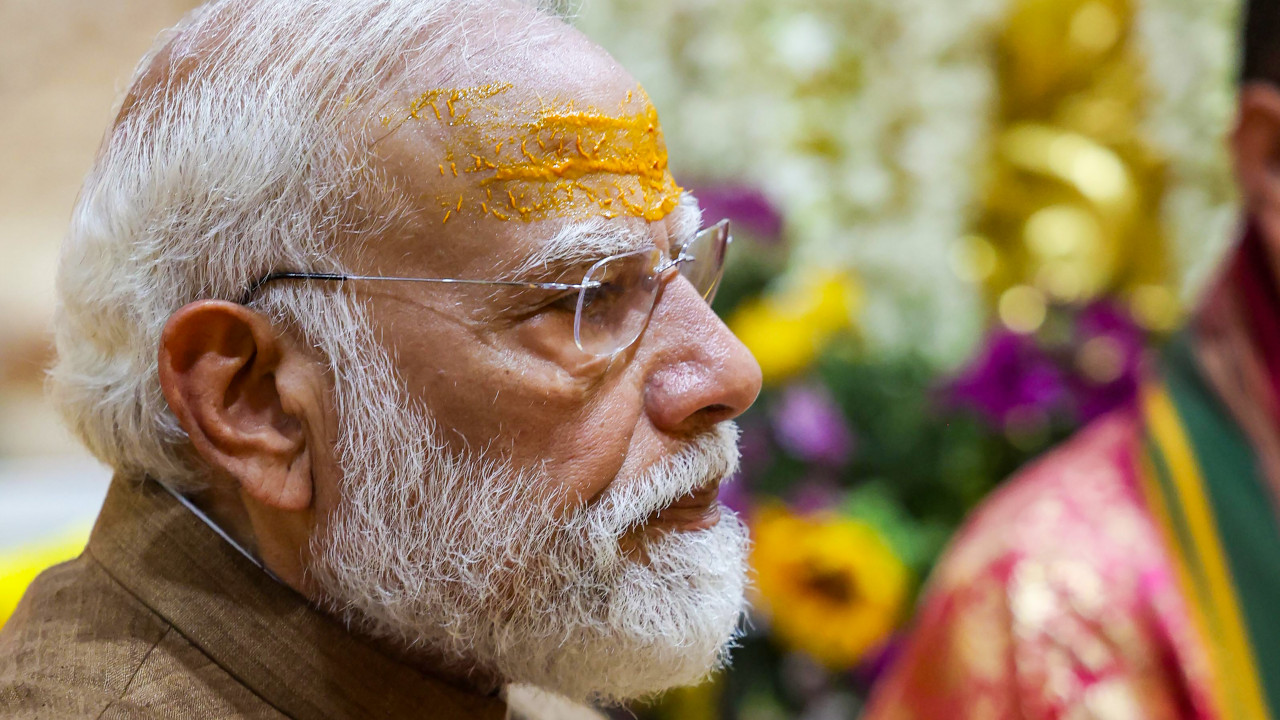
Ahmedabad, May 11 : Prime Minister Narendra Modi on Monday recalled the nuclear tests conducted in Pokhran on May 11, 1998, highlighting India’s firm and resolute resolve to take forward its nuclear ambitions despite immense pressure from world powers.
He said that India conducted two nuclear tests in 1998, first on May 11 and then on May 13 and asserted that no power in the world could make the country and its citizens bow before external forces.
Participating in the Somnath Amrut Mahotsav celebrations, marking the 75 years of reconstruction of the Somnath Temple, PM Modi invoked the 1998 nuclear tests – one of the defining moments in the country’s history to highlight India’s rise as a global power under the leadership of former Prime Minister late Atal Bihari Vajpayee.
“On May 11, India conducted three nuclear tests in Pokhran. Our scientists showcased the country’s might and prowess before the world, this sent shockwaves across the world,” he said addressing the gathering after 'Kumbhabhishek' at the Somnath temple.
He stated that the global powers took a grim view of our nuclear prowess and imposed a lot of economic sanctions and restraints.
“Anybody would have been shaken by this, when global powers gang up against you. But, we are made of different soil. After May 11, the world powers stepped up their vigil but our scientists had done the job. Again on May 13, two more nuclear tests were conducted. That day, the world go to know the “atal” (resolute) will of India’s political leadership,” PM Modi said.
He said that there was immense pressure on the country but under the leadership of Atal Bihari Vajpayee, the BJP government had shown that the national interests reign supreme for us and no power in the world could force us to bow down.
The Prime Minister also elucidated on the naming of nuclear mission as 'Operation Shakti', stating that it marked India’s growing self-belief and strategic positioning despite hurdles.
Notably, the Pokhran-I tests on May 18, 1974 and later the Pokhran-II tests on May 11 and May 13 in 1998, marked India’s entry into the select league of nuclear-armed states and also came as a turning point in the country’s strategic and geopolitical positioning.

He said that India conducted two nuclear tests in 1998, first on May 11 and then on May 13 and asserted that no power in the world could make the country and its citizens bow before external forces.
Participating in the Somnath Amrut Mahotsav celebrations, marking the 75 years of reconstruction of the Somnath Temple, PM Modi invoked the 1998 nuclear tests – one of the defining moments in the country’s history to highlight India’s rise as a global power under the leadership of former Prime Minister late Atal Bihari Vajpayee.
“On May 11, India conducted three nuclear tests in Pokhran. Our scientists showcased the country’s might and prowess before the world, this sent shockwaves across the world,” he said addressing the gathering after 'Kumbhabhishek' at the Somnath temple.
He stated that the global powers took a grim view of our nuclear prowess and imposed a lot of economic sanctions and restraints.
“Anybody would have been shaken by this, when global powers gang up against you. But, we are made of different soil. After May 11, the world powers stepped up their vigil but our scientists had done the job. Again on May 13, two more nuclear tests were conducted. That day, the world go to know the “atal” (resolute) will of India’s political leadership,” PM Modi said.
He said that there was immense pressure on the country but under the leadership of Atal Bihari Vajpayee, the BJP government had shown that the national interests reign supreme for us and no power in the world could force us to bow down.
The Prime Minister also elucidated on the naming of nuclear mission as 'Operation Shakti', stating that it marked India’s growing self-belief and strategic positioning despite hurdles.
Notably, the Pokhran-I tests on May 18, 1974 and later the Pokhran-II tests on May 11 and May 13 in 1998, marked India’s entry into the select league of nuclear-armed states and also came as a turning point in the country’s strategic and geopolitical positioning.