Washington, April 17 : The Strait of Hormuz has been declared “completely open” for commercial shipping during a fragile ceasefire in the Middle East, even as the United States signalled it would maintain a targetted naval blockade on Iran, underscoring the fragile and conditional nature of the breakthrough.
Iran’s Foreign Minister Seyed Abbas Araghchi said the vital waterway was “completely open” for all commercial vessels following a ceasefire agreement in Lebanon, linking the move directly to the truce.
“In line with the ceasefire in Lebanon, the passage for all commercial vessels through Strait of Hormuz is declared completely open for the remaining period of ceasefire, on the coordinated route as already announced,” Araghchi said in a social media post.
The reopening of the strategic chokepoint — through which a significant share of global oil flows — triggered an immediate market reaction, with oil prices dropping sharply and stock markets rallying.
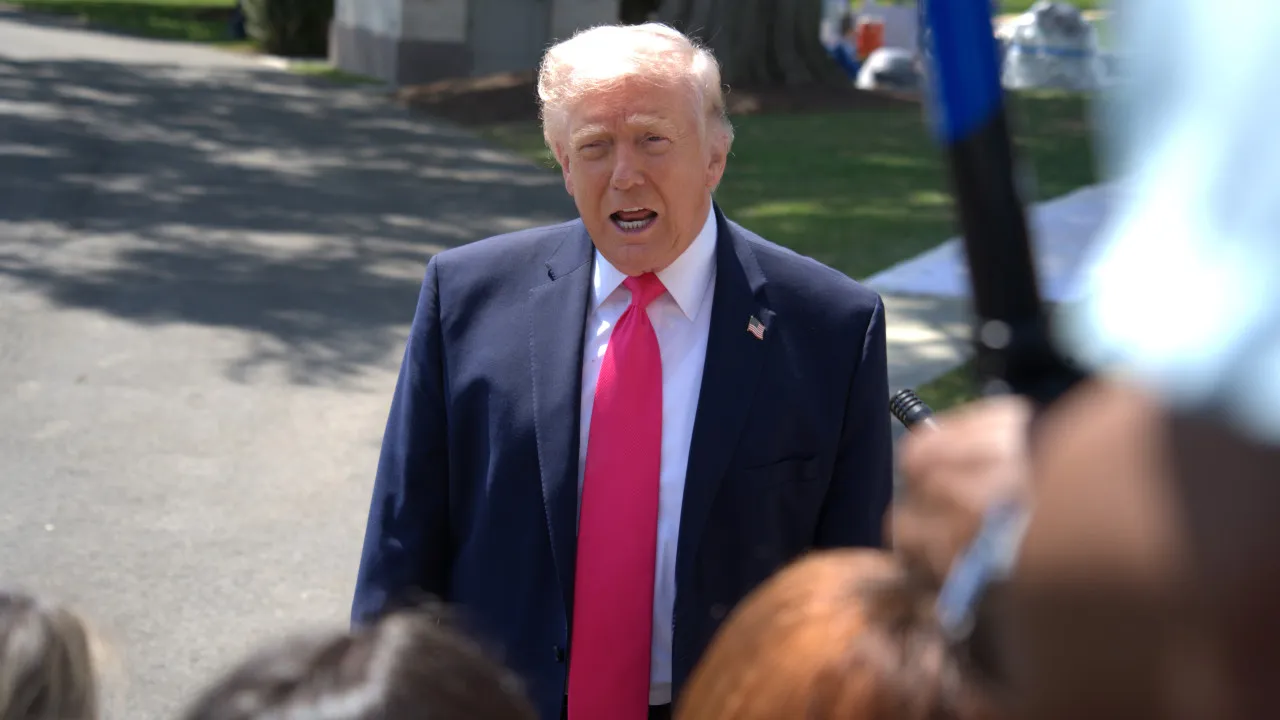
However, US President Donald Trump struck a more guarded tone, signalling that military pressure on Iran would continue despite the easing of shipping restrictions.
“The Strait of Hormuz is completely open and ready for business and full passage. But, the naval blockade will remain in full force and effect as it pertains to Iran, only, until such time as our transaction with Iran is 100 per cent complete," Trump said.
"This process should go very quickly in that most of the points are already negotiated," he added.
The US military blockade remains a central feature of Washington’s strategy during the ceasefire period.
Military officials said the operation involves “more than 10,000 sailors, marines and airmen, over a dozen ships and dozens of aircraft,” highlighting the scale of enforcement despite the easing of tensions.
Even with Iran’s assurances, analysts and officials cautioned that the reopening may be limited in scope. Shipping routes remain “coordinated” and close to Iran’s coast, suggesting continued control over maritime movement.
The ceasefire itself — a 10-day truce between Israel and Lebanon — appears to be holding, though concerns remain over violations and the durability of the arrangement.
Diplomatic efforts are intensifying alongside the military posture.
Trump has indicated that talks with Iran could take place soon, even suggesting he may travel to Pakistan if a final agreement is reached there.
The developments mark a delicate balancing act — partial reopening of a critical global shipping lane, continued military pressure on Iran, and fast-moving diplomacy aimed at securing a broader settlement.
The Strait of Hormuz, connecting the Persian Gulf to the Gulf of Oman, is one of the world’s most important energy corridors. Before the conflict, roughly a fifth of global oil and gas supplies passed through it, making any disruption a major driver of global energy prices.
The current crisis began with a wider conflict involving Iran, the United States and Israel, leading to attacks on shipping and a sharp contraction in tanker traffic. The ceasefire and partial reopening offer a temporary reprieve, but uncertainty over security and navigation conditions continues to weigh on global markets.
Trump says Hormuz open, but Iran's blockade stays
Advertisement