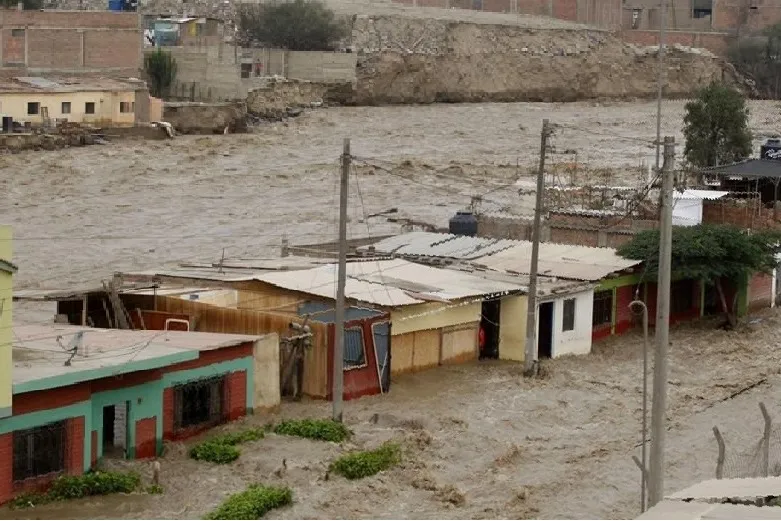
Lima, March 13 : Peru has declared a state of emergency in 283 districts to mitigate high risks and address the impact of intense rainfall on public safety, the official gazette El Peruano reported.
According to several decrees published in the gazette on Thursday, the emergency measure will be in effect for 60 calendar days across 20 of Peru's regions, including Lima, Amazonas, Ancash, Cusco and Arequipa.
During the emergency period, regional and local governments, in coordination with the National Institute of Civil Defence and various ministries, will implement immediate and necessary exceptional measures and actions for disaster response and the rehabilitation of affected areas.
Ministers of the country are also deployed in different affected areas to directly supervise response and relief efforts, as well as to mobilise health brigades that provide first aid, psychological support, and humanitarian assistance to the affected population.
The Peruvian Armed Forces have also deployed specialised personnel to assist with rehabilitation and logistics, working in coordination with the National Police, Xinhua news agency reported.
Earlier on March 3, the country's Ministry of Health reported at least 41 people have been killed and one remains missing as a result of the rainy season in Peru since the beginning of this year.
According to an official statement 56 people had been injured, of whom 48 were discharged and seven remain hospitalised.
On February 25, the Peruvian government had declared a 60-day state of emergency in various regions in view of the imminent danger posed by intense rainfall.
Torrential downpours have caused widespread damage across southern Peru, affecting about 5,500 homes and forcing many residents to evacuate.
Peru experiences heavy rains primarily due to the El Nino-Southern Oscillation (ENSO) phenomenon, which warms coastal waters, increases atmospheric moisture, and triggers intense, seasonal rainfall. This is often intensified by warm, humid air from the Amazon Basin hitting the Andes mountains and the recent impacts of climate change.
Peru declares state of emergency in 283 districts amid heavy rains
Advertisement