Seoul, Jan 5 : A coalition of civic groups on Monday chanted anti-US slogans to protest against the US capture of Venezuelan President Nicolas Maduro outside the US Embassy in Seoul, condemning US President Donald Trump over a military strike.
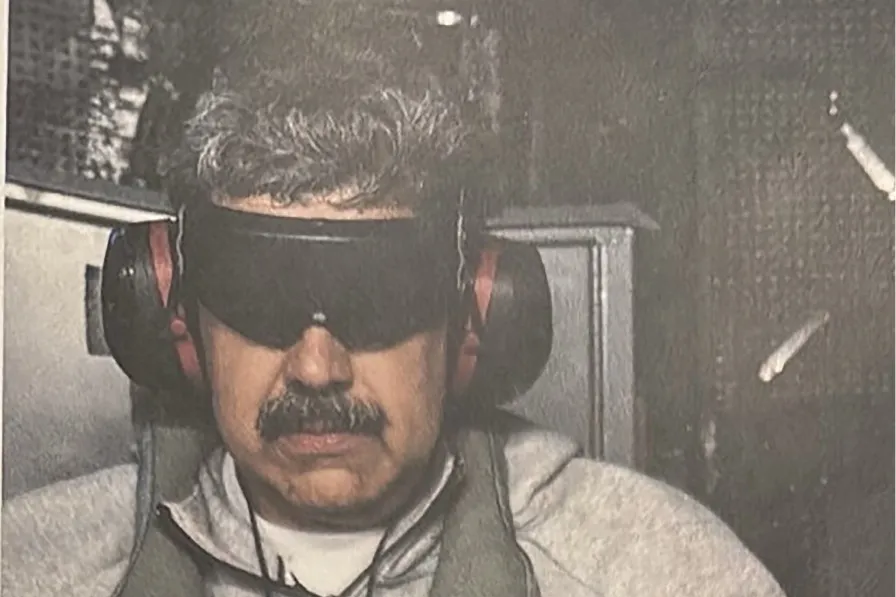
The rally involving 38 civic organisations took place after Trump announced Saturday that Maduro and his wife were taken into US custody through a military raid in Caracas, Yonhap News Agency reported.
Acting Venezuelan Ambassador to South Korea Natasha Faria Fernandez attended the rally and called for Maduro's immediate release while accusing the US government of violating the UN Charter.
Kwon Young-kook, leader of the left-wing Justice Party, called on the South Korean government to voice opposition to what he called the US invasion of the South American nation at the rally.
On Sunday, South Korea's foreign ministry urged all involved parties in the situation in Venezuela to ease tensions in the region.
Another rally involving an umbrella group representing 267 civic organisations took place near the embassy on Monday, with participants strongly condemning the US military operation.
The far-left People's Democracy Party plans to deliver a letter demanding Maduro's release to the US Embassy later in the day.
Meanwhile, the Trump administration sought to blunt criticism of its Venezuela operation, arguing that the arrest of Nicolás Maduro was a narrowly targeted law-enforcement action rather than the opening of a new war or military occupation.
Speaking on NBC’s Meet the Press, US Secretary of State Marco Rubio rejected the suggestion that the United States is now at war with Venezuela. “There’s not a war,” Rubio said, adding that Washington is “at war against drug trafficking organisations -- not at war against Venezuela.”
Rubio said the operation was conducted under US legal authority to arrest an indicted narco-trafficker and did not amount to an invasion. “This was not an invasion,” he said on NBC. “This was a law enforcement operation.”
Appearing separately on ABC’s This Week, Rubio said US forces were on the ground only briefly to execute the arrest and then withdrew. He emphasised that the mission relied on court warrants and sanctions enforcement rather than congressional authorisation for combat.
Rubio said the administration’s focus has now shifted to sustained pressure through sanctions and maritime enforcement. On CBS’s Face the Nation, he said the United States is enforcing an oil “quarantine” using court orders to seize sanctioned shipments.
“That leverage remains,” Rubio told CBS News, saying the pressure would stay in place until changes occur that serve US interests and benefit Venezuelans.
Rubio pushed back against repeated questions about who is “running” Venezuela. On NBC, he said Washington is not administering the country but shaping outcomes through policy tools.
“What we are running is policy,” he said, referring to efforts to stop drug trafficking, dismantle gangs, and end the presence of foreign militant groups.
US Ambassador to the United Nations Mike Waltz echoed that message on Fox News’ Sunday Morning Futures. Waltz said the operation was justified under international law and framed as self-defence.
“This is our hemisphere,” Waltz told Fox News. “We are not going to allow it to become a base of operation for adversaries.”
Waltz cited alleged ties between Maduro and China, Russia, Iran, and Hezbollah, arguing that decisive action was necessary to protect US security.
Rubio said the administration is not ruling out future steps but stressed that there are no US troops stationed in Venezuela. “We don’t have US forces on the ground,” he told NBC.
Responding to questions on elections and political transition, Rubio urged realism. “These things take time,” he said on CBS. “There’s a process.”
The administration said it would judge Venezuela’s next steps by actions rather than promises, while maintaining pressure until US security concerns are addressed.
Civic groups rally against Trump's 'capture' of Venezuela's Maduro near US Embassy in Seoul