New Delhi, Sep 2 : In a significant feat for the country to become a global semiconductor hub, Union Minister for Electronics and IT Ashwini Vaishnaw on Tuesday presented the first made-in-India processor, along with test chips from four approved projects, to Prime Minister Narendra Modi here.
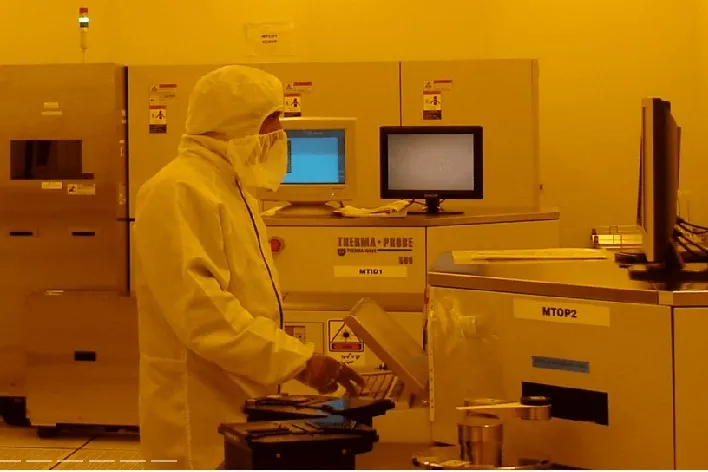
The first fully indigenous 32-bit microprocessor, called 'Vikram,' has been developed by ISRO’s Semi-conductor Laboratory (SCL).
It is designed to withstand the harsh environmental conditions of space launch vehicles, marking a milestone in India’s efforts to reduce dependency on imported chips.
Vaishnaw highlighted the rapid progress of India’s semiconductor infrastructure at the 'Semicon India 2025' event.
“Just a few years ago, we met for the first time to make a new beginning driven by our Prime Minister's farsighted vision, we launched the India Semiconductor Mission. In a short span of 3.5 years, we have the world looking at India with confidence,” said the minister.
“Today, the construction of five semiconductor units is going on at a rapid pace. We just presented the first ‘Made-in-India’ chip to PM Modi," he told the gathering.
India’s semiconductor journey has gained momentum under the Semicon India Programme.
The government has already approved 10 projects in critical areas such as high-volume fabrication units (Fabs), 3D heterogeneous packaging, compound semiconductors, and outsourced semiconductor assembly and testing (OSATs).
In addition, design-focused initiatives have supported more than 280 academic institutions and 72 start-ups with advanced tools, while 23 start-ups have been approved under the Design Linked Incentive (DLI) scheme.
Over three days, the flagship event will feature keynote addresses, panel discussions, fireside chats, paper presentations, and six international roundtables.
A dedicated ‘Workforce Development Pavilion’ will also highlight career opportunities in microelectronics to attract new talent.
With top companies like Applied Materials, ASML, IBM, Infineon, Lam Research, Micron, Tata Electronics, SK Hynix, and Tokyo Electron participating, SEMICON India 2025 is expected to drive India’s next wave of semiconductor innovation and strengthen its position in the global value chain.
India gets first fully indigenous 32-bit chip ‘Vikram’ built by ISRO lab