

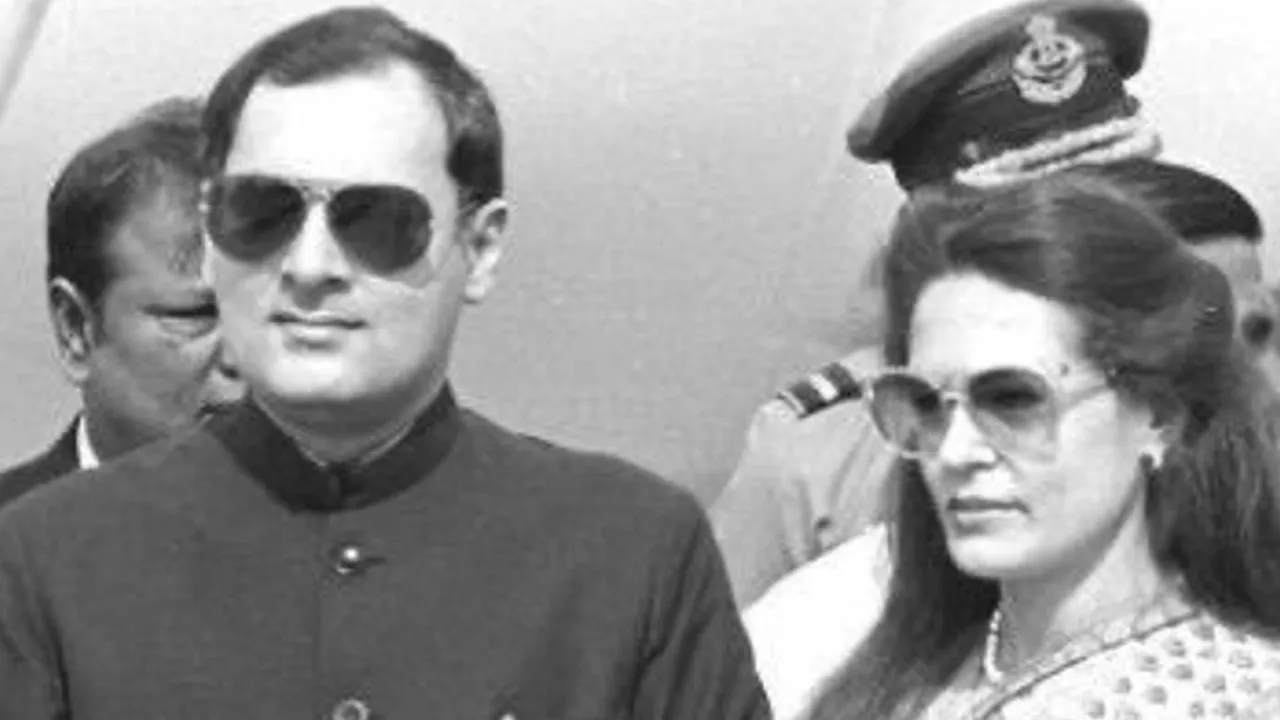
New Delhi, Nov 10 (IANS) In her memoir ‘Belonging: A Journey of Love’, Congress leader Sonia Gandhi offers a personal account of the political storm surrounding the Shah Bano case and reveals how deeply she disagreed with the government’s approach to the issue.
Sonia recalls questioning her husband, then Prime Minister Rajiv Gandhi, over ‘his government's handling’ of the controversy. ‘Disturbed’ by newspaper and magazine reports, she was particularly concerned by allegations that the government was compromising the rights of Muslim women. Several prominent women’s rights activists, including Muslim women, had also publicly supported Shah Bano’s claim to maintenance.
Describing her reaction, Sonia writes: “I argued with him and questioned him: The papers are accusing you of sacrificing Muslim women’s interests. What’s going on? Why are you letting this happen?”
Rajiv, according to her account, maintained that he was attempting to navigate a complicated issue while ensuring fairness. Responding to her concerns, he said: “Wouldn’t I defend women’s rights—don’t you know me?” Sonia remembers that he delivered the response in “a slightly irritated tone”.
Rajiv subsequently explained that his intention was to find a solution for Shah Bano and other women facing similar circumstances without destabilising the broader framework of Muslim Personal Law.
Sonia writes that he was trying to resolve the matter without putting “in jeopardy the entire edifice of Muslim Personal Law”.
Reflecting on the eventual political compromise, Sonia defends the government's decision, arguing that it attempted to reconcile religious considerations with the need for gender justice. She maintains that the arrangement provided Muslim women with a more equitable financial settlement than the monthly maintenance of Rs 179.2 awarded to Shah Bano by the court.
“The compromise he accepted did, in fact, strike a balance between religious beliefs and gender justice, and it also gave Muslim women a fairer and more reasonable portion than the pitiful monthly amount of Rs 179.2 awarded by the court to Shah Bano,” Sonia wrote.
However, the government's move to introduce legislation overturning the Supreme Court's verdict attracted criticism from opposing political and social quarters. Sonia acknowledges that the amendment was controversial, describing it as “a political step that was widely criticised”.
The Bharatiya Janata Party (BJP) was among the strongest critics of the government's decision. Sonia notes that the party accused the Congress government of prioritising electoral considerations over women's rights.
“The BJP predictably accused the government of indulging in ‘vote-bank politics’—a capitulation to the conservative elements of Muslim society,” she wrote.
The memoir also refers to the Supreme Court's 2001 judgment, which upheld the constitutional validity of the Muslim Women (Protection of Rights on Divorce) Act, 1986.


