
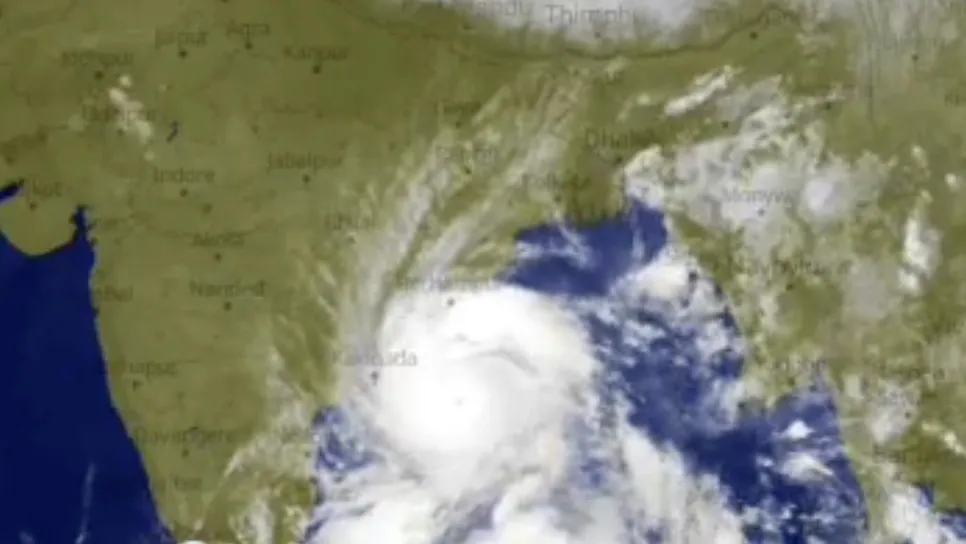
Amaravati: Very severe cyclonic storm Arnab completed its landfall along the Andhra Pradesh and Yanam coasts on Wednesday morning after a prolonged crossing lasting more than six hours, bringing destructive winds, torrential rainfall and widespread disruption across Andhra Pradesh and neighbouring Odisha.
According to the India Meteorological Department (IMD), the cyclone crossed the coastline near Yanam with maximum sustained wind speeds of 125–135 kilometres per hour, gusting to 150 kilometres per hour. The weather system subsequently weakened into a severe cyclonic storm at 8:30 am.
In its 9:50 am bulletin, the IMD confirmed that the landfall process had been completed, with the cyclone's central region moving entirely over land. The storm was positioned approximately 20 kilometres east of Narsapur, 40 kilometres south-southwest of Yanam, 60 kilometres south-southwest of Kakinada and 90 kilometres east-northeast of Machilipatnam.
Heavy rainfall battered several districts, with Visakhapatnam recording 315 mm of rainfall by 8:30 am, followed by Vizianagaram at 301 mm, Anakapalli at 275 mm, Srikakulam at 257 mm and Krishna district at 223 mm.
In Odisha, Koraput recorded 188 mm of rainfall, followed by Ganjam at 161 mm and Gajapati at 135 mm, as the cyclone's influence extended across the region.
Authorities in Andhra Pradesh and Odisha evacuated more than 180,000 people from vulnerable locations ahead of the cyclone's arrival. Strong winds uprooted trees and disrupted electricity supplies, while precautionary measures affected schools, railway operations and aviation services. Several airlines cancelled flights to Visakhapatnam and Vijayawada on Wednesday.
No fatalities had been reported in either state at the time of the latest available update.
Despite the cyclone's weakening, authorities warned that heavy rainfall could continue through Wednesday and Thursday, raising concerns about flooding and further disruption in vulnerable areas. Residents were advised to remain vigilant and follow official weather warnings and instructions from local administrations.
The IMD continued monitoring the system's movement and weakening as emergency response teams worked to restore essential services in affected districts.


