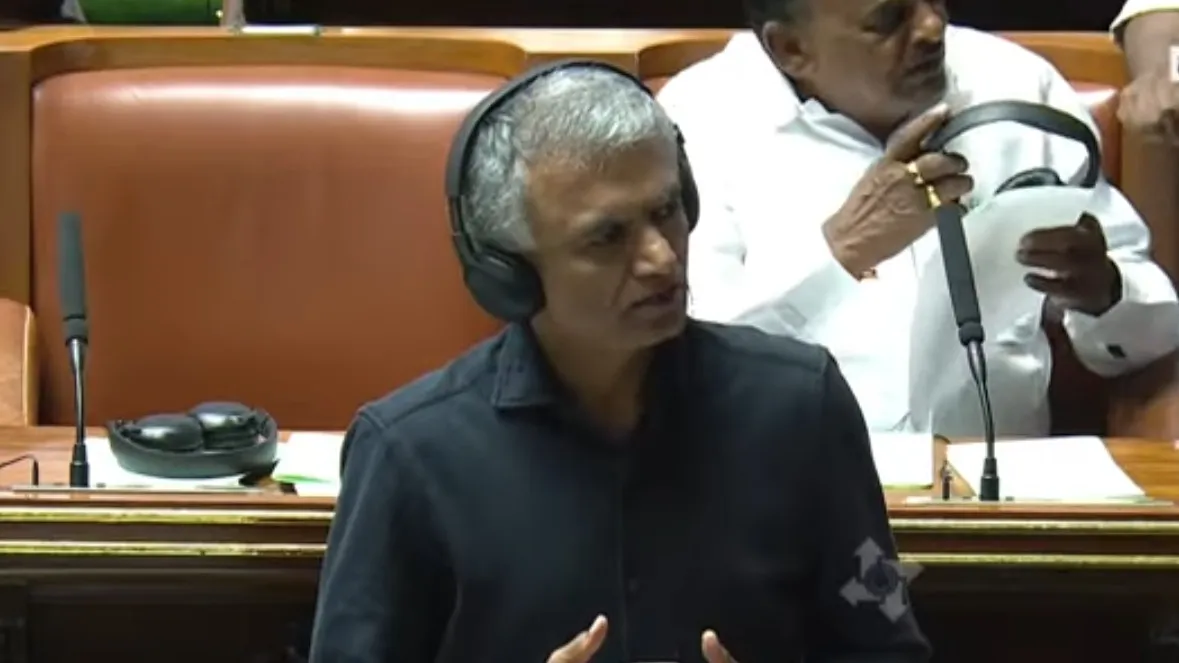
Bengaluru, Aug 21 : The Karnataka government has introduced the Karnataka Apartment (Ownership and Management) Bill, 2026, aimed at protecting the interests of apartment residents and providing them with clearly defined statutory rights, Bengaluru Development Minister Krishna Byre Gowda said on Friday.
Introducing the Bill in the Legislative Assembly, the Minister added that the legislation seeks to address the growing complexities of apartment living in Karnataka, including disputes between residents, administrative confusion, and contentious practices involving developers.
"As our cities grow, land has become an increasingly scarce and valuable resource. As a result, apartment living has become the preferred choice for a large number of citizens. However, the existing laws, some of which date back to 1972-73, along with the regulatory framework under RERA, have not been adequate to address many of the complex issues that have emerged in today's rapidly expanding apartment sector," Byre Gowda said.
He added that the absence of a clear and comprehensive legal framework had resulted in several recurring problems.
"In some apartment complexes, two or three associations have been registered, leading to disputes among residents. There are also continuing disputes between residents and developers over ownership and control of common areas, roads and compound walls. There has been no clear legal mechanism for redevelopment of old and deteriorating apartment buildings," he said.
The Minister added that the new legislation has been drafted after extensive consultations with apartment residents and other stakeholders.
He said an initial meeting with apartment residents had been held when D.K. Shivakumar was the Deputy Chief Minister, followed by another consultation with residents about two months ago. Their suggestions and feedback were incorporated into the draft, which was subsequently placed in the public domain for wider consultation.
"After considering the feedback received from the public, a comprehensive and mature Bill has now been prepared and introduced in the Assembly," he added.
The key features of the Bill include, "Every apartment project will have one registered Residents' Welfare Association (RWA), which will be registered and governed under the provisions of the proposed legislation."
The Bill prohibits the creation of separate associations for the same apartment project under other laws, thereby seeking to eliminate competing associations and the disputes arising from them.
Developers will not be permitted to privately sell, transfer or alter common areas, roads and open spaces belonging to the apartment project.
The management and maintenance of such common areas will have to be handed over to the residents' association, providing residents with greater clarity and control over shared assets.
The Bill provides for the appointment of Competent Authorities and Appellate Authorities at the local level, including Gram Panchayats, municipalities and municipal corporations, to adjudicate disputes arising under the legislation.
These authorities will be vested with powers similar to those of a Civil Court, providing apartment residents with an accessible institutional mechanism for dispute resolution.
The Bill provides a definitive legal framework for the redevelopment of old and structurally deteriorated apartment buildings.
Redevelopment will require the consent of at least 75 per cent of the apartment owners.
Where an owner does not consent to redevelopment, the Bill provides for acquisition of the property based on an independent valuation at twice the prevailing market value, enabling redevelopment to proceed while ensuring enhanced compensation for dissenting owners.
The legislation is intended to bring greater clarity, accountability and legal certainty to apartment ownership and management, while protecting residents from prolonged disputes and ensuring a more structured relationship between apartment owners, residents' associations and developers.
Karnataka govt introduces Apartment Ownership Bill to protect residents' rights