New Delhi, Aug 10 : The Parliament approved the Taxation and other Laws (Amendment) Bill on Monday, with Finance Minister Nirmala Sitharaman making it clear that the legislation does not impose any tax or transaction charge on users making payments through the Unified Payments Interface (UPI).
The Bill, which was passed by the Lok Sabha last week, was returned by the Rajya Sabha with a voice vote after a brief discussion and reply by the Finance Minister.
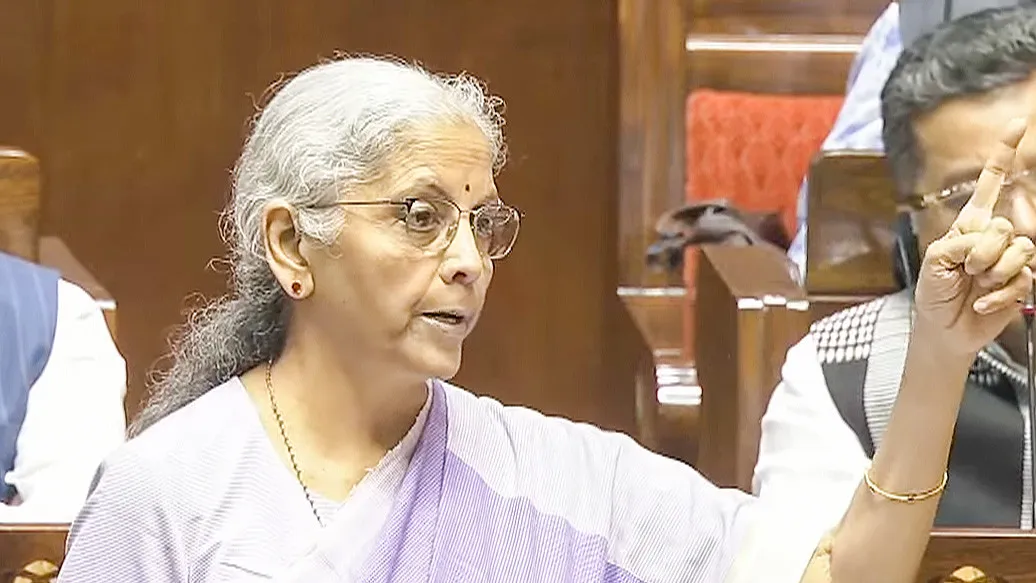
Speaking on the floor of the Upper House, the Finance Minister said the proposed amendment to Section 10A of the Payment and Settlement Systems Act is only an enabling provision and does not introduce a Merchant Discount Rate (MDR) charge on consumers at this stage.
"The enabling provision we are bringing in does not impose any tax or transaction charge on UPI users," Sitharaman said.
The Finance Minister further stated that after the approval of the Parliament, the UPI and Services Steering Committee of the National Payments Corporation of India (NPCI) will consider whether an MDR charge should be introduced.
"So, no MDR framework has been finalised," she clarified.
The clarification comes amid growing speculation that a transaction fee would be charged on UPI payments following the government's proposed amendments.
The Finance Ministry had issued a statement on Saturday to clarify that person-to-person UPI transactions will continue to remain free of charge under the new proposal.
The government said that if MDR is introduced, it would apply only to a limited set of merchant transactions above a specified threshold and would be charged at a nominal rate. The rate, it said, would be significantly lower than the MDR applicable to debit or credit card transactions.
"Most transactions will remain free of charge for merchants on UPI," the ministry said.
Government officials said that over 90 per cent of the transactions that include daily purchases of milk, vegetables, and groceries will not attract an MDR charge.
The government also clarified that any MDR charge, if introduced, would be threshold-based on high-value transactions rather than being imposed across all UPI transactions.
The government highlighted that UPI was introduced in 2016 and has remained free of charge for both merchants and citizens since January 2020. It also highlighted India's achievement in developing UPI into the world's largest real-time interoperable payment system.
Parliament passes Taxation Bill, Sitharaman says no fee on UPI transactions