Over 900 suspected cases identified in Congo Ebola response: WHO chief
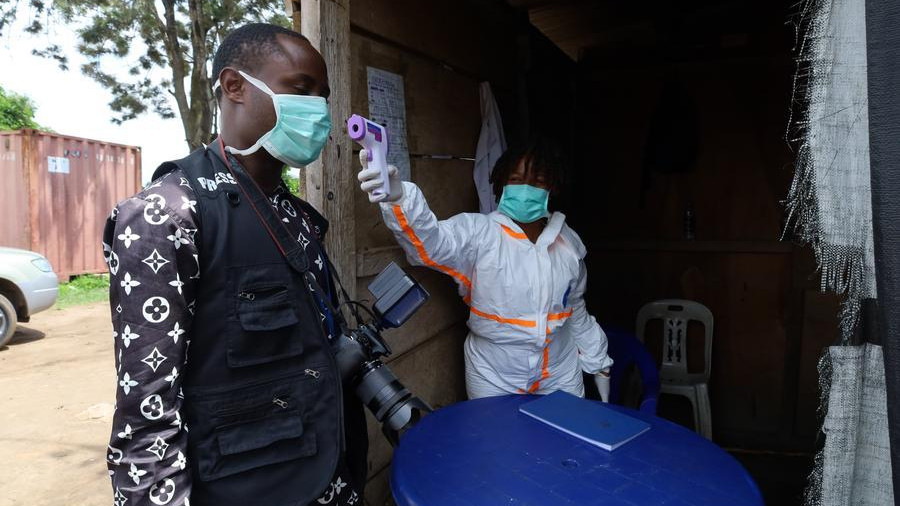
Geneva, May 25 : World Health Organization (WHO) Director-General Tedros Adhanom Ghebreyesus said that as the Democratic Republic of the Congo (DRC) scales up surveillance in its Ebola response, more than 900 suspected cases have been identified so far, including 101 confirmed cases.
In Ituri province, the epicentre of the outbreak, nearly 5 million people live amid ongoing conflict, with one in four in need of humanitarian assistance and one in five internally displaced, Tedros said in a post on X.
"The violence is forcing people to flee, including health and humanitarian workers. This is severely impeding efforts to scale up Ebola contact tracing and identify infections early enough to provide supportive care," he added, noting that ongoing insecurity and fear are also fueling mistrust within communities.
The WHO chief said that WHO and humanitarian health partners maintain a presence across Ituri, including in some of the hardest-to-reach and most insecure areas, where communities are facing not only the threat of Ebola but also a wide range of diseases.
Tedros emphasised that delivering a comprehensive package of healthcare services is essential -- not only to meet urgent health needs, but also to build the trust that is critical for an effective Ebola response, Xinhua news agency reported.
On May 16, Tedros determined that the Ebola disease caused by the Bundibugyo virus in the DRC and Uganda constitutes a public health emergency of international concern. On May 22, the WHO revised its risk assessment to "very high" at the national level, while keeping it as "high" at the regional level and "low" globally.
According to the WHO, Ebola disease is a severe, often fatal illness affecting humans and other primates.
The virus is transmitted to people from wild animals (such as fruit bats, porcupines and non-human primates) and then spreads in the human population through direct contact with the blood, secretions, organs or other bodily fluids of infected people, and with surfaces and materials (e.g. bedding, clothing) contaminated with these fluids.
The average Ebola disease case fatality rate is around 50%. Case fatality rates have varied from 25–90 per cent in past outbreaks.
The first Ebola disease outbreaks occurred in remote villages in Central Africa, near tropical rainforests. The 2014–2016 Ebola virus disease outbreak in West Africa was the largest and most complex Ebola outbreak since the virus was first discovered in 1976. There were more cases and deaths in this outbreak than all others combined. It also spread between countries, starting in Guinea then moving across land borders to Sierra Leone and Liberia.
In Ituri province, the epicentre of the outbreak, nearly 5 million people live amid ongoing conflict, with one in four in need of humanitarian assistance and one in five internally displaced, Tedros said in a post on X.
"The violence is forcing people to flee, including health and humanitarian workers. This is severely impeding efforts to scale up Ebola contact tracing and identify infections early enough to provide supportive care," he added, noting that ongoing insecurity and fear are also fueling mistrust within communities.
The WHO chief said that WHO and humanitarian health partners maintain a presence across Ituri, including in some of the hardest-to-reach and most insecure areas, where communities are facing not only the threat of Ebola but also a wide range of diseases.
Tedros emphasised that delivering a comprehensive package of healthcare services is essential -- not only to meet urgent health needs, but also to build the trust that is critical for an effective Ebola response, Xinhua news agency reported.
On May 16, Tedros determined that the Ebola disease caused by the Bundibugyo virus in the DRC and Uganda constitutes a public health emergency of international concern. On May 22, the WHO revised its risk assessment to "very high" at the national level, while keeping it as "high" at the regional level and "low" globally.
According to the WHO, Ebola disease is a severe, often fatal illness affecting humans and other primates.
The virus is transmitted to people from wild animals (such as fruit bats, porcupines and non-human primates) and then spreads in the human population through direct contact with the blood, secretions, organs or other bodily fluids of infected people, and with surfaces and materials (e.g. bedding, clothing) contaminated with these fluids.
The average Ebola disease case fatality rate is around 50%. Case fatality rates have varied from 25–90 per cent in past outbreaks.
The first Ebola disease outbreaks occurred in remote villages in Central Africa, near tropical rainforests. The 2014–2016 Ebola virus disease outbreak in West Africa was the largest and most complex Ebola outbreak since the virus was first discovered in 1976. There were more cases and deaths in this outbreak than all others combined. It also spread between countries, starting in Guinea then moving across land borders to Sierra Leone and Liberia.