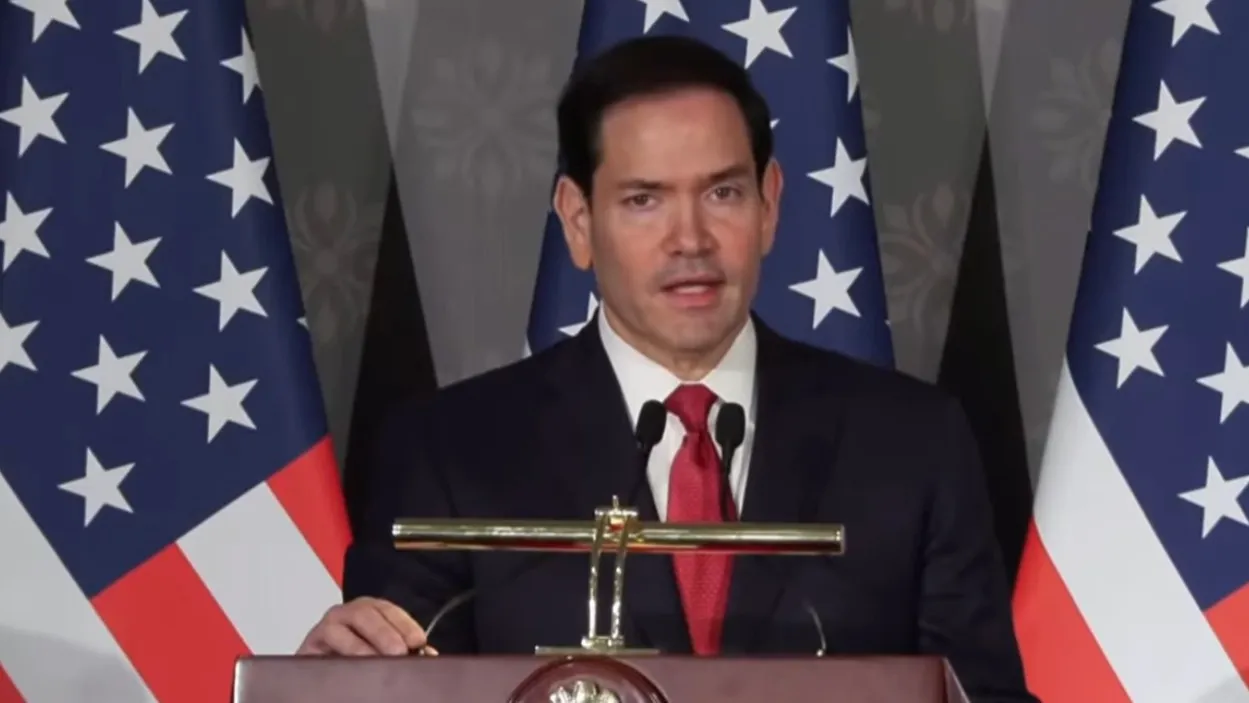
New Delhi, May 24 : US Secretary of State Marco Rubio said on Sunday that India and the US are strategically aligned on several key global issues, including critical minerals, supply chains and terrorism. He called India "one of the most important strategic partners" for the US in the world.
While addressing a joint press briefing with External Affairs Minister S Jaishankar on Thursday, Rubio said that India and the US have suffered due to global terrorism networks. He noted that India and the US as democracies understand the importance of public scrutiny, accountability.
Rubio said, "I have to go back and justify to the American people every decision we make and the president has to do the same on why it's good for our country and our counterparts here in India have to do the exact same thing. You have to respond to the people of India about why your partnership with the United States or your stance on any issue for that matter is to the benefit of your country. I imagine this is true in every country in the world to some degree, but it is particularly true for democracies."
"Democracies respond directly to the people and you have to respond constantly and democracies, you have opposition parties, have a free and open media. By the you have a lot of media. We have media in our government, you guys have a lot of media, that means a lot of scrutiny and lot of attention. But that begins to align our interests immediately because we both recognize and have mutual respect and understanding that every decision we make, every announcement we make, everything we work together on, we ultimately have to go back and justify it to our voters, to our people, the people who put us in these positions to begin with," he added.
Marco Rubio stated that the strategic partnership between India and the US goes beyond regional cooperation. He stressed that both nations are strategic allies on the idea that access to critical minerals and supply chains are essential issue in the 21st century.
He said, "The second point I would make is that our partnership from a strategic standpoint is not limited to a regional one. Now, clearly there are regional issues in the Indo-Pacific that are important to both of our countries. But, the ability increasingly as we have conversations, we are talking about strategic interests that align beyond simply the region. Whether it's your visit last weekend to the Western Hemisphere, we have a lot of alignment. Whether it's our mutual interests of what's happening currently now in the Strait of Hormuz and beyond and then on the topics as well.
"If you talk about the topics that we have a mutual interest on, both countries are strategic allies on the idea that access to critical minerals and supply chains are an essential issue in the 21st century. The over-concentration of reliance on a single source for anything, particularly things that are vital for our economies, is one of the great challenges of the 21st century and we are strategically aligned on that topic," he added.
Highlighting strong counter-terrorism alignment between India and the US, he said, "On the issue of terrorism, both of our countries have suffered, both directly and indirectly, because of global terrorist networks. There is a strong counter-terrorism alignment as a result of that. On innovation and ensuring that all of the promises of new technologies and new advances in the 21st century, all of them come with risks and rewards. Every technological advancement that's made individuals and societies more productive have always come with risks associated with them. Managing those risks and maximizing those benefits is one of the great challenges of the 21st century and there's a tremendous strategic alliance between our countries in agreement on that point."
He described his visit to India "phenomenal" and termed India an "important strategic partner" of the US.
He said, "It's been a phenomenal visit already and it's only been a day and we have so much more work to do and it's an honour to be here with all of you in this important visit to one of our most important strategic partners in the world and I want to highlight that point for a minute. We obviously have relations and we work with countries all over the world and we need to just as India does and we have all kinds of alliances and partnerships with countries that we work on sometimes on discrete and individualized issues, other times on broader issues that involve one region of the world or another.
"A strategic partnership is something very different. It's something much broader than that. A strategic partnership is when your interests as two nations are aligned and you work together strategically to solve those problems and the list of issues that we work together with India on, the breadth and scope of them, is what highlights the fact that India is an important strategic partner of the United States, one of our most important strategic partners in the world. It begins with the fact of our shared values. We are the two largest democracies in the world. And so obviously that in and of itself begins to align our interests simply because our leaders respond directly to voters and people on a regular basis," he added.
'India one of our most important strategic partners', says Marco Rubio after talks