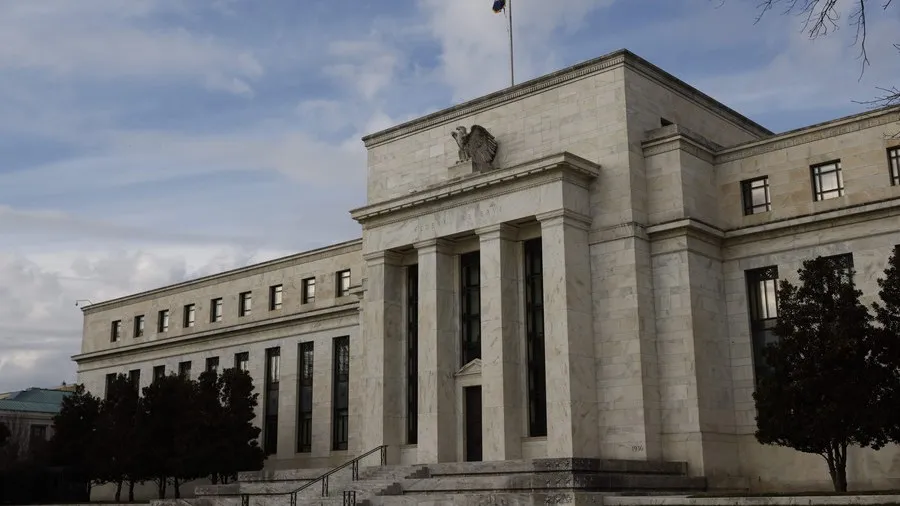
Washington, April 30 : The US Federal Reserve has kept interest rates unchanged as rising global energy prices linked to the Middle East conflict pushed inflation higher, while policymakers flagged growing uncertainty around the economic outlook.
Federal Reserve Chair Jerome Powell on Wednesday (local time) said the central bank remains focused on its dual mandate of maximum employment and stable prices, even as inflation has “moved up and is elevated.”
“The US economy has been expanding at a solid pace,” Powell said, noting that consumer spending remains resilient and business investment is strong. At the same time, he acknowledged that job gains have slowed and the housing sector remains weak.
The Federal Open Market Committee (FOMC) decided to hold its policy rate in the 3.5 to 3.75 per cent range, describing the current stance as “appropriate” to support economic stability.
Powell said inflation pressures have intensified, driven partly by higher oil prices linked to geopolitical tensions. “Estimates… indicate that total PCE prices rose 3.5 per cent over the 12 months ending in March, boosted by the significant rise in global oil prices that has resulted from the conflict in the Middle East,” he said.
Core inflation, which excludes food and energy, stood at 3.2 per cent, reflecting in part the impact of tariffs on goods prices.
He warned that developments in the Middle East were adding to economic uncertainty. “Higher energy prices will push up overall inflation,” Powell said, adding that the broader impact “remains unclear, as does the future course of the conflict itself.”
Despite rising inflation, the Fed signalled it is not rushing into further policy action. “Monetary policy is not on a pre-set course,” Powell said. “We will make our decisions on a meeting-by-meeting basis.”
The labour market remains stable but subdued. The unemployment rate stood at 4.3 per cent in March, with “little change in recent months,” while job growth has slowed partly due to lower immigration and participation rates.
Powell said the central bank is in a position to “wait and see” how inflation evolves, particularly given uncertainty around oil prices and trade disruptions. He noted that energy shocks are typically temporary but said the current situation has yet to peak.
The Fed chief also underscored risks to institutional independence, citing “legal attacks” that he said could threaten the central bank’s ability to operate free of political influence. “It is so important… that they can depend over time on a central bank that operates that way, free of political influence,” he said.
Powell confirmed he will step down as chair on May 15 but plans to remain on the board as a governor for a period, citing the need for stability during ongoing challenges.
He said the US economy continues to show resilience despite repeated shocks. “The US economy has just powered through shock after shock,” he said, adding that consumer spending has not yet shown significant signs of slowing, even as higher fuel costs squeeze household budgets.
US Federal Reserve holds rates as oil shock lifts inflation