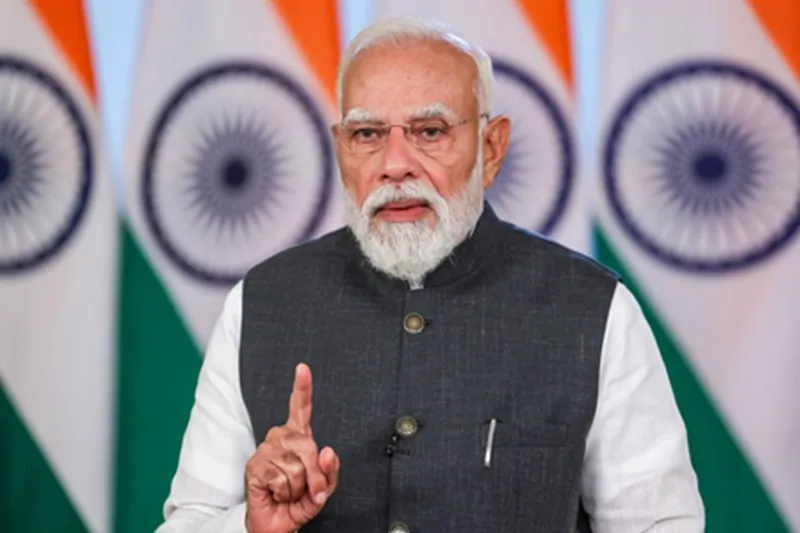
New Delhi, April 4 : Prime Minister Narendra Modi on Saturday announced that the government will extend the ongoing Budget Session of Parliament by three days -- April 16, 17 and 18 -- to fast-track steps for operationalising 33 per cent reservation for women in the Lok Sabha and state legislative Assemblies, with the aim of implementing it from the 2029 general elections.
In a strong pitch centred on women’s empowerment, PM Modi said his government had the resolve to enact the “Nari Shakti Vandan Adhiniyam”, which provides one-third reservation for women in legislative bodies.
“We want 33 per cent of the seats in Parliament to be occupied by our sisters starting from the 2029 Lok Sabha elections,” he said.
The Prime Minister said the special sitting would focus on enabling provisions, including statutory and constitutional measures required to make the quota effective. He outlined two key objectives for the three-day session.
First, to provide a legislative assurance that no state will lose Lok Sabha seats due to population control efforts. He referred to concerns raised by southern states such as Kerala, Tamil Nadu, Karnataka, Andhra Pradesh, Telangana and Goa, which have performed well in family planning and fear a reduction in representation.
Second, the government is considering creating women-reserved seats as “additional seats”, thereby increasing the overall strength of the Lok Sabha and state Assemblies. This, he indicated, would help preserve existing representation while expanding space for women.
PM Modi appealed for unanimous support from all political parties, urging the Congress and other Opposition members, including those in the INDIA bloc, to participate constructively.
“The rights of our mothers and sisters have remained pending for nearly 40 years. They should not be delayed again for the 2029 elections,” he said.
He also called upon women across the country to press for the passage of the legislation without political delays.
The Prime Minister said necessary amendments would be introduced to ensure that the provisions of the law are implemented in time for the next general elections. He described the initiative as central to advancing “Nari Shakti” and strengthening inclusive development.
The development follows the passage of the Women’s Reservation Bill during a special session of Parliament in September 2023. Its implementation was earlier linked to the completion of the Census and a subsequent delimitation exercise.
The proposed changes are aimed at expediting the process so that the quota can be implemented without prolonged delay. Increasing the total number of seats is also being considered to ensure that no sitting MP is adversely affected while expanding representation for women.
The announcement is expected to trigger detailed discussions in the special sitting, with the Opposition likely to raise issues such as sub-quotas, including for OBC women, and the broader contours of delimitation.
If cleared with consensus, the three-day session could mark a significant step in expanding women’s representation in India’s legislative framework.
PM Modi announces 3-day special Parliament session to push 33 per cent women's quota