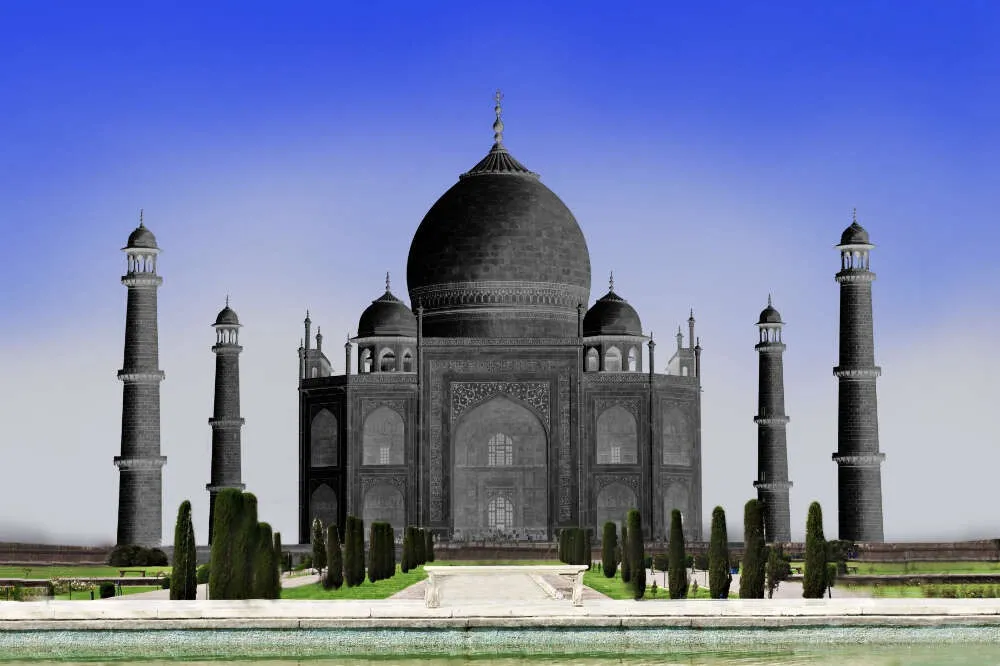
Legend has it that Mughal emperor Shah Jahan dreamed of building a stunning mausoleum made of black marble for himself, directly across the Yamuna River from the Taj Mahal. This mysterious tale of love, ambition, and betrayal continues to capture imaginations—even though historians say it might just be a myth. According to the legend, the two structures would have been connected by a bridge, symbolizing eternal union with his beloved wife, Mumtaz Mahal.
Origins of the Legend
The story originates from the writings of Jean-Baptiste Tavernier, a French traveler who visited Agra in 1665. He claimed Shah Jahan began building a black marble tomb for himself, but the project was halted when his son Aurangzeb overthrew and imprisoned him.
Ruins of blackened marble found in the Moonlight Garden (Mehtab Bagh) across from the Taj Mahal seemed to support this tale, though modern historians largely consider the story a myth rather than historical fact.
There is no concrete archaeological evidence that construction of a Black Taj Mahal ever began in Agra.
The fascination with the legend persists, fueled by romantic notions and the dramatic end to Shah Jahan’s reign.
The official Taj Mahal website acknowledges the legend but notes that Shah Jahan was ultimately buried beside Mumtaz Mahal in the white Taj Mahal after his death, not in a separate black mausoleum.
Other Structures Called Black Taj Mahal
In Burhanpur, Madhya Pradesh, there is a tomb called the Black Taj Mahal — the Tomb of Shah Nawaz Khan. While not related to Shah Jahan’s legend, it is a real Mughal-era structure known for its black stone architecture and is sometimes confused with the mythical Agra monument.