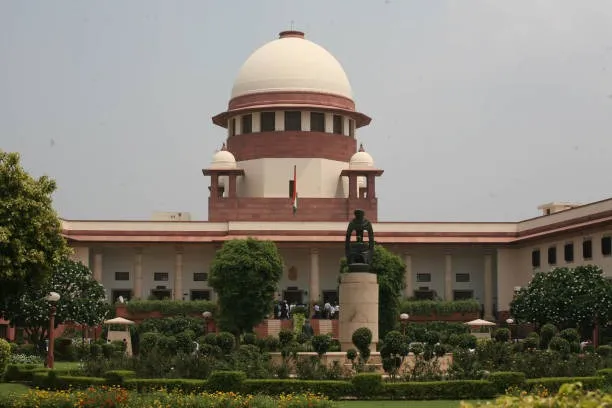
The Supreme Court of India has ruled that delays in granting assent to bills by Governors and the President must be curtailed, stating that such postponements are no longer acceptable. In a landmark judgment delivered today, the apex court declared that Governors are required to take timely decisions on bills passed by state legislatures, and warned that inaction could invite judicial scrutiny. The court further ordered that even bills referred to the President must be resolved within a maximum period of three months.
This significant ruling came just four days after the Supreme Court cleared ten bills that had been kept pending by Tamil Nadu Governor R. N. Ravi for Presidential assent. The bench comprising Justice J. B. Pardiwala and Justice R. Mahadevan delivered this decision, citing Article 200 of the Constitution, which outlines the Governor’s powers. The court criticized the indefinite withholding of bills, declaring such actions as unacceptable.
The Supreme Court directed that when Governors refer bills to the President, the decision should be taken within the three-month timeline set by the Ministry of Home Affairs. If there is a delay, the reasons must be communicated to the respective state government. The court also advised states to cooperate with the Union Government in responding to related queries.
The bench clarified that if the President refuses assent to a bill forwarded by the Governor, the concerned state government has the right to seek judicial recourse. Although Article 200 allows the Governor to either approve, withhold, or refer bills to the President, the court held that keeping bills pending for long periods or acting in disregard of legislative intent is not justifiable. Once a bill has been reconsidered and sent back by the legislature, the Governor should promptly provide assent.
The court emphasized that Governors must act according to the advice of the Council of Ministers and may not refer a bill to the President a second time after it has already been returned by the legislature. Although Article 200 does not prescribe a strict deadline for the Governor’s assent, the court made it clear that the provision does not empower the Governor to neglect state governance by delaying action indefinitely.
The registry has been instructed to circulate copies of the judgment to all High Courts and the offices of the Governors across states. The Supreme Court advised that when a bill is withheld or referred for Presidential consideration on the advice of the Council of Ministers, the Governor must take a decision within a maximum of one month. If the Governor chooses to withhold assent contrary to the Council’s advice, the bill must be returned within three months. Upon resubmission following reconsideration, the Governor should grant assent within a maximum of one month.
These directions were issued in response to a petition filed by the Government of Tamil Nadu challenging the delay in granting assent to various bills passed by the state legislature. The state had approached the Supreme Court in 2023, stating that 12 bills—including one dating back to 2020—were still pending with the Governor.