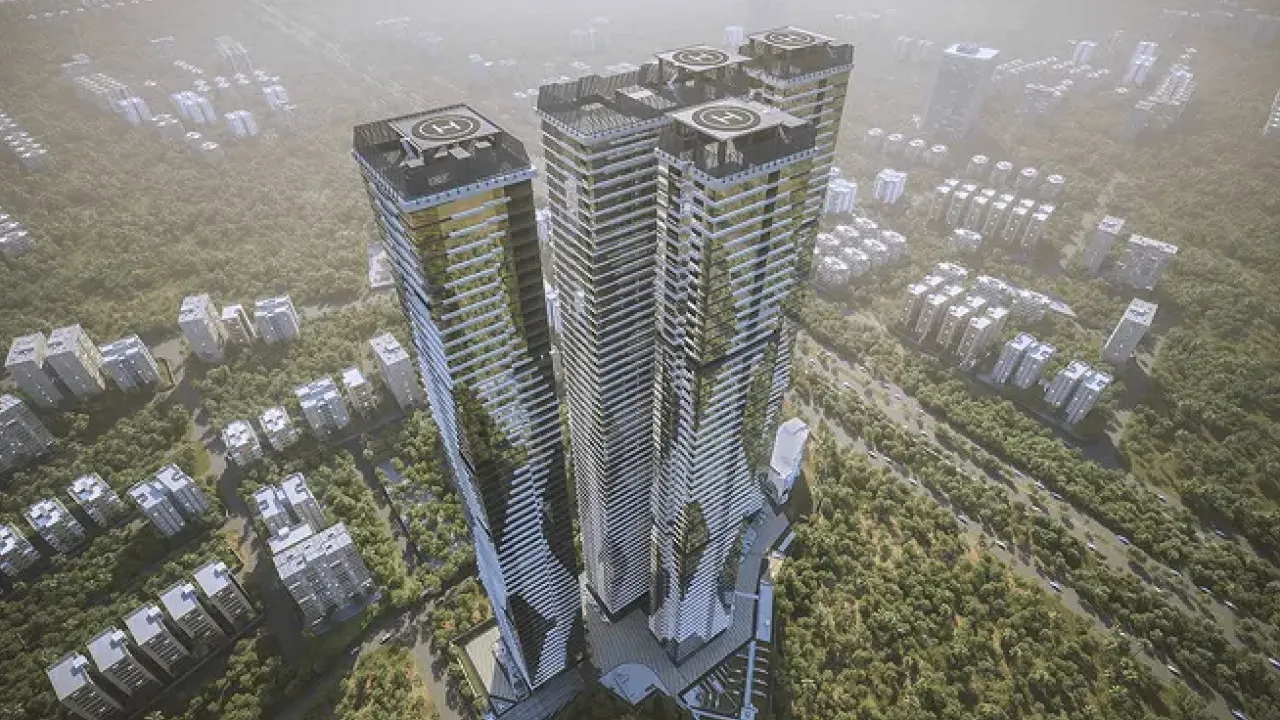
Once known for its historic monuments and expansive landscapes, Hyderabad is rapidly transforming its urban identity with a growing skyline of towering buildings. Matching the pace of other major metropolitan cities in India, the city is witnessing unprecedented vertical growth, particularly along its western corridor. As a result, Hyderabad is fast emerging as the “Skyscraper Capital of South India.”
The scale of this growth is reflected in the city’s construction statistics. By 2026, Hyderabad is expected to have 275 buildings exceeding 100 metres in height and more than 50 skyscrapers taller than 150 metres. The recently completed SAS Crown in Kokapet, standing at 235.3 metres with 58 floors, has set a record as the tallest completed residential building in South India.
The record may soon be surpassed by Candeur Skyline in Puppalaguda, which is currently under construction and is expected to reach nearly 244 metres in height. Upon completion, the project is expected to mark another milestone in the city’s skyline development.
Several other landmark projects are also reshaping Hyderabad’s skyline, including Diamond Tower in the Financial District (187 metres), MyScape Yoo Residences (201 metres), DSR The Twins, Raghava Iris, and Phoenix Triton. Areas such as Kokapet, the Financial District, Neopolis, Tellapur, and Puppalaguda have emerged as key centres for these large-scale developments.
Multiple factors have contributed to the rise of skyscraper culture in Hyderabad. Government policies introduced after 2014, particularly the absence of restrictions on Floor Space Index (FSI), have encouraged developers to pursue high-rise projects. Faster building approvals through the TS-bPASS system have also supported growth in the sector.
Rising land prices in western Hyderabad have further accelerated the trend. As land values continue to increase, developers are opting for taller buildings to maximise construction potential and improve project viability. At the same time, the expansion of the IT sector and the growing influx of professionals from other states have significantly increased demand for premium and luxury housing.
The pace of approvals also reflects the city’s rapid expansion. Within the jurisdictions of the Greater Hyderabad Municipal Corporation (GHMC) and the Hyderabad Metropolitan Development Authority (HMDA), approximately 200 large building projects received approvals in 2025, nearly double the number approved in 2024.
The trend is expected to continue in the coming years. Approvals have already been granted for a 70-floor building of approximately 250 metres in Osman Nagar and a 66-floor tower in Kokapet. Industry representatives estimate that many more skyscrapers will emerge across the city by 2029–30.
While these high-rise developments offer world-class living standards and luxury amenities, they also come with higher costs for residents. Prices in such projects have crossed ₹10,000 per square foot, significantly above the city’s average residential rates of ₹7,000–8,000 per square foot.
Maintenance expenses are also considerably higher due to advanced elevators, uninterrupted power supply systems, enhanced security infrastructure, and sophisticated fire safety mechanisms. Representatives of CREDAI Hyderabad stated that maintenance charges, which are typically around ₹3 per square foot in conventional residential projects, can rise to as much as ₹6 per square foot in these skyscrapers.
Speaking on the evolving market, Telangana Realtors Association President N. Praveen said, “To attract buyers, developers are offering a wide range of amenities such as clubhouses, swimming pools, co-working spaces and sports facilities, helping their projects stand out in a competitive market.”
Overall, Hyderabad is shaping its future through rapid urbanisation and a growing emphasis on premium living standards. Industry observers believe that if the city successfully addresses the infrastructure challenges accompanying this vertical expansion, it could emerge as a model vertical city in India.