Kabul, May 7 : The heinous Pahalgam terror attack in April 2025 was a watershed moment that led to a near total breakdown of bilateral relations between India and Pakistan. India put the Indus Water Treaty (IWT) in abeyance after the attack arguing that blood and water cannot flow together and that Pakistan must put its house in order. All formal trade remains suspended, further straining an already fragile Pakistani economy. Pakistan has since blamed India for weaponizing water. This move by India has fundamentally shifted the geopolitics of the sub-continent.
Under IWT, brokered by the World Bank in 1960, India was granted exclusive control over eastern rivers, Ravi, Beas and Sutlej. While on the other hand, Pakistan was given the rights of western rivers, Indus, Jhelum and Chenab.
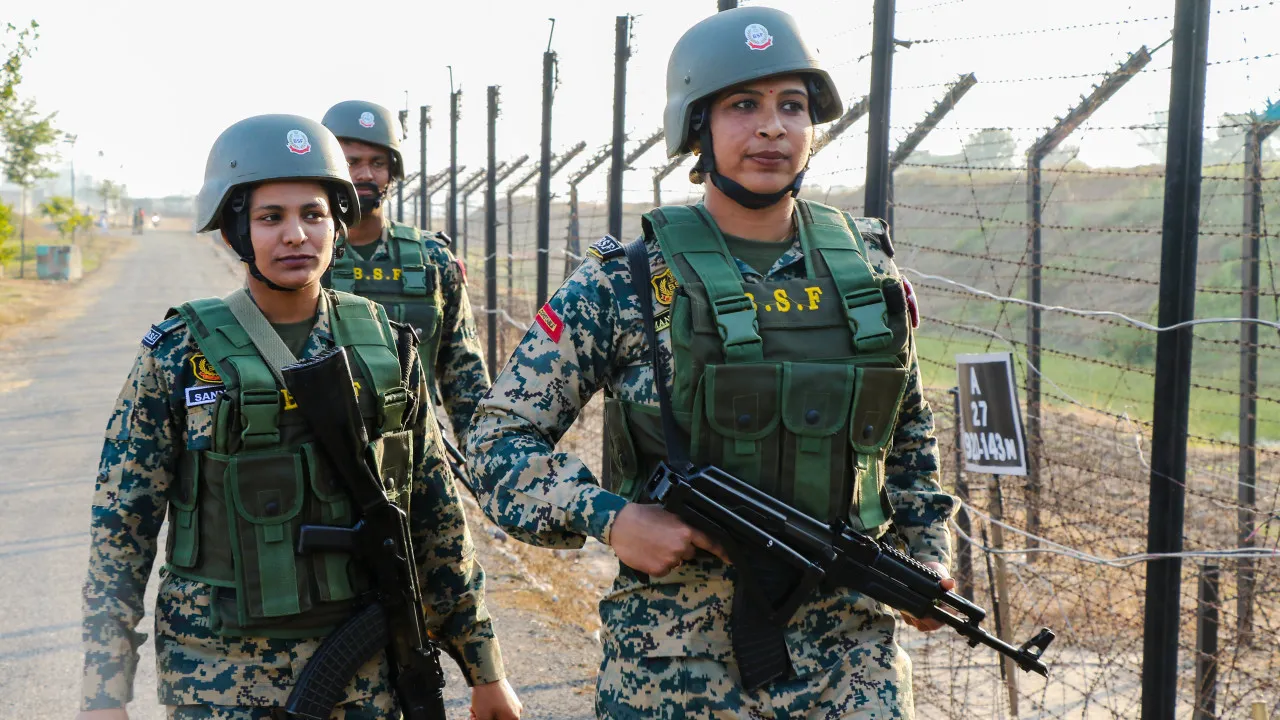
Following the Pahalgam attack by Pakistan-backed terrorists, India significantly escalated its military response that culminated into Operation Sindoor, a coordinated campaign involving land, air and sea assets. The aim of the operation was to dismantle terror infrastructure both across the Line of Control (LoC) and deeper within the Pakistani territory. For the first time in decades, India successfully established military asymmetry by striking deep into Pakistan’s Punjab province without triggering a full scale nuclear escalation. Key facilities of terror groups like Jaish-e-Mohammed and Lashkar-e-Taiba were dismantled forcing Pakistan to reorganise its proxy networks.
India has carefully used the term abeyance rather than abrogation. The treaty is not cancelled but paused. Post Pahalgam, India has stopped sharing real-time flood/hydrological data (flood warnings and daily flow stats) and has accelerated the construction of dams and diversion infrastructure on western-flowing rivers. This information is crucial for Pakistan's Indus River System Authority (IRSA) to plan seasonal water distribution. India has also suspended the meetings of the Permanent Indus Commission, and refused to participate in the dispute resolution mechanisms facilitated by the World Bank. These steps serve as a leverage point for India against Pakistan-sponsored terrorism from across the border. India has stated that the IWT will remain in abeyance until Pakistan takes credible, verifiable and irreversible steps to end support for cross-border terrorism.
Pakistan’s agriculture which forms the backbone of the nation’s economy is heavily dependent on the Indus water system. It has to be noted that nearly 90 per cent of Pakistan’s irrigation is dependent on water from the Indus basin and since the treaty is held in abeyance, Pakistan has reported water scarcity and reduction in crop yields. Reports from early this year indicate that the steps taken by India have severely impacted Pakistan’s agricultural planning in the Sindh and Punjab provinces contributing to a decline in key crops yields. On top of it, an increase in domestic unrest has been reported from these already water stressed provinces. The water woes in these two provinces increased significantly throughout 2025 and 2026, creating a dual crisis of external pressure from India. Sindh has fiercely protested Punjab’s plan to launch six new canals and it argues these projects divert water from the Indus at a time when the lower riparian is facing shortages as high as 62 per cent. India has also conducted sediment flushing on projects like Baglihar and Salal, which Pakistan claims disrupts downstream flows, but India maintains these are within its rights under the abeyance framework.
Pakistan has approached the UN Security Council and the Permanent Court of Arbitration (PCA), framing the suspension as water weaponization and a violation of international law. It has labelled India’s water management as water terrorism and a breach of international law. Currently the standoff remains absolute, India’s domestic stance is firm: the IWT was a goodwill gesture that Pakistan fortified through its alleged support of militancy. While on the other hand, Pakistan maintains the IWT is fully operational and that India’s unilateral actions constitute a serious threat to regional stability and food security for its 300 million people downstream. Pakistan right now faces a two-front security crisis, it has been in a sustained war with Afghanistan over Tehreek-e-Taliban Pakistan (TTP) hideouts. This has diverted military resources away from the Indian border. With relations with the US cooling, Islamabad has doubled down on its partnership with China for military technology. However, this has led to domestic concerns about becoming a proxy for Chinese interests.
The border between India and Pakistan remains highly militarised, and the new red line established by Operation Sindoor continues to dictate the terms of engagement. The bilateral trade relationship remains at a near-total standstill and India has recorded zero imports from Pakistan in 2026, and maintains a 200 per cent tariff on any potential Pakistani goods. While water is a critical resource that can trigger tensions, a direct war is considered unlikely due to the nuclear deterrence held by both the nations. However increased border tensions, proxy conflicts, and diplomatic pressures are expected.
Relations with India at a historic low, Pakistan has now attempted to regain international relevance through the Islamabad opening. Pakistan hosted high level delegations from the United States and Iran in Islamabad recently. This has positioned Pakistan as a key facilitator in the Middle East, even as its South Asian borders remain tense. There is ongoing trilateral defence pact between Pakistan, Saudi Arabia and Turkey, which some analysts suggest is a strategic counter weight to India’s growing regional dominance. India is currently pursuing a policy of Strategic Decoupling, choosing to ignore Pakistan’s diplomatic overtures while using its control over water and trade as leverage. Pakistan, meanwhile, is pivoting toward a role as a Middle Eastern security partner to compensate for its isolation in South Asia.
Red line established by Operation Sindoor now dictates India's border engagement with Pakistan