New Delhi, March 11 : India on Wednesday welcomed the International Energy Agency's (IEA) decision to release emergency oil stocks amid the prevailing supply disruptions due to the Iran war.
The government is closely monitoring the evolving situation in global energy markets, particularly in the Middle East, an official said.
India stands ready to take appropriate measures, as necessary, to support global market stability in alignment with the efforts of the IEA, the official added.
India is an associate member of the International Energy Agency (IEA) and an active participant in international energy cooperation.
In a significant development amid the ongoing West Asia crisis, the IEA members agreed on Wednesday to release 400 million barrels of oil from the emergency reserves of 32 member countries to address disruptions in oil markets.
The emergency stocks will be made available to the market over a timeframe that is appropriate to the national circumstances of each member country and will be supplemented by additional emergency measures by some countries.
IEA members hold emergency stockpiles of over 1.2 billion barrels, with a further 600 million barrels of industry stocks held under government obligation.
The coordinated stock release is the sixth in the history of the IEA, which was created in 1974. Previous collective actions were taken in 1991, 2005, 2011, and twice in 2022.
According to the IEA, the decision to take emergency collective action was made following an extraordinary meeting of IEA Member governments, convened by the IEA Executive Director Fatih Birol to assess market conditions amid the conflict in the Middle East and consider the options to address supply disruptions.
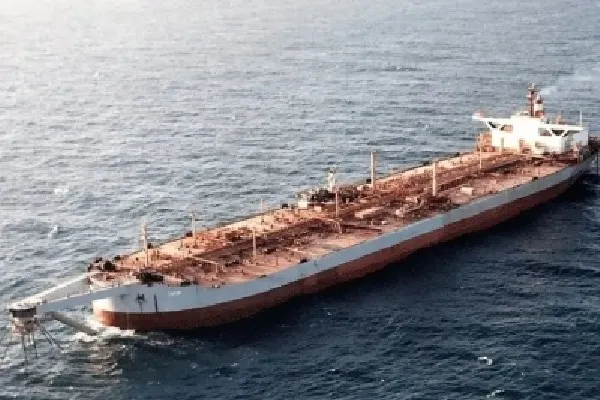
The conflict in the Middle East, which began on February 28, has impeded oil flows through the Strait of Hormuz, with export volumes of crude and refined products currently at less than 10 per cent of pre-conflict levels.
This is forcing operators across the region to shut in or curtail a substantial amount of production.
An average of 20 million barrels per day of crude oil and oil products transited the Strait of Hormuz in 2025, or around 25 per cent of the world’s seaborne oil trade.
Options for oil flows to bypass the Strait of Hormuz are limited, said the IEA.
India hails IEA decision to release emergency oil stocks to rein in prices