AQI spikes to 294 as Delhi's air quality deteriorates; mainly clear skies forecast
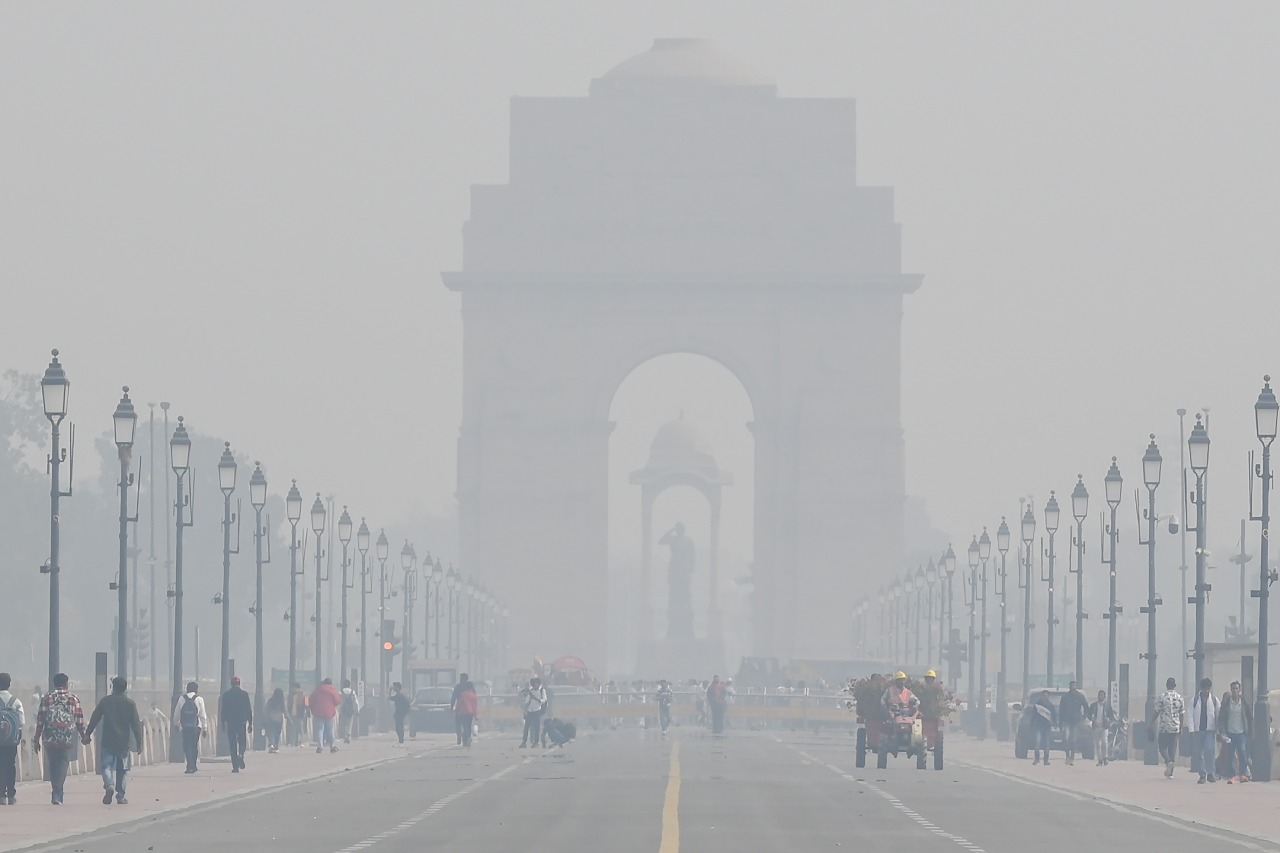
On Tuesday, the air quality in the Delhi-NCR also remained in the ‘poor’ category, with the AQI recorded at 267.
As per CPCB data, several monitoring stations in Delhi reported high AQI levels. Anand Vihar recorded 342, Bawana 312, Burari Crossing 321, Chandni Chowk 365, and DTU 290. Dwarka Sector-8 recorded 280, while IIT Delhi stood at 209. Jawaharlal Nehru Stadium reported 321, Mandir Marg 214, and Mundka 374.
Other areas, including Narela (331), North Campus (320), Patparganj (313), Pusa (262), R.K. Puram (280), and Rohini (345) also remained in the ‘poor’ category. Sonia Vihar recorded 357, while Wazirpur reported the highest AQI at 375.
In the NCR, Noida also witnessed poor air quality. Noida Sector-125 recorded an AQI of 328, Sector-62 stood at 268, Sector-1 at 275, and Sector-116 at 284.
Meanwhile, Delhi Chief Minister Rekha Gupta on February 10 said that pollution control requires sustained, year-round action. She made the remarks while inaugurating six Continuous Ambient Air Quality Monitoring System (CAAQMS) stations to expand real-time tracking of air quality across the capital. She also flagged off 100 ‘Vayu Rakshak’ vehicles for stricter monitoring and enforcement of pollution control norms.
With the addition of the new stations, the total number of CAAQMS in Delhi has increased to 46, making it the largest air quality monitoring network in any city in the country. Of these, 30 stations are operated by the Delhi Pollution Control Committee (DPCC), 10 by the India Meteorological Department/IITM, and six by the CPCB. Additionally, 14 more monitoring stations are planned to be installed soon.
As part of the initiative, 100 ‘Vayu Rakshaks’ have been deployed to work in coordination with the DPCC for on-ground pollution control. In addition, 600 Vayu Rakshaks, along with the Delhi Police, are monitoring violations related to traffic and emissions.
The IMD said maximum temperatures in Delhi on February 11 are likely to range between 24 and 26 degrees Celsius, while minimum temperatures may settle between 10 and 12 degrees Celsius. Similar weather conditions are expected on February 12 and 13, with mainly clear skies and light morning mist. Maximum temperatures are forecast between 23 and 25 degrees Celsius, and minimum temperatures between 9 and 11 degrees Celsius on both days. Winds are expected to blow mainly from the northwest, strengthening in the afternoon and weakening by evening.