


Introduction
Om Shanti Shanti Shanti is the Telugu remake of the Malayalam hit Jaya Jaya Jaya Jaya Hey. Directed by A.R. Sajeev, the film stars director-actor Tarun Bhascker as the lead and Eesha Rebba as the female protagonist. Even after the Malayalam original became widely available on OTT platforms, remaking it in Telugu was a bold move by the makers. The key question is whether this remake offers anything new for Telugu audiences or matches the impact of the original. Let’s find out in this Om Shanti Shanti Shanti Movie Review.
Plot Summary
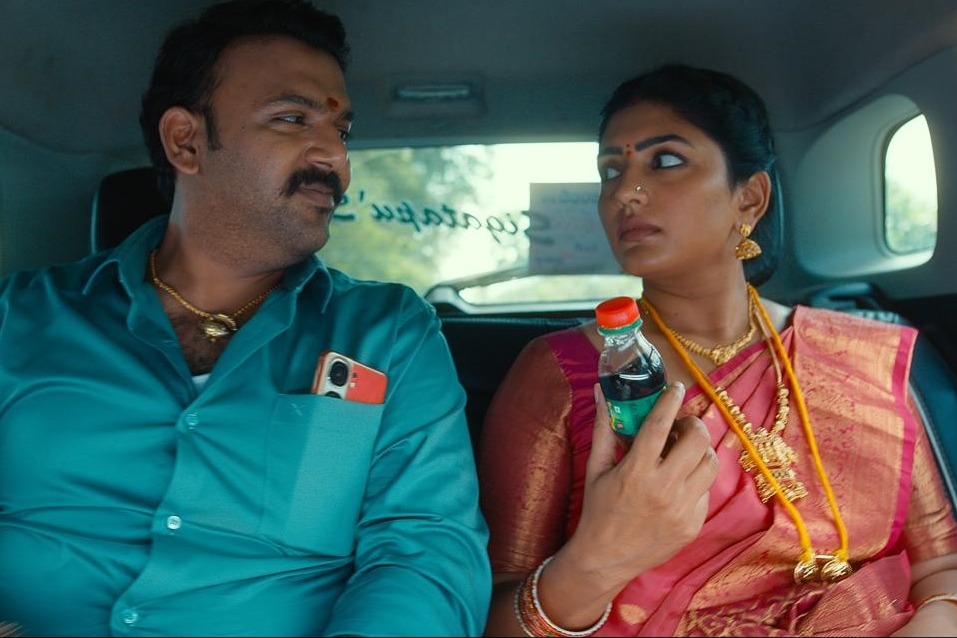
Prashanti (Eesha Rebba) is a woman who believes that girls deserve freedom, equality, and independence both before and after marriage. However, due to her upbringing under strict family control, she is unable to study what she wants or live life on her own terms. Hoping that marriage will bring happiness, she marries Omkar Naidu (Tarun Bhascker).
But her expectations are shattered when Omkar imposes restrictions, believes a wife should only listen to her husband, and confines her to the household. As Prashanti faces emotional and physical abuse, she finally decides to stand up against Omkar and take revenge in a way that leaves him fearful of her presence. What Omkar does next, how their marriage progresses, and whether they stay together or part ways form the rest of the story.
Analysis
With OTT platforms breaking language barriers, Telugu producers have largely stopped remaking films from other languages. In this context, remaking a successful Malayalam film was indeed a risk. Unfortunately, the makers could not recreate the naturalness and engaging tone of the original. When retelling a well-known story, freshness in narration and impactful scenes are essential.
However, the director’s writing lacks novelty. The freshness, humor, and satirical fun that worked so well in the original are missing here. While the first half feels passable and somewhat light-hearted, the second half turns heavy and slow. The soul of the original film is clearly absent. For viewers who have already watched the Malayalam version, this remake feels more like a television serial. Characters that felt organic in the original appear artificial in the Telugu version.
Performances
Tarun Bhascker, as Omkar Naidu, does not seem to have put in enough homework for the role. Although he delivers dialogues fluently in the Godavari dialect, his performance lacks an organic feel. Still, as an actor, he manages to impress in scenes involving negative shades and moments where he is beaten by his wife for comic effect.
The difference between Basil Joseph’s appearance in the original and Tarun’s portrayal in the remake is clearly noticeable. Eesha Rebba gets one of her better roles after a long time. She performs well in action scenes and convincingly portrays a woman who stands up to her husband and strives to become independent in the second half. Her character arc connects emotionally with the audience.
Technical Aspects
Cinematographer Deepak’s visuals are pleasing, especially the childhood portions of the heroine, which are shown with a brown tint to create a visual distinction. Jai Krish’s music is soothing, and his background score helps improve the pacing in parts. The songs do not overpower the narrative, and the lyrics are clearly audible, which works in the film’s favor.
Final Verdict
Known stories can work well if they are presented with added entertainment and engaging narration. While Telugu audiences have accepted such attempts in the past, Om Shanti Shanti Shanti falls short due to a lack of effort in adapting the film without losing the soul of the original. Those who have not watched the Malayalam version may find the film somewhat satisfactory.
However, it does not offer complete satisfaction or a sense of “shanti” in the end. This Om Shanti Shanti Shanti Movie Review concludes that the remake remains strictly average.
‘Om Shanti Shanti Shanti’ Movie Review
Movie Details
Movie Name: Om Shanti Shanti Shantihi
Release Date: 2026-01-30
Cast: Tharun Bhascker, Esha Rebba, Bramhanandham, Brahmaji, Surabhi Prabhavathi, Goparaju Vijay, Sivannarayana (Amrutham Appaji), Bindu Chandramouli, Dheeraj Aathreya, Anshvi.
Director: A R Sajeev
Music: Jay Krish
Banner: S Originals, Movie Verse Studios
Review By: Maduri Madhu
Disclaimer:
This review is based on the reviewer’s individual perspective. Audience opinions may vary.
Trailer