Introduction:
Rural love stories have always found acceptance on the Telugu screen. In recent times, village-based narratives rooted in realism have connected well with audiences. Dandora is a film that falls into this category. The trailer itself made viewers think about its core concept. Released during Christmas, the film raises the question: does Dandora have enough elements to engage the audience? Do the emotions in this rural love story truly touch the heart? Let’s find out in this Dandora Movie Review.
Plot Summary:
In recent years, several love stories addressing caste discrimination have been made, and Dandora joins this list. Set in a Telangana village deeply affected by caste divisions, the story revolves around Shivaji (played by Shivaji), a wealthy man belonging to an upper caste who himself becomes a victim of caste discrimination. Due to certain reasons, he is estranged from his son Vishnu (Nandu). Even after his death, village elders impose conditions stating that his last rites cannot be performed in the cemetery meant for his caste.
Why did caste elders boycott Shivaji, a man from their own upper caste? What is the relationship between Shivaji and Srilatha (Bindu Madhavi)? Who murdered Ravi (Ravikrishna), a man belonging to a lower caste? What consequences followed this murder? And what is the connection of the village sarpanch (Navadeep) to these events? The answers form the rest of the story.
Analysis:
Stories that question society, highlight caste discrimination, and expose social inequalities have been explored extensively in Tamil and Malayalam cinema. In Telugu cinema too, films like Palasa 1978, Love Story, and Court have addressed similar themes. Director Murali Kanth, with Dandora, makes a similar attempt in his debut film, but presents the issue from a different perspective.
Instead of focusing only on the victims of caste discrimination, the film explores the struggles faced by families that uphold such discriminatory practices. It shows how these families also suffer humiliation, emotional pain, and helplessness within society. The director effectively portrays the dominance within upper castes, the inner turmoil of individuals, and their inability to oppose caste elders.
From the opening scene, it is clear that the director is confident about what he wants to convey. The emotional depth in each scene helps the audience stay engaged. However, the second half feels slightly dragged, with certain points being repeated, which tests patience. Tighter execution could have made those moments more impactful. Adding commercial elements to such rooted stories requires a strong screenplay, and this is where the film slightly falters. The emotional intensity of Shivaji’s character could have been explored better. Still, the strengths of certain scenes compensate for the weaknesses elsewhere. The climax and concluding portions stand out as major highlights.
Performances:
The casting works well for the film, with actors fitting naturally into their roles. Each performer delivers convincingly, making it hard to imagine alternatives. Shivaji’s role is different from his earlier characters, though traces of familiar shades appear at times. Bindu Madhavi as Srilatha and Navadeep as the sarpanch deliver solid performances. Other characters leave a moderate impact.
Mark K Robin’s background score enhances the emotional strength of the scenes, while the cinematography effectively captures the mood of the story. Director Murali Kanth deserves appreciation for honestly presenting the subject he chose.
Final Verdict:
Dandora is a sincere and honest attempt to convey an important social message. Audiences who enjoy rural love stories and rooted narratives can watch Dandora without hesitation.
'Dandora' Movie Review
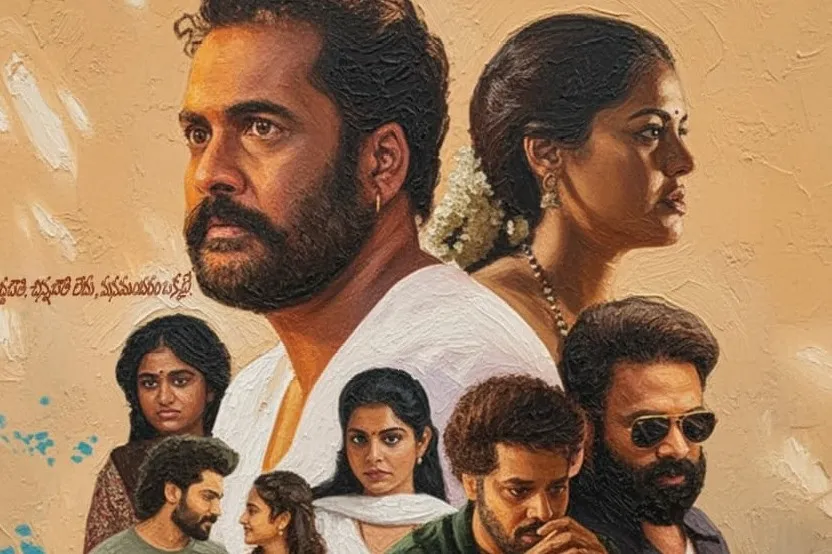
Movie Details
Movie Name: Dandora
Release Date: 2025-12-25
Cast: Shivaji, Navadeep, Nandu, Ravikrishna, Manika Chikkala, Mounika Reddy, Bindu Madhavi, Radhya, Aditi Bhavaraju
Director: Muralikanth
Music: Mark K. Robin
Banner: Loukya Entertainments
Review By: Maduri Madhu
Disclaimer:
This review is based on the reviewer’s individual perspective. Audience opinions may vary.