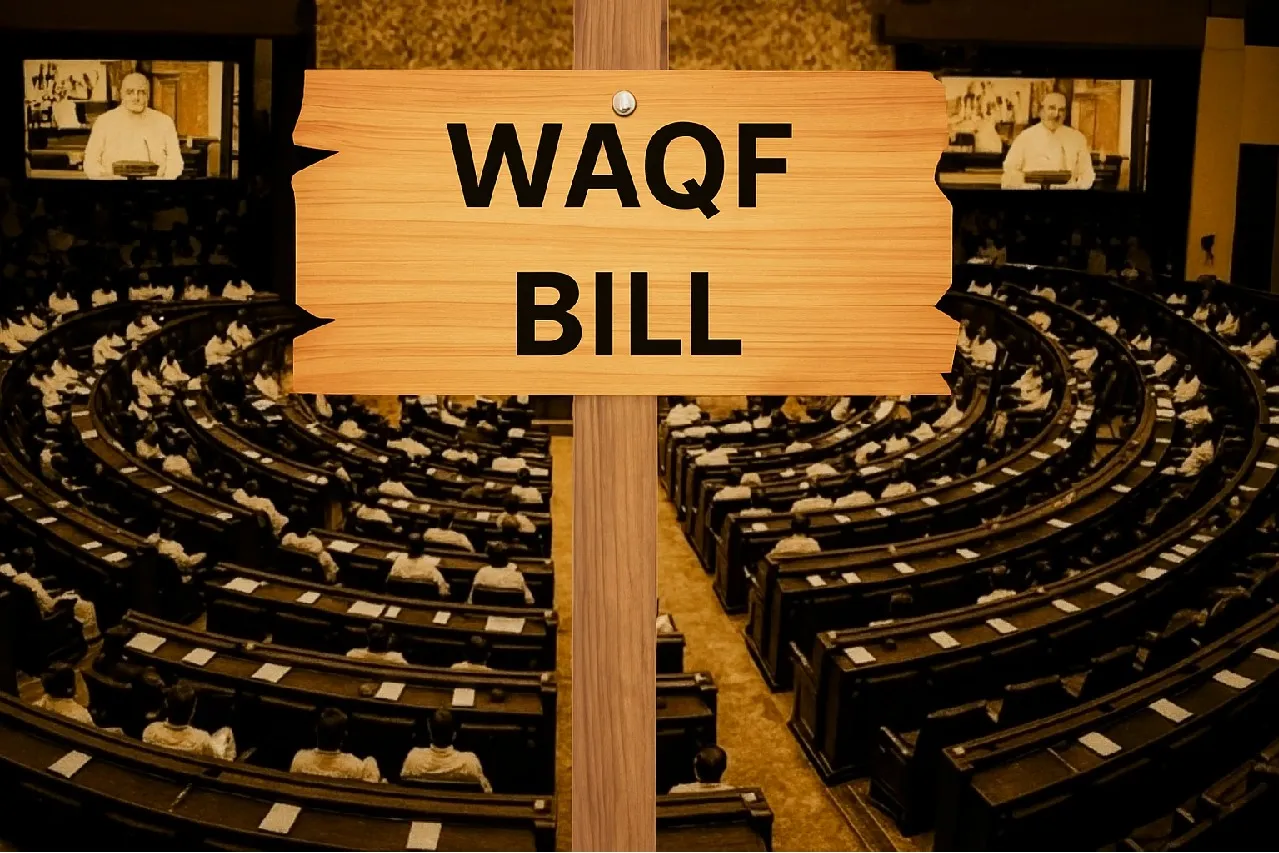
Understanding Waqf: The Basics
Waqf (pronounced "wakf") refers to properties donated by Muslims for religious or charitable purposes according to Islamic law. These could be lands, buildings, or other assets dedicated to supporting mosques, schools, hospitals, cemeteries, or charitable activities.
- The concept has several important characteristics:
- Once property is declared as waqf, it's considered permanently dedicated to Allah
- The property becomes inalienable, meaning it cannot be sold, transferred, or inherited
- Such properties are managed by administrators called "mutawallis"
- India has approximately 8.7 lakh (870,000) registered waqf properties, considered the largest waqf holding in the world
Key Changes in the New Law
The newly amended law introduces several significant changes to how waqf properties are managed:
Management and Composition Changes
- Non-Muslim Representation: Two non-Muslim members will now be included in Central and State Waqf Boards
- Women's Representation: The law requires at least two Muslim women on waqf boards
- Tribunal Structure: Waqf Tribunals will no longer require Muslim law experts
Property Ownership and Disputes
- Government Property Protection: Any government property identified as waqf will no longer be considered waqf
- Proof Requirements: Waqf boards must now provide valid documents to claim a property as waqf
- District Collector Authority: District Collectors, not Waqf Boards, will now determine ownership in disputed cases
- Removal of "Waqf by User": Land cannot be considered waqf simply because it has been used as such over time
Appeals and Legal Process
- Expanded Appeal Rights: The new law makes it easier to challenge Waqf Tribunal decisions in High Courts within 90 days
- Centralized Registration: All waqf properties must be registered on a central digital portal within six months
Why Supporters Say It's Needed
The government and supporters of the bill have presented several arguments in its favor:
Prime Minister Narendra Modi called the law a "watershed moment" that will "boost transparency and safeguard people's rights". Home Minister Amit Shah has claimed the amendments will help identify individuals who lease waqf properties for personal profit.
Other stated benefits include:
- Improved transparency and accountability in waqf property management
- Protection against illegal claims on government and private properties
- Better utilization of waqf resources for Muslim community development
- Special provisions for widows, divorced women, and orphans
- Reduction in corruption and mismanagement of valuable community resources
Why Critics Are Concerned
Opposition parties and many Muslim organizations have voiced serious concerns about the new law:
Congress party leader Sonia Gandhi characterized it as "a blatant attack on the constitution," suggesting it is part of the BJP's strategy to maintain societal division. The All India Muslim Personal Law Board called it "a blatant violation of the constitutional rights of Muslim citizens".
Main criticisms include:
- The bill could erode the rights of the Muslim minority
- Including non-Muslims on Waqf Boards interferes with religious autonomy
- The government could gain excessive control over Muslim properties
- The law might lead to the confiscation of historic mosques and significant sites
- The five-year practicing Muslim requirement creates arbitrary distinctions
Political Context and Next Steps
The bill passed with 128 votes in favor and 95 against in the Rajya Sabha after being approved by the Lok Sabha. President Droupadi Murmu gave her approval on April 5, 2025, making it law.
Several opposition parties, including Congress, have announced they will challenge the constitutionality of the law in the Supreme Court. Congress leader Jairam Ramesh announced that the party would soon file a legal challenge.
Meanwhile, the US Commission on International Religious Freedom has noted in its recent annual report that conditions for religious freedom in India continue to decline, criticizing the Modi administration for rhetoric against Muslims and other minorities.
The new Waqf law represents a significant change in how Muslim religious endowments are managed in India. While the government frames it as a modernization effort to improve transparency and efficiency, critics see it as an encroachment on minority rights and religious autonomy. As implementation begins and legal challenges move forward, the debate around this law will likely continue to feature prominently in India's political landscape.