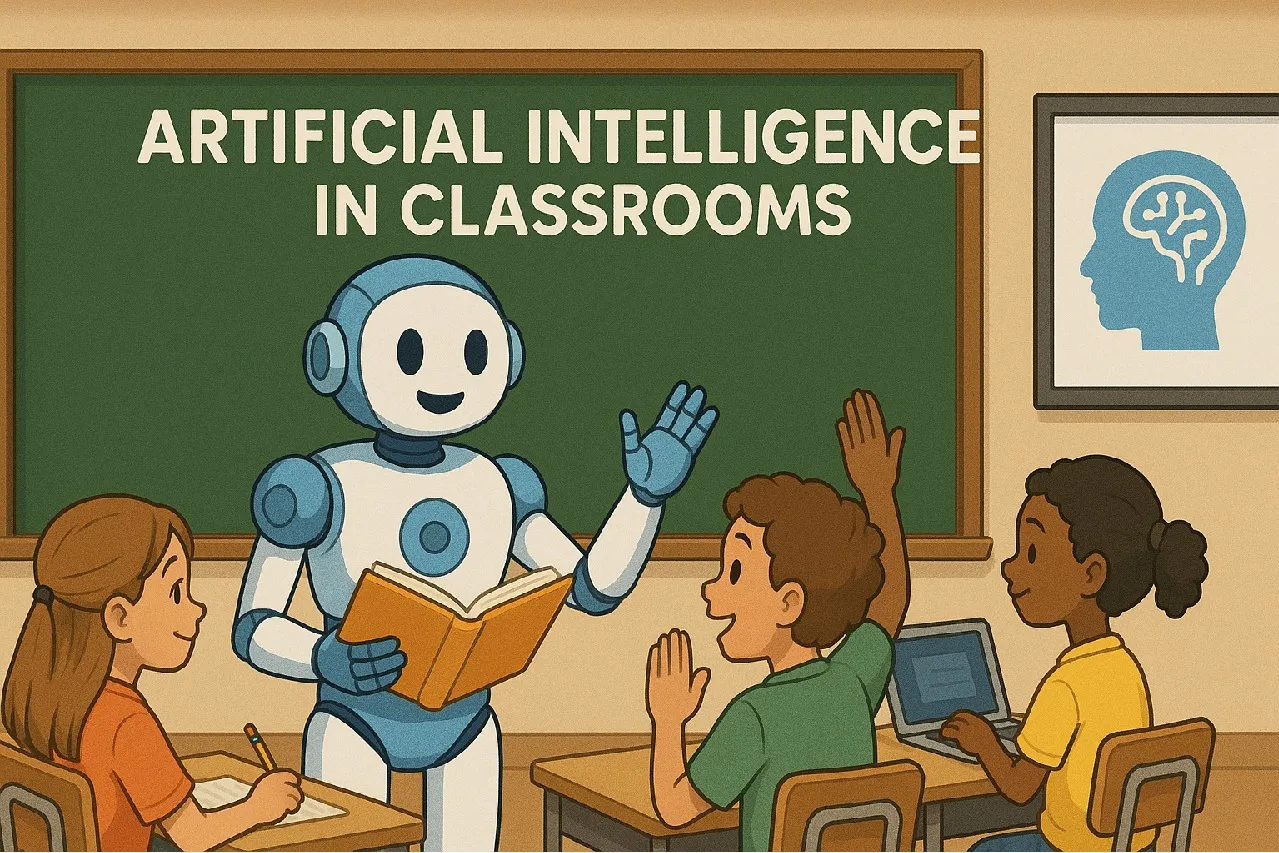
The inclusion of Artificial Intelligence (AI) in school curricula is becoming a global trend, reflecting its growing importance in shaping the future. AI has the potential to revolutionize education by offering personalized learning experiences, automating administrative tasks, and creating innovative teaching methods. Adaptive learning platforms, for instance, adjust content to suit individual students' needs, allowing them to learn at their own pace. Additionally, AI-powered tools like virtual reality (VR) and augmented reality (AR) provide immersive educational experiences that make complex topics engaging and interactive. These advancements aim to equip students with critical skills for a technology-driven world.
Globally, countries are taking steps to integrate AI into education systems. Some nations have introduced AI-focused modules in secondary school syllabi, covering topics such as ethical AI practices, machine learning basics, and its societal impact. Programs like "Responsible AI for Youth" are designed to promote technological literacy while fostering responsible use of AI tools.
Furthermore, interdisciplinary approaches are being adopted to incorporate AI concepts into subjects like science, mathematics, and social studies, ensuring students gain a holistic understanding of its applications. These initiatives reflect the growing recognition of AI as a vital skill set for the future workforce.
However, the integration of AI into education also comes with challenges. Concerns about data privacy, algorithmic bias, and unequal access to technology remain significant barriers. Over-reliance on AI tools could potentially hinder students' creativity and critical thinking skills, while the digital divide risks exacerbating inequalities between privileged and underprivileged learners.
Ethical considerations surrounding the displacement of traditional teaching roles and the need for ongoing training for educators further complicate the process. To address these issues, schools must adopt a balanced approach that prioritizes fairness, accessibility, and ethical practices while leveraging AI’s potential to enhance education effectively.
Artificial Intelligence in Classrooms—Revolution or Risk?