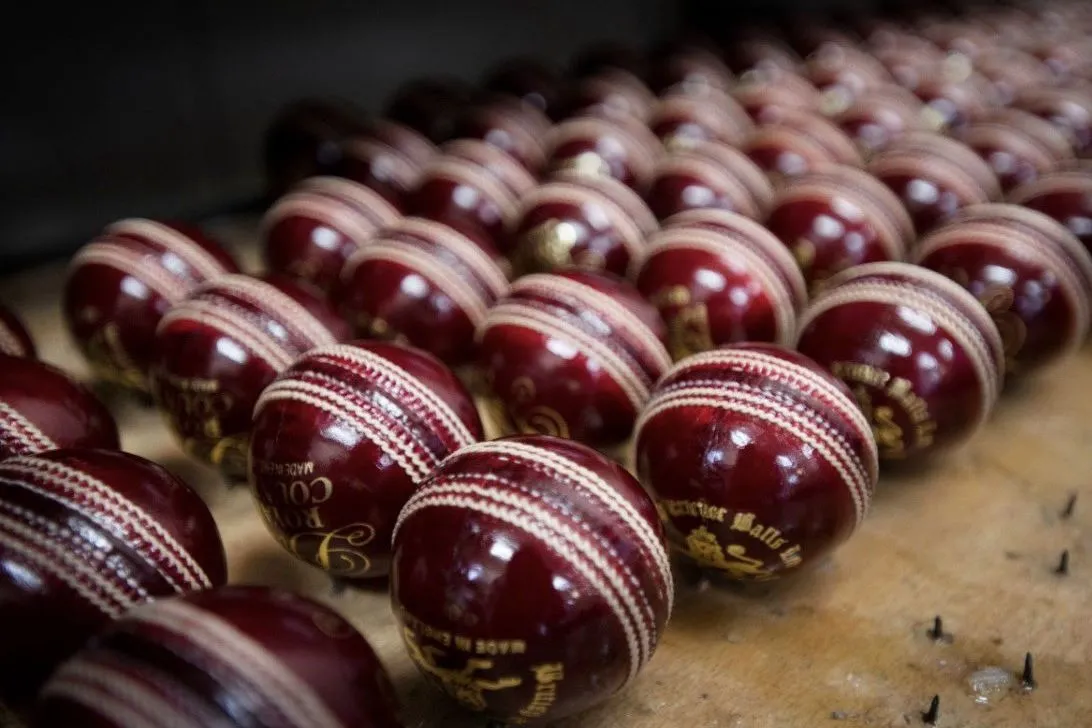
New Delhi, March 19 : The upcoming English cricket season may face an unusual challenge due to a shortage of Dukes balls, which could affect preparations for both domestic and international matches. Delays in Gulf shipping routes, caused by the ongoing US-Israel conflict with Iran, have slowed the transportation of cricket balls from South Asia to the UK, posing logistical hurdles for the organisers.
The English season is set to start on April 3, but officials report that stock levels of Dukes balls, used in home Tests and the County Championship involving all 18 first-class counties, are already reduced to about half the usual supply. With limited balls available, teams may need to ration their allocations at the beginning of the season.
Dilip Jajodia, owner of British Cricket Balls Ltd, the manufacturer of Dukes balls, highlighted the impact of the Gulf conflict on freight and logistics.
“We’ve got a major crisis right now with this bloody Gulf War nonsense. We’ve got to ration clubs by giving them 50 per cent of their balls at the start of the season, and then manage the problem. We’ve got plenty of stuff in the factories in the subcontinent ready to go, but the airlines are not taking the freight, because there’s a logjam,” he told Daily Mail.
Jajodia further explained that the conflict has caused a sharp increase in transportation costs, as safety concerns and disrupted flight routes through the Middle East have driven up freight charges.
“The rates have gone up, too. A box of 120 cricket balls would be charged normally by airlines at about $5 a kilo. The last quote I got was $15 a kilo. Most of the stuff goes through the Middle East, but if you’ve suddenly got rockets flying around, you’ve got a major problem,” he added.
Despite the serious nature of the situation, Jajodia struck a humorous note, saying, “If only I had known this was going to happen, I’d have had a word with Donald Trump. Please don’t attack anybody before the cricket season starts!”
An official from the England and Wales Cricket Board (ECB) acknowledged that the supply disruption served as a wake-up call for the domestic industry.
The production of Dukes' balls is a complex, multi-step process rather than a simple factory task. The leather starts as British cowhide, tanned and treated in Chesterfield, before being shipped to South Asia, where craftsmen hand-stitch each ball with precision. Once finished, the balls are sent back to the UK for final preparation and distribution before the professional season.
With the first round of matches just weeks away, English cricket authorities will have to navigate these supply constraints carefully to ensure the season proceeds smoothly.
English cricket faces a potential shortfall of Dukes balls amid Gulf shipping disruption