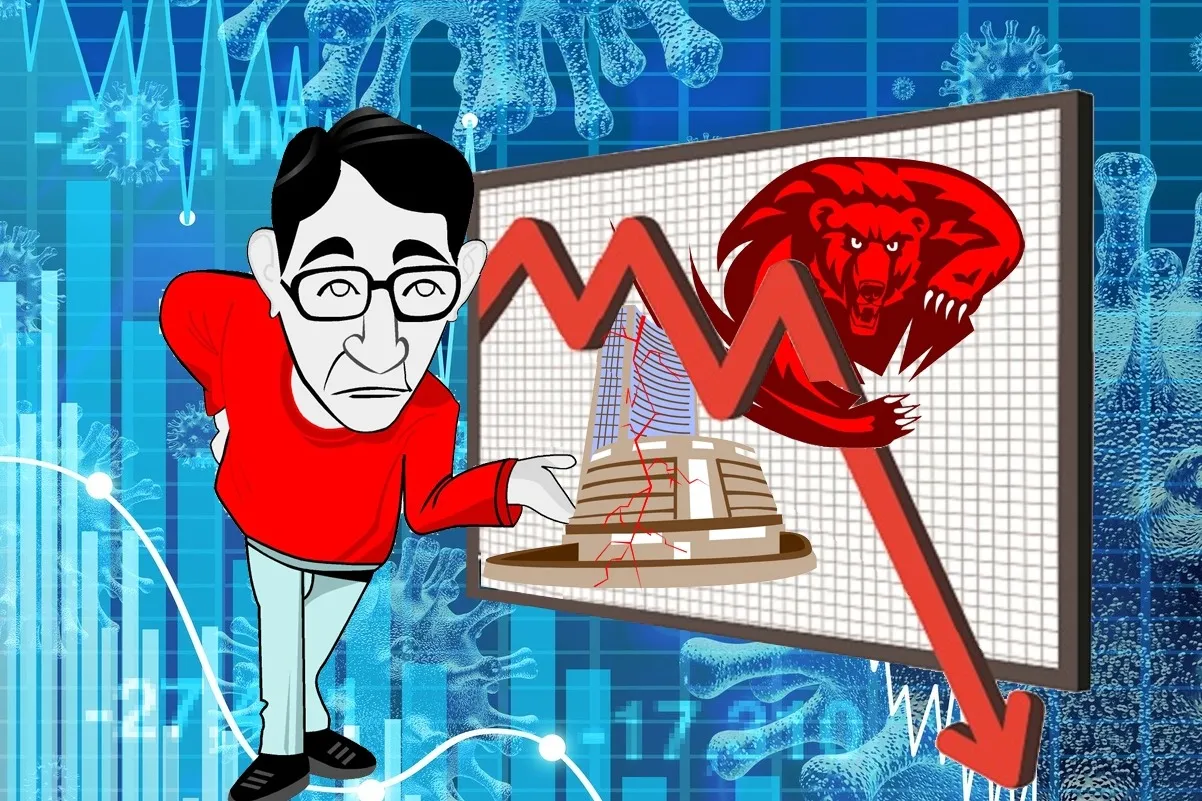
Mumbai, Feb 24 : India’s benchmark equity indices recorded their worst session in four days on Tuesday, dragged down by heavy selling in banking, infrastructure and IT stocks amid fresh concerns over US trade policy.
The 50-share Nifty ended 1.12 per cent, or 288.35 points, lower at 25,424.65. The Sensex closed 1.28 per cent, or 1,068.74 points, down at 82,225.92.
Commenting on Nifty technical outlook, an analyst said that the 25,500–25,600 zone remains a crucial resistance band; a decisive breakout above this area could trigger short covering toward 25,700, while a sustained move below 25,300 may intensify downside momentum toward 25,200 or lower.
Market sentiment remained weak after US President Donald Trump threatened to impose renewed tariffs, raising fears of fresh trade tensions.
Over the weekend, Trump announced 15 per cent new temporary global tariffs and warned countries against stepping back from recently negotiated trade deals.
This came even as the US Supreme Court ruled that Trump’s earlier tariffs were unlawful. The developments unsettled global markets and weighed on investor confidence in India as well.
Among sectors, IT stocks were the worst hit. The Nifty IT index fell sharply by 4.74 per cent to close at 30,053.50 after touching a two-year low during the day.
Weak cues from global markets and concerns over US tech spending pressured the sector.
The Nifty Realty index was the second-biggest loser, declining 2.54 per cent. However, the Nifty Metal index managed to outperform the broader market.
Broader markets showed some resilience compared to the benchmarks. The Nifty MidCap index ended 0.32 per cent lower, while the Nifty SmallCap index fell 0.55 per cent.
Meanwhile, Christopher Wood, Global Head of Equity Strategy at Jefferies, said that the artificial intelligence-driven trade, which has dominated stock markets, especially in the United States, could come under scrutiny this year.
His comments added to concerns that high valuations in AI-related stocks may face pressure if global growth slows or trade tensions escalate.
Analysts said that the sharp fall in benchmark indices reflects rising global uncertainties and cautious investor sentiment, with markets likely to remain volatile in the near term.
“Escalating global macro uncertainty -- particularly around US trade and tariff developments -- along with persistent concerns over AI-led disruption in the global technology space, weighed on overall risk appetite and prompted defensive positioning across most sectors,” an expert stated.
Sensex, Nifty slip over 1 pc as IT stocks tumble on fresh US tariff concerns