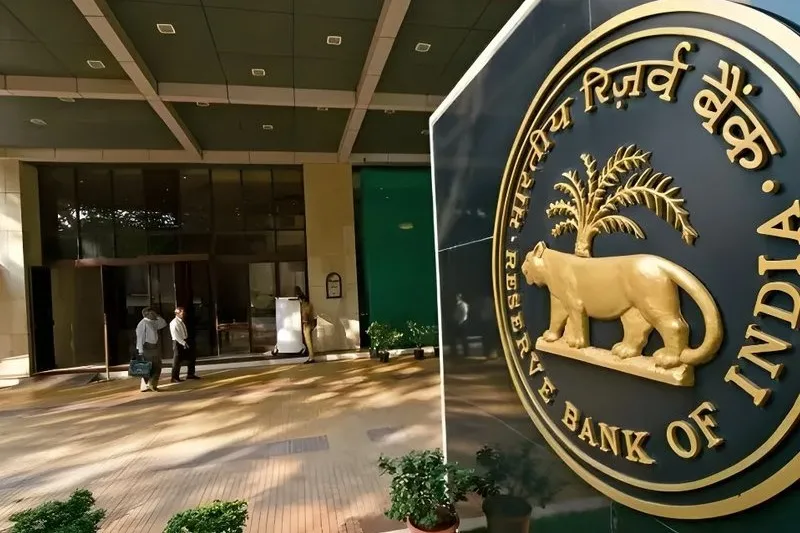
Mumbai, Dec 23 : The Reserve Bank of India (RBI) on Tuesday announced a fresh set of steps to inject a large amount of money into the banking system to ease tight liquidity conditions.
Through a mix of open market operations (OMOs) and a foreign exchange swap, the central bank will add nearly Rs 3 trillion to the system over the coming weeks.
As part of the plan, the RBI will buy government bonds worth Rs 2 trillion through OMOs.
These purchases will be done in four equal tranches of Rs 50,000 crore each on December 29, January 5, January 12 and January 22.
In addition, the central bank will conduct a three-year USD/INR buy-sell swap of $10 billion on January 13, which will also help release rupee liquidity into the banking system.
Market participants said such a large injection was widely expected, even before the RBI stepped in to sell dollars in the foreign exchange market last week.
The main reason for the liquidity squeeze is the RBI’s recent intervention in the currency market. Last week, the central bank sold dollars aggressively to prevent a sharp fall in the rupee, which had weakened due to uncertainty around a possible trade deal with the US and continued foreign portfolio investor outflows from Indian equity and debt markets.
Market participants believe the RBI’s latest move is timely and sufficient for now. They said any further action will depend on how liquidity conditions evolve and whether the central bank needs to intervene again in the foreign exchange market. If pressures continue, more steps could be taken in the fourth quarter.
In the recent monetary policy meeting, RBI Governor Sanjay Malhotra had reassured markets that the central bank would ensure adequate liquidity in the banking system.
He had said this support would continue even without formally targeting a surplus level of around 1 per cent of net demand and time liabilities.
So far in December, the RBI has already injected about Rs 1.45 trillion of durable liquidity through a mix of bond purchases and forex swaps.
Bond market participants said that if OMOs are conducted in more liquid government securities, it would improve participation and help better price discovery.
When illiquid bonds are used, banks often bid at higher levels to lock in gains, which reduces the effectiveness of such operations.
Earlier in the year, the RBI had carried out even larger liquidity support. In the first half of the current calendar year, it injected around Rs 9.5 trillion into the banking system.
This helped move liquidity conditions from a prolonged deficit since mid-December 2024 to a surplus by the end of March 2025. Most of this support came through open market purchases, along with long-term repo operations and USD/INR buy-sell swaps.
RBI announces Rs 3 trillion liquidity boost through OMOs, forex swap