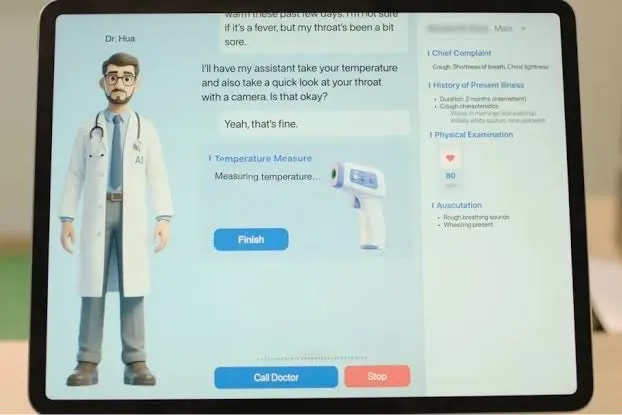
In a groundbreaking step for medical technology, Saudi Arabia has inaugurated the world’s first clinic that provides healthcare services primarily through artificial intelligence (AI). This experimental AI clinic, launched last month in the Eastern Province city of Al-Ahsa, is being heralded as a major milestone in medical history.
The initiative is a collaboration between Chinese medical technology firm Xinyi AI and Saudi Arabia’s Almoosa Health Group, according to a report in Leaders magazine. The clinic enables patients to initially consult an AI doctor, with human doctors stepping in if further medical intervention is required.
Patients visiting the clinic first interact with an AI doctor named "Dr Hua" via a tablet computer. They input their symptoms and health concerns into the device. The AI doctor then conducts a virtual consultation, asking follow-up questions much like a human physician. With assistance from human staff, it also collects and analyzes patient data such as body temperature and medical imagery.
After the consultation process, Dr Hua prepares a treatment plan. However, this plan is reviewed and approved by a human doctor before it is administered to the patient. In cases where the AI system cannot recognize or manage emergency conditions, human doctors remain on standby to take over. Xinyi AI describes these human professionals as “safety gatekeepers” who oversee the diagnostic and treatment process.
Shanghai-based Xinyi AI stated, “The AI Clinic represents a pioneering medical service model. AI doctors here independently manage all activities—from questioning patients to recommending treatments—while human doctors function as safety supervisors who review diagnoses and treatment outcomes.”
Current Services and Future Plans
At present, the AI doctor is equipped to consult on respiratory conditions only. This includes approximately 30 ailments such as asthma and pharyngitis. Xinyi AI plans to expand the AI system's database to cover 50 diseases, including gastrointestinal and dermatological disorders.
The diagnostic data gathered during this pilot program will be submitted to Saudi authorities, with full approval expected within the next 18 months. In preliminary trials prior to the current launch, Xinyi AI reported an error rate of only 0.3%.
Commenting on the technological advancement, Xinyi AI CEO Zhang Xiaodian said, “In the past, AI was merely a tool to assist human doctors. But now we are taking the final step—developing AI that can directly diagnose and treat patients.”