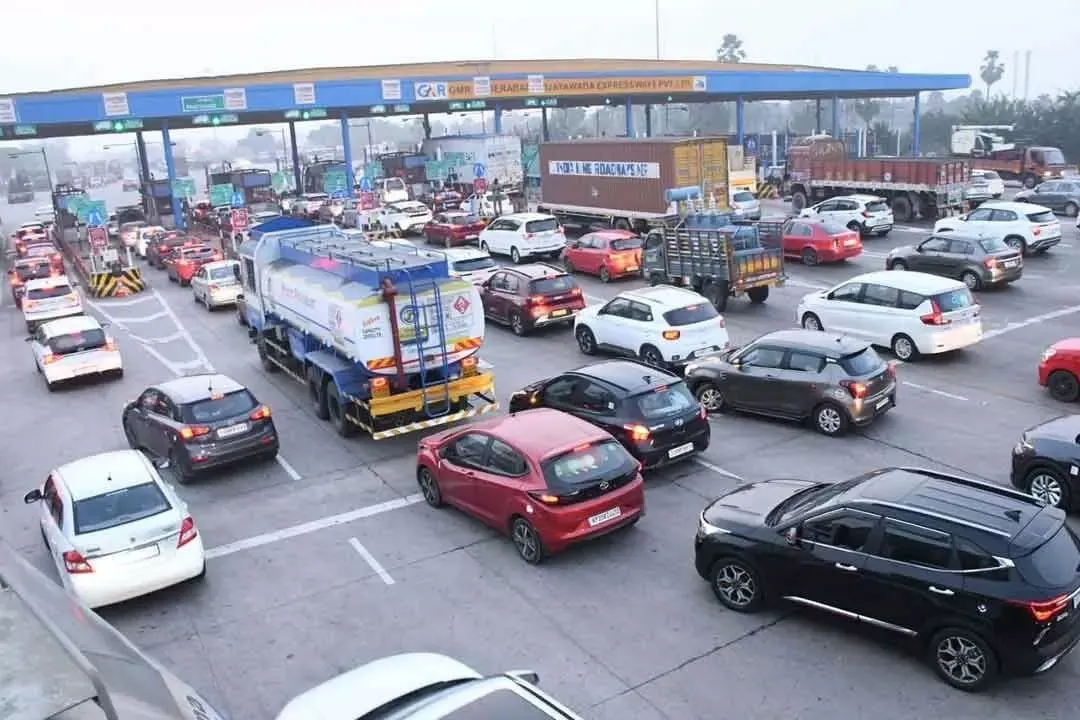
Motorists using toll roads across India have received a major reprieve as the Central Government is introducing a new system under which toll charges will be levied based solely on the actual distance travelled. This marks a departure from the current practice where tolls are charged regardless of how far a vehicle travels on a toll road.
To address long-standing issues faced at toll gates, the Centre is set to implement a Global Navigation Satellite System (GNSS)-based tolling mechanism starting May 1. Initially, this new system will be applicable only to commercial vehicles. However, from 2027 onwards, it will be extended to private vehicles as well. Until then, the existing toll gate system will continue to function, as confirmed by the central authorities.
Unlike the GPS technology commonly used in smartphones, the GNSS system is a far more advanced mechanism. GPS is a single satellite navigation system, whereas GNSS integrates multiple satellite constellations from various countries. These include Russia’s GLONASS, Europe’s Galileo, China’s BeiDou, and India’s own GAGAN and NAVIC systems. The GNSS model connects to these different satellite systems simultaneously, thereby enabling extremely precise location tracking and navigation capabilities.
Once operational, the system will accurately record the distance travelled by a vehicle on toll roads. To facilitate this, vehicles liable for toll—such as buses, lorries, trucks, and cars—must be equipped with onboard devices known as On-Board Units (OBUs). These devices connect to satellites and automatically register vehicle movement. Based on this data, the corresponding toll amount will be deducted from the vehicle owner’s account.