
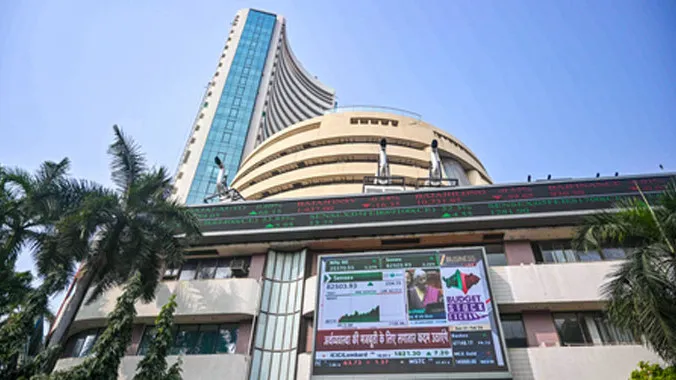
Mumbai, Nov 16 : India's equity headline index Sensex may hit the 95,000 mark by December 2027 in its base-case scenario as analysts see scope for a re-rating of the domestic markets, supported by strong economic growth, resilient corporate earnings and a stable policy environment, according to a report.
Analysts' target at global brokerage Morgan Stanley -- which carries a 50 per cent probability -- implies an upside of roughly 16 per cent from last session's closing of 81,592.45 and values the benchmark index at a trailing price-to-earnings (P/E) multiple of 23 times, above its 25-year average of 22 times.
"The premium over the historical average reflects greater confidence in India's medium-term growth cycle, lower market beta, a higher terminal growth rate and a predictable policy environment," according to the brokerage.
The brokerage's bull-case scenario, assigned a 30 per cent probability, envisages the Sensex reaching 105,000 by December 2027, while its bear-case scenario, with a 20 per cent probability, places the index at 68,000.
Morgan Stanley's base-case assumptions include robust domestic growth, steady global economic conditions, a resolution of the India-US trade agreement and Brent crude oil prices remaining below $100 per barrel.
The brokerage also factors in an additional 75 basis points of policy rate increases, a supportive liquidity backdrop, sustained retail participation and no significant surge in primary-market issuances that could absorb market liquidity.
Under these assumptions, the brokerage expects Sensex earnings to grow at a compound annual rate of 18.1 per cent through fiscal 2029.
From an investment perspective, the brokerage prefers domestic cyclical sectors over defensives and export-oriented businesses.
In addition, Morgan Stanley remains underweight on energy, materials, utilities and healthcare.
It added that information technology services could emerge as an unexpected beneficiary as global companies increasingly look to Indian firms for artificial intelligence-related applications and solutions.
The brokerage also argued that structural changes in the economy, including lower oil intensity in GDP, rising services exports and ongoing fiscal consolidation, could reduce India's saving-investment imbalance and support structurally lower real interest rates.
The combination of favourable fundamentals, improving market sentiment and relatively light foreign investor positioning creates a supportive backdrop for Indian equities over the next few years, according to the report.
Analysts' target at global brokerage Morgan Stanley -- which carries a 50 per cent probability -- implies an upside of roughly 16 per cent from last session's closing of 81,592.45 and values the benchmark index at a trailing price-to-earnings (P/E) multiple of 23 times, above its 25-year average of 22 times.
"The premium over the historical average reflects greater confidence in India's medium-term growth cycle, lower market beta, a higher terminal growth rate and a predictable policy environment," according to the brokerage.
The brokerage's bull-case scenario, assigned a 30 per cent probability, envisages the Sensex reaching 105,000 by December 2027, while its bear-case scenario, with a 20 per cent probability, places the index at 68,000.
Morgan Stanley's base-case assumptions include robust domestic growth, steady global economic conditions, a resolution of the India-US trade agreement and Brent crude oil prices remaining below $100 per barrel.
The brokerage also factors in an additional 75 basis points of policy rate increases, a supportive liquidity backdrop, sustained retail participation and no significant surge in primary-market issuances that could absorb market liquidity.
Under these assumptions, the brokerage expects Sensex earnings to grow at a compound annual rate of 18.1 per cent through fiscal 2029.
From an investment perspective, the brokerage prefers domestic cyclical sectors over defensives and export-oriented businesses.
In addition, Morgan Stanley remains underweight on energy, materials, utilities and healthcare.
It added that information technology services could emerge as an unexpected beneficiary as global companies increasingly look to Indian firms for artificial intelligence-related applications and solutions.
The brokerage also argued that structural changes in the economy, including lower oil intensity in GDP, rising services exports and ongoing fiscal consolidation, could reduce India's saving-investment imbalance and support structurally lower real interest rates.
The combination of favourable fundamentals, improving market sentiment and relatively light foreign investor positioning creates a supportive backdrop for Indian equities over the next few years, according to the report.


