20 rebel Trinamool MPs propel NCPI from fringe outfit to national player overnight
The post on the Facebook handle of the Nationalist Citizens Party of India (NCPI), titled “West Bengal Lok Sabha seat – Party-wise breakdown”, shows it with 20 members in the Lower House of Parliament. The ruling Bharatiya Janata Party (BJP) has 12, and the state’s principal Opposition Trinamool Congress (TMC) has eight, with Congress having a single member and one seat (Basirhat) vacant after the death of the sitting member.
Incidentally, despite its modest beginnings and poor electoral performance in the 2023 Tripura Assembly poll, the NCPI has recently gained prominence – on Sunday, to be precise – after 20 rebel Trinamool MPs merged with it, catapulting it to the national stage.
The dramatic turn of events has the potential to make NCPI the fifth-largest party in the Lok Sabha if approved by the Speaker. The party, registered in January 2023, is currently listed with the Election Commission of India as a “Registered Unrecognised Political Party (RUPP)”.
It is thus a legally registered party but does not enjoy recognition as a state or national party. Therefore, it does not enjoy reserved election symbols, lacks privileges such as free airtime on state media or subsidised campaign facilities. Recognition would require consistent electoral performance and meeting prescribed vote-share or seat thresholds in state or national elections.
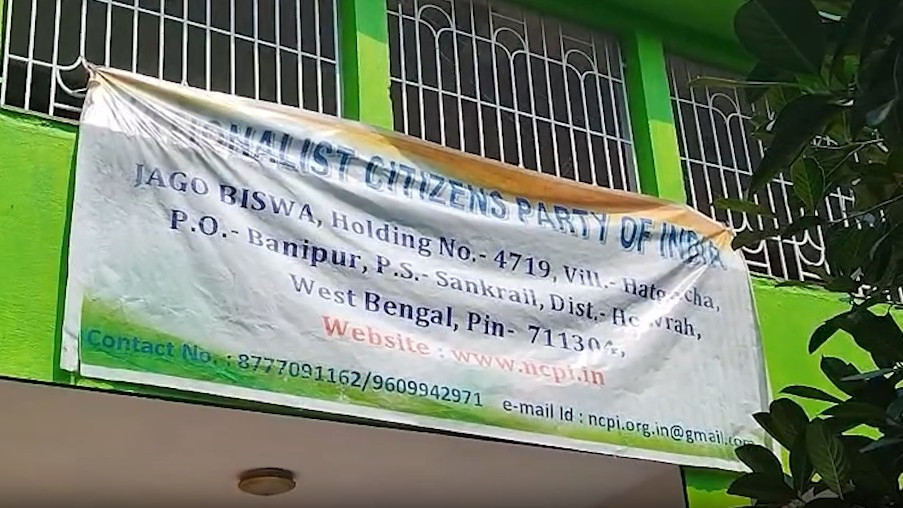
Financially, available records show donations totalling Rs 1.13 lakh, underscoring its limited financial base. Reports suggest it is registered at an address in Bankra town of Howrah district, West Bengal. The party is said to have been involved in certain social activities in Tripura and had reportedly contested a few seats in the 2023 Assembly elections, but failed to make any significant electoral impact.
In its electoral debut, the NCPI fielded candidates in seven Assembly constituencies in Tripura. However, four of its nominations were reportedly rejected on technical grounds. In the Chawamanu Assembly constituency, the party's candidate, Barjeda Tripura, secured just 536 votes, accounting for less than 1.4 per cent of the total valid votes polled.
In the Kailashahar seat, the NCPI candidate got even less, 286 votes. Altogether, the party's three candidates secured fewer than 2,000 votes, indicating a limited electoral presence and support base on the ground. Party president Uttiya Kundu is said to have remained politically active and is reportedly known to have close links with several political leaders.
Shewly Kundu, the party’s treasurer, is also linked to social work organisations and private enterprises registered at the same address in West Bengal. The Kundu couple’s stewardship reflects the personalised nature of small-party politics in India. Among the other names that have appeared in reports as NCPI leaders is Shantanu Dey, who, in media interactions, outlined the party's initial focus on advocating for deprived tribal communities in the areas governed by Tripura's Autonomous District Council.
The move by the rebel Trinamool MPs has now transformed the party from obscurity into a potential player amidst West Bengal’s political crisis. The action was undertaken apparently to bypass anti-defection laws and align themselves with the Bharatiya Janata Party (BJP)-led National Democratic Alliance (NDA).
While the NCPI had no significant electoral impact or support earlier, the influx of sitting TMC MPs has given it sudden visibility and leverage in national politics. It has to be seen if the NCPI consolidates its new parliamentary base and translates it into electoral success. Otherwise, its recognition status with the Election Commission will remain unchanged.