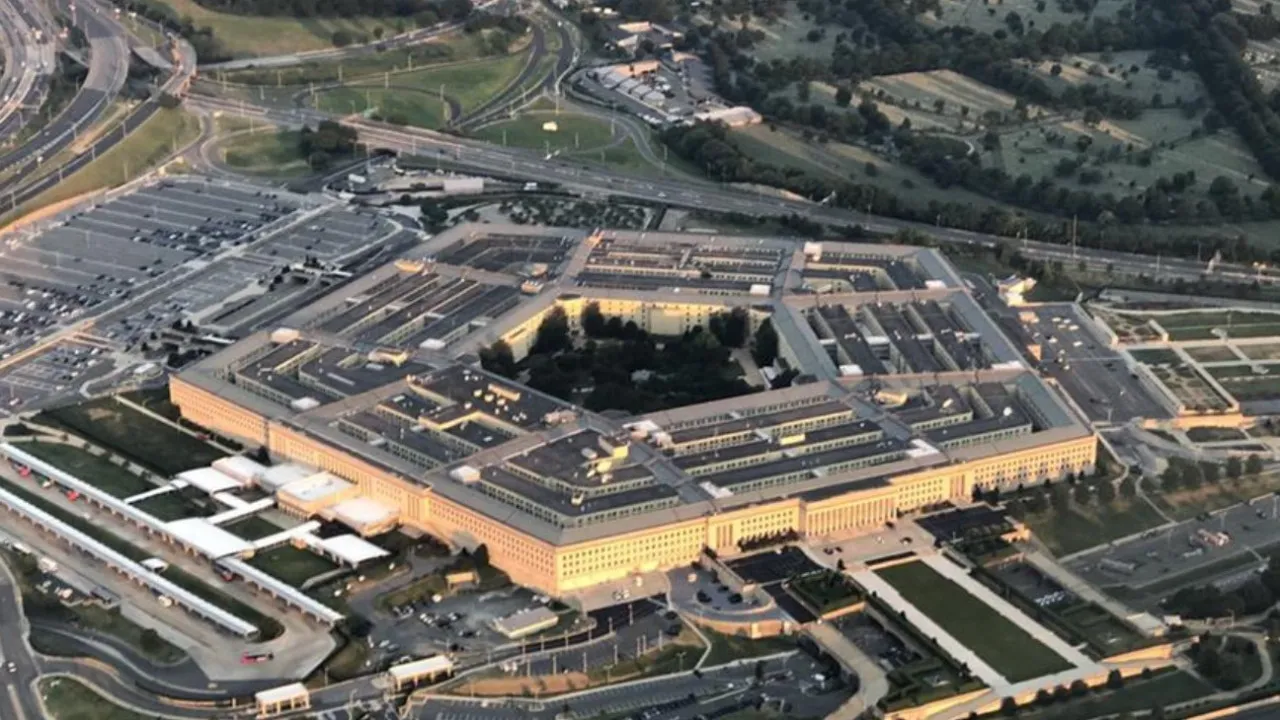
Washington, May 13 : Pentagon leaders refused to publicly disclose detailed battle damage assessments from the ongoing Iran conflict.
The issue became one of the sharpest points of confrontation during a Senate Appropriations Subcommittee on Defence hearing on President Donald Trump’s proposed $1.5 trillion defence budget, as lawmakers pressed Secretary of War Pete Hegseth and Joint Chiefs Chairman General Dan Caine for specifics on Iran’s remaining missile, drone and naval capabilities.
Democratic senators repeatedly questioned whether the administration’s public claims about crippling Iran’s military infrastructure matched classified intelligence assessments.
Senator Christopher Murphy cited public reports suggesting Iran still retained as much as 70 per cent of its missile and drone capabilities despite weeks of US operations.
Murphy directly asked Caine whether he disputed those intelligence estimates.
“With deep respect for the question, I’m not going to comment in this forum on what may or may not have been opined on by the IC,” Caine responded, referring to the intelligence community.
“I’m not going answer what you guys in the Congress considers decision criteria around continued funding or not,” the general added later.
Murphy argued lawmakers could not properly evaluate the success of the campaign without transparent assessments.
“How do we assess whether we should continue funding this if you can’t state to us what the assessments are?” he asked.
Hegseth also declined to discuss specific battlefield assessments in public. “This is not a classified setting. We don’t talk about those things,” the defence secretary said.
At another point, Hegseth accused senators of relying on leaked intelligence reports. “Why would I validate what people may leak or not leak?” he asked.
The tense exchange followed broader questioning from lawmakers about whether the administration had underestimated Iran’s ability to continue military operations, particularly its use of drones and asymmetric naval tactics in the Strait of Hormuz.
Senator Brian Schatz questioned whether the Pentagon had fully anticipated Iran’s retaliation capabilities after US strikes.
“There are some data points that seem to indicate that we did not see all of this coming,” Schatz said while pointing to emergency troop movements, redeployment of missile defence systems and damage to US military facilities across the region.
Hegseth rejected the suggestion that the Pentagon had been caught off guard. “I can reassure you that it was all accounted for,” he said.
The administration has consistently maintained that the campaign’s primary objective is preventing Iran from obtaining a nuclear weapon. Officials have also highlighted the destruction of large parts of Iran’s navy, missile launch systems and defence industrial infrastructure.
Pentagon refuses to publicly disclose Iran damage details
Advertisement