From Namoh '108' Lotus, Buddha statue to Banarasi Silk: PM Modi presents cultural treasures to Vietnamese Prez To Lam
New Delhi, May 7 : Prime Minister Narendra Modi on Thursday presented a carefully curated selection of gifts -- reflecting the country's rich spiritual, artistic and cultural traditions -- to Vietnamese President To Lam during his three-day visit to India.
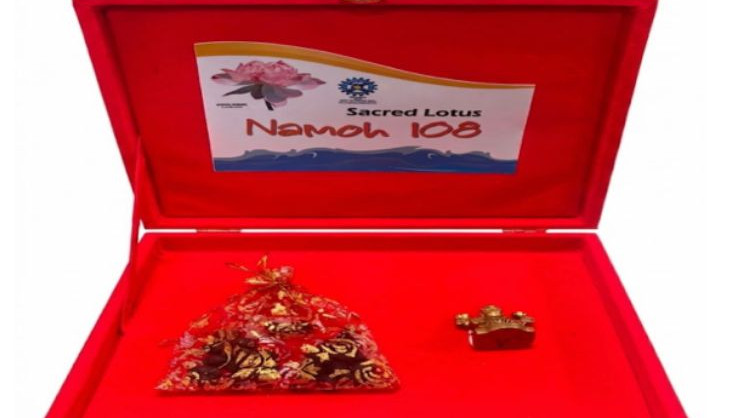
The gifts included the specially developed Namoh 108 lotus, a handcrafted brass Buddha sculpture with a Bodhi tree motif, and exquisite silk fabric from Varanasi.
Each item carried deep symbolic and cultural significance, showcasing India's heritage and craftsmanship.
Among the most distinctive gifts was the Namoh 108 lotus, a unique variety of India's national flower developed by the National Botanical Research Institute (NBRI) in Uttar Pradesh's Lucknow.
The flower is considered significant not only botanically but also spiritually, as it acts as a "living bridge" between India's ancient traditions and modern scientific achievement.
The lotus was specially developed with exactly 108 petals, a number considered sacred in Hinduism, Buddhism and Jainism. The number 108 is associated with meditation malas, sacred sites across the Indian subcontinent and several cosmic calculations in Vedic traditions, making the flower a representation of spiritual completeness and harmony.
The name "Namoh" is derived from the Sanskrit term meaning "salutation" or "obeisance", linking the flower with traditional mantras and prayers and adding to its spiritual symbolism.
Prime Minister Modi also gifted a brass sculpture of Lord Buddha seated in a meditative posture beneath an intricately designed Bodhi tree canopy.
The sculpture depicts Buddha in the Abhaya Mudra, with the right hand raised as a symbol of fearlessness and protection, while the left hand rests on the lap holding a bowl symbolising compassion and nourishment.
The gift carried added significance as President To Lam, at the beginning of his India visit, had travelled to Bodh Gaya in Bihar to offer prayers at the Mahabodhi Temple.
The brass artwork displayed remarkable detailing, particularly in the delicate branching patterns of the Bodhi tree, giving the piece a spiritual and organic appearance.
The sculpture was crafted by artisans from Moradabad in Uttar Pradesh, a city internationally known for its generations-old brass craftsmanship and intricate metalwork traditions.
Another gift presented during the visit was a luxurious silk fabric originating from Varanasi in Uttar Pradesh, a city renowned for centuries for its royal brocades and exceptional textile heritage.
The fabric featured an elegant tone-on-tone jacquard weave with interconnected floral and vine motifs. Designed to blend Indian and Vietnamese cultural aesthetics, the Banarasi-inspired silk was envisioned as ideal for crafting the traditional Vietnamese Ao dai.
Alongside the ceremonial gifts, a specially curated selection of Indian delicacies was also served during President To Lam's visit.
The menu highlighted regional specialities from Bihar and Maharashtra, reflecting India's diverse culinary traditions.
The dishes included Silao Khaja, Gaya Anarsa, Mithila Makhana and Hajipur Malbhog Banana from Bihar, along with Ratnagiri mangoes and millet bars from Maharashtra.
Silao Khaja, a traditional sweet from Silao in Bihar's Nalanda district, is recognised with a Geographical Indication (GI) tag and is known for its layered texture and unique preparation style.
Gaya Anarsa, another delicacy from Bihar, is celebrated for its distinct taste and cultural importance and is regarded as a reflection of the region's rich culinary heritage and traditional craftsmanship.
Mithila Makhana, commonly known as fox nuts or lotus seeds, is a premium agricultural product from Bihar's Mithila region and also carries a GI tag for its unique origin and superior quality.
Hajipur Malbhog Banana, cultivated in the fertile plains of Bihar, is recognised for its natural sweetness, rich aroma and creamy texture, making it one of the state's most valued horticultural products.
The menu also featured Ratnagiri mangoes, popularly known as Alphonso or Hapus mangoes, which are among Maharashtra's finest mango varieties and are GI-tagged for their exceptional taste and quality.
Healthy millet bars were also served as part of the hospitality menu.
Millets, which are widely cultivated in regions such as Solapur, Ahmednagar and the Marathwada belt of Maharashtra, are considered climate-resilient crops rich in fibre, protein and essential minerals.
Presented in the form of nutritious snack bars, the millets symbolised a blend of traditional Indian agriculture and modern healthy food innovation, showcasing how ancient grains are being adapted into contemporary lifestyles.

The gifts included the specially developed Namoh 108 lotus, a handcrafted brass Buddha sculpture with a Bodhi tree motif, and exquisite silk fabric from Varanasi.
Each item carried deep symbolic and cultural significance, showcasing India's heritage and craftsmanship.
Among the most distinctive gifts was the Namoh 108 lotus, a unique variety of India's national flower developed by the National Botanical Research Institute (NBRI) in Uttar Pradesh's Lucknow.
The flower is considered significant not only botanically but also spiritually, as it acts as a "living bridge" between India's ancient traditions and modern scientific achievement.
The lotus was specially developed with exactly 108 petals, a number considered sacred in Hinduism, Buddhism and Jainism. The number 108 is associated with meditation malas, sacred sites across the Indian subcontinent and several cosmic calculations in Vedic traditions, making the flower a representation of spiritual completeness and harmony.
The name "Namoh" is derived from the Sanskrit term meaning "salutation" or "obeisance", linking the flower with traditional mantras and prayers and adding to its spiritual symbolism.
Prime Minister Modi also gifted a brass sculpture of Lord Buddha seated in a meditative posture beneath an intricately designed Bodhi tree canopy.
The sculpture depicts Buddha in the Abhaya Mudra, with the right hand raised as a symbol of fearlessness and protection, while the left hand rests on the lap holding a bowl symbolising compassion and nourishment.
The gift carried added significance as President To Lam, at the beginning of his India visit, had travelled to Bodh Gaya in Bihar to offer prayers at the Mahabodhi Temple.
The brass artwork displayed remarkable detailing, particularly in the delicate branching patterns of the Bodhi tree, giving the piece a spiritual and organic appearance.
The sculpture was crafted by artisans from Moradabad in Uttar Pradesh, a city internationally known for its generations-old brass craftsmanship and intricate metalwork traditions.
Another gift presented during the visit was a luxurious silk fabric originating from Varanasi in Uttar Pradesh, a city renowned for centuries for its royal brocades and exceptional textile heritage.
The fabric featured an elegant tone-on-tone jacquard weave with interconnected floral and vine motifs. Designed to blend Indian and Vietnamese cultural aesthetics, the Banarasi-inspired silk was envisioned as ideal for crafting the traditional Vietnamese Ao dai.
Alongside the ceremonial gifts, a specially curated selection of Indian delicacies was also served during President To Lam's visit.
The menu highlighted regional specialities from Bihar and Maharashtra, reflecting India's diverse culinary traditions.
The dishes included Silao Khaja, Gaya Anarsa, Mithila Makhana and Hajipur Malbhog Banana from Bihar, along with Ratnagiri mangoes and millet bars from Maharashtra.
Silao Khaja, a traditional sweet from Silao in Bihar's Nalanda district, is recognised with a Geographical Indication (GI) tag and is known for its layered texture and unique preparation style.
Gaya Anarsa, another delicacy from Bihar, is celebrated for its distinct taste and cultural importance and is regarded as a reflection of the region's rich culinary heritage and traditional craftsmanship.
Mithila Makhana, commonly known as fox nuts or lotus seeds, is a premium agricultural product from Bihar's Mithila region and also carries a GI tag for its unique origin and superior quality.
Hajipur Malbhog Banana, cultivated in the fertile plains of Bihar, is recognised for its natural sweetness, rich aroma and creamy texture, making it one of the state's most valued horticultural products.
The menu also featured Ratnagiri mangoes, popularly known as Alphonso or Hapus mangoes, which are among Maharashtra's finest mango varieties and are GI-tagged for their exceptional taste and quality.
Healthy millet bars were also served as part of the hospitality menu.
Millets, which are widely cultivated in regions such as Solapur, Ahmednagar and the Marathwada belt of Maharashtra, are considered climate-resilient crops rich in fibre, protein and essential minerals.
Presented in the form of nutritious snack bars, the millets symbolised a blend of traditional Indian agriculture and modern healthy food innovation, showcasing how ancient grains are being adapted into contemporary lifestyles.