United Nations, April 1 : The military escalation in the Middle East, now in its fifth week, may cost economies in the region from 3.7 to 6 per cent of their collective GDP, representing up to $194 billion in losses, according to a new report issued.
The total value of the losses may exceed the cumulative regional GDP growth achieved in 2025, said the report from the United Nations Development Programme (UNDP).
Coupled with an estimated rise in unemployment of up to 4 percentage points or 3.6 million jobs lost, more than the total jobs created in the region in 2025, these reversals will push up to 4 million people into poverty, according to the report titled "Military Escalation in the Middle East: Economic and Social Implications for the Arab States Region."
The assessment exposes the concerning reality of structural vulnerabilities characteristic to the region, which enable a short-lived military escalation to generate profound and widespread socioeconomic impacts that may persist over a long term, it said.
The findings highlight that impacts are not uniform, varying significantly across the region due to the structural characteristics of its main subregions.
Across the region, human development as measured by the Human Development Index is expected to decline by approximately 0.2 to 0.4 per cent, corresponding to a setback of roughly half a year to nearly one year of human development progress, according to the report.
"This crisis rings alarm bells for countries of the region to fundamentally reevaluate their strategic choices of fiscal, sectoral, and social policies, representing an important turning point in the development trajectory of the region," Abdallah Al Dardari, UN assistant secretary-general and director of the Regional Bureau for Arab States in UNDP, said in a press release.
"Our findings underline the pressing need to strengthen regional collaboration to diversify economies -- beyond reliance on growth driven by hydrocarbons, and to expand production bases, secure trade and logistics systems, and broaden economic partnerships, to reduce exposure to shocks and conflicts," he said.
The assessment employs Computable General Equilibrium modeling to capture the magnitude of disruptions caused by a four-week conflict, and models its effects through key transmission channels, including increased trade costs, temporary productivity losses and localised capital destruction, Xinhua news agency reported.
It conducted five simulation scenarios, representing escalating levels of conflict scenarios, ranging from a "moderate disruption," where trade costs increase by tenfold, to an "extreme disruption and energy shock," where trade costs increase a hundred-fold, intensified by a stop of hydrocarbon production.
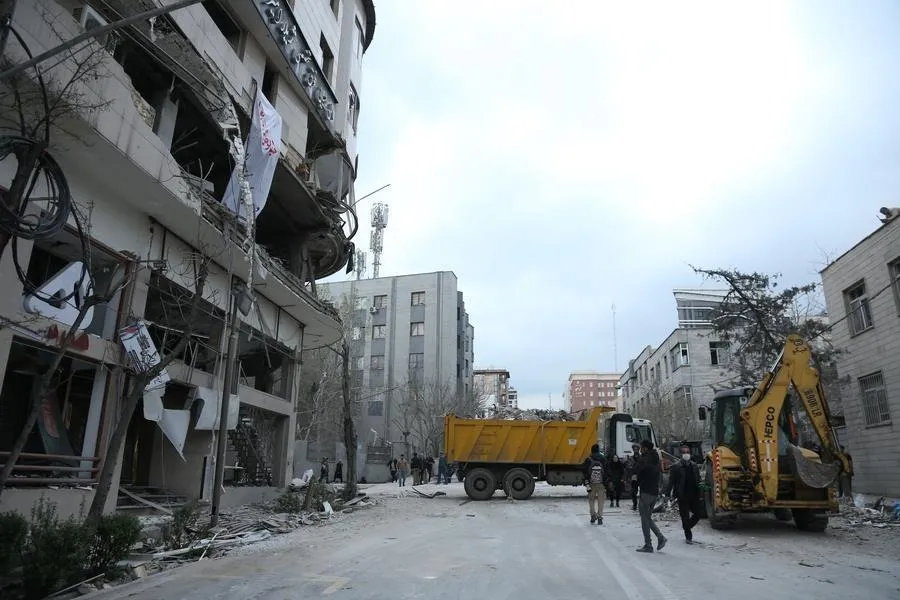
Escalation in Mideast may cause losses exceeding 2025 regional cumulative GDP: UN report
Advertisement