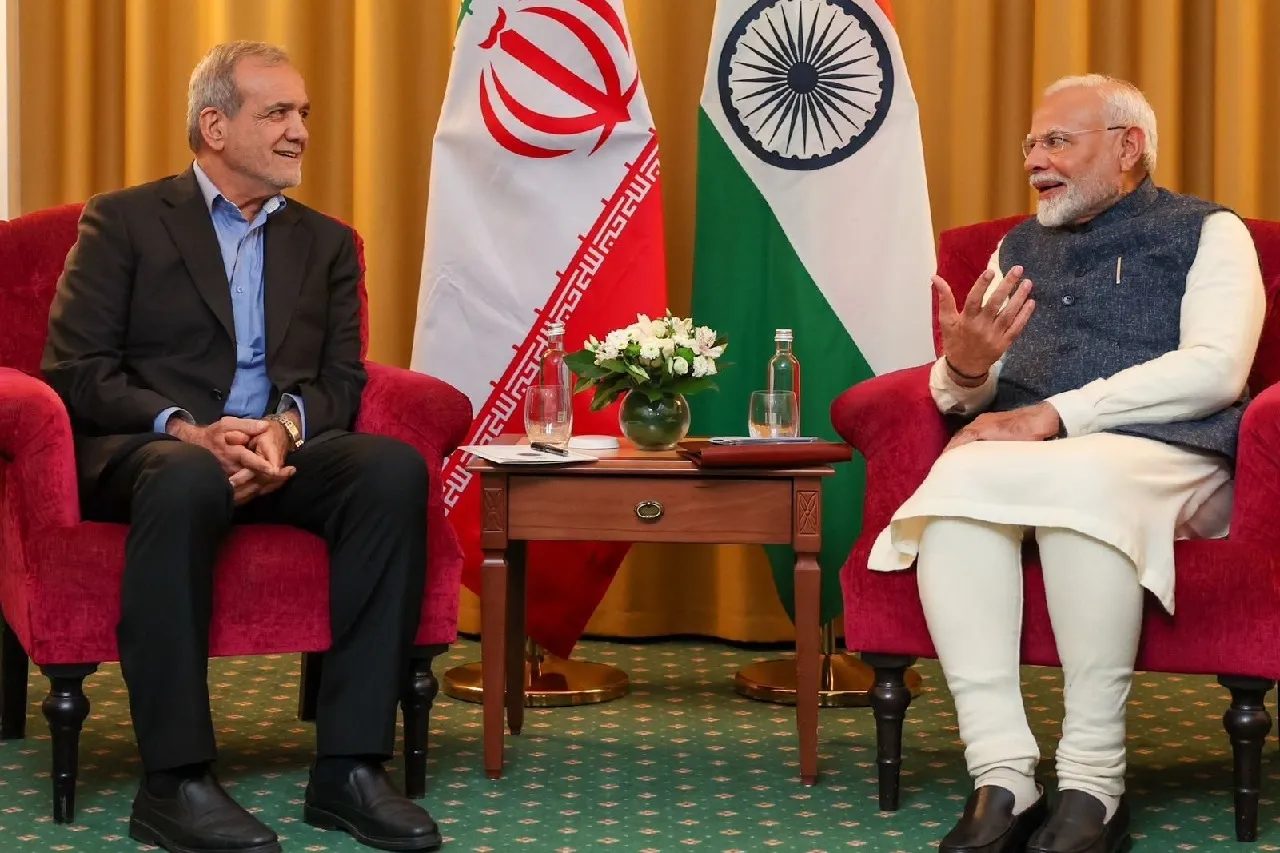
New Delhi, March 21 : Prime Minister Narendra Modi on Saturday spoke with Iran's President Masoud Pezeshkian conveying to him Eid and Nowruz greetings and also discussing the current security situation in the West Asia region.
During the call, PM Modi condemned attacks on critical infrastructure in the region and also asserted the significance of safeguarding freedom of navigation along with keeping the shipping lanes open and secure.
This was PM Modi's second phone conversation with the Iranian President in the last 10 days.
"Spoke with President Dr. Masoud Pezeshkian and conveyed Eid and Nowruz greetings. We expressed hope that this festive season brings peace, stability and prosperity to West Asia. Condemned attacks on critical infrastructure in the region, which threaten regional stability and disrupt global supply chains," PM Modi posted on X after the phone call.
"Reiterated the importance of safeguarding freedom of navigation and ensuring that shipping lanes remain open and secure. Appreciated Iran's continued support for the safety and security of Indian nationals in Iran," Prime Minister Modi added.
Both leaders had earlier spoken over phone on March 12 when PM Modi had voiced his concern over the escalation of tensions in the region, pointing to the loss of civilian lives and damage to infrastructure. He had also reiterated India's consistent position that all issues must be resolved through dialogue and diplomacy.
Prime Minister Modi had highlighted the importance of unhindered transit of goods and energy, noting that disruptions could have far‑reaching consequences for India’s economy and regional stability.
Pezeshkian had then briefed PM Modi on the current situation in Iran and shared his perspective on recent developments in the region.
Iran has allowed India-flagged tankers to pass through the Strait of Hormuz following the talks between the two leaders.
External Affairs Minister (EAM) S Jaishankar and Iranian Foreign Minister Seyed Abbas Araghchi have also held several conversations over the past few weeks since the outbreak of the conflict on February 28.
Besides assessing the current security situation in the region, the ministers have discussed issues pertaining to the safety of shipping, bilateral cooperation and matters concerning BRICS, where India is the current chair and Iran a member of the grouping.
Earlier this week, Finnish President Alexander Stubb had suggested that India could play an important diplomatic role in easing tensions between the United States and Iran.
In an interview with Bloomberg, Stubb said global efforts should focus on halting hostilities and opening channels for dialogue, while noting that India could potentially contribute to diplomatic efforts aimed at reducing tensions.
"We need a ceasefire... I'm wondering if India can actually get involved. We saw Foreign Minister Jaishankar call for a ceasefire to calm things down," he said.
PM Modi has another phone call with Iran's Pezeshkian, condemns attacks on critical infrastructure