'India has emerged as leading force in AI applications'
Washington, March 19 : India has emerged as a leading force in the application of artificial intelligence and is third in core AI creation after the United States and China, Indian-origin scientist Dr Taraknath Woddi said, pointing to the country’s growing strengths and untapped potential in the sector.
“Very bluntly, in terms of AI application usage, India is among the top in the application,” Woddi told IANS in an interview. “Usage of the application, India would come at the top of it now as an AI creator; it is number three in the world, but understand it is a distant number three.”
Woddi, a nuclear engineer turned data scientist and founder of Anicca Data Science Solutions, said India’s immediate opportunity lies not in competing head-on with the United States and China in foundational models, but in building practical, industry-driven applications.
“The nation should keep on building applications right now, which have a direct utility with the industry,” he said, emphasising use cases such as enterprise systems, supply chains, and industrial optimisation.
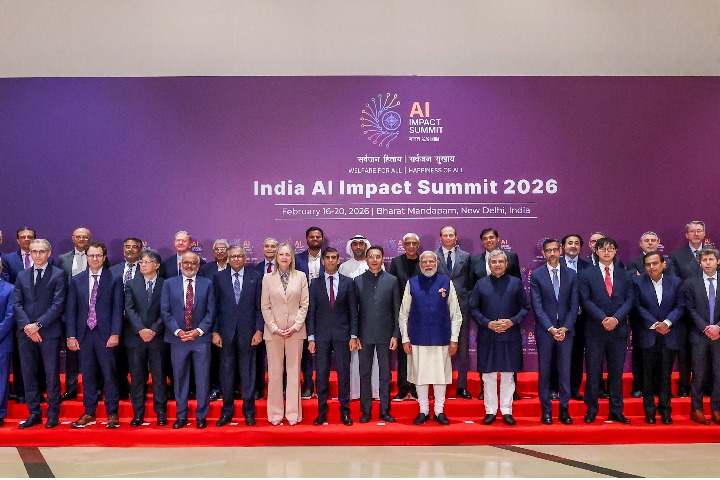
Having returned from India after attending the AI Impact Summit last month, Woddi was emphatic in his praise for India’s leadership in artificial intelligence, saying that Prime Minister Narendra Modi stands out globally for his grasp of the subject.
“He stands out, out by many, many milestones. He talks and reads that there will be, there would be, and there are very few leaders who really comprehend and understand the way he does,” he said, recalling discussions at the conference that exceeded expectations even among global technology leaders.
Woddi noted that the government’s engagement, along with industry participation, was critical in executing large-scale initiatives, noting that such coordination “made it work and made it happen,” reflecting a leadership-driven push shaping India’s AI trajectory.
Drawing from his experience across nuclear engineering, AI, and large-scale data systems, Woddi underscored the importance of solving real-world problems first.
“First, ask the industry what problem they are going to solve,” he said, cautioning against premature investments in infrastructure without defined use-cases.
He noted that India’s data centre capacity remains underutilised despite being limited. “India has less than one gigawatt… but even though it has less than one gigawatt, less than 80 per cent of that is being used, there are not enough applications to use the infrastructure that exists,” he said.
Woddi argued that India should prioritise sectors with visible inefficiencies, such as healthcare, education and the legal system. “Wherever I have the inefficiencies and most difficulties that people are facing. That is the sector that will pick up,” he said.
On regulation, he advocated a balanced approach, rejecting both extremes of excessive control and complete deregulation. “There is no… business in the world just the fact that it is innovative in nature, that it should be running free of every regulation,” he said, stressing the importance of data protection and responsible AI frameworks.
At the same time, he highlighted the need for coordinated action between government and industry.
“Government should talk to the industry, saying that, hey, these are the problems of the nation,” he said, adding that support should follow once clear solutions are identified.
Woddi also drew lessons from India’s past economic trajectory, warning against over-reliance on services without product innovation. “Any nation, anywhere, any society which doesn’t manufacture or create its own products doesn’t have a say in the world,” he said.
His own career reflects India’s evolving global footprint. Trained as a nuclear engineer in India and the United States, Woddi contributed to technical work underpinning the US-India civilian nuclear agreement and later transitioned into AI and data science leadership roles.
He said India’s strength lies in its talent pool and growing innovation culture. “The push is there… this is the moment,” he said, noting that increasing opportunities are enabling individuals to pursue independent innovation.
India’s AI journey, he added, must be anchored in three pillars: “energy, education, environment that triple E,” supported by high-performance computing and emerging technologies like blockchain.

“Very bluntly, in terms of AI application usage, India is among the top in the application,” Woddi told IANS in an interview. “Usage of the application, India would come at the top of it now as an AI creator; it is number three in the world, but understand it is a distant number three.”
Woddi, a nuclear engineer turned data scientist and founder of Anicca Data Science Solutions, said India’s immediate opportunity lies not in competing head-on with the United States and China in foundational models, but in building practical, industry-driven applications.
“The nation should keep on building applications right now, which have a direct utility with the industry,” he said, emphasising use cases such as enterprise systems, supply chains, and industrial optimisation.
Having returned from India after attending the AI Impact Summit last month, Woddi was emphatic in his praise for India’s leadership in artificial intelligence, saying that Prime Minister Narendra Modi stands out globally for his grasp of the subject.
“He stands out, out by many, many milestones. He talks and reads that there will be, there would be, and there are very few leaders who really comprehend and understand the way he does,” he said, recalling discussions at the conference that exceeded expectations even among global technology leaders.
Woddi noted that the government’s engagement, along with industry participation, was critical in executing large-scale initiatives, noting that such coordination “made it work and made it happen,” reflecting a leadership-driven push shaping India’s AI trajectory.
Drawing from his experience across nuclear engineering, AI, and large-scale data systems, Woddi underscored the importance of solving real-world problems first.
“First, ask the industry what problem they are going to solve,” he said, cautioning against premature investments in infrastructure without defined use-cases.
He noted that India’s data centre capacity remains underutilised despite being limited. “India has less than one gigawatt… but even though it has less than one gigawatt, less than 80 per cent of that is being used, there are not enough applications to use the infrastructure that exists,” he said.
Woddi argued that India should prioritise sectors with visible inefficiencies, such as healthcare, education and the legal system. “Wherever I have the inefficiencies and most difficulties that people are facing. That is the sector that will pick up,” he said.
On regulation, he advocated a balanced approach, rejecting both extremes of excessive control and complete deregulation. “There is no… business in the world just the fact that it is innovative in nature, that it should be running free of every regulation,” he said, stressing the importance of data protection and responsible AI frameworks.
At the same time, he highlighted the need for coordinated action between government and industry.
“Government should talk to the industry, saying that, hey, these are the problems of the nation,” he said, adding that support should follow once clear solutions are identified.
Woddi also drew lessons from India’s past economic trajectory, warning against over-reliance on services without product innovation. “Any nation, anywhere, any society which doesn’t manufacture or create its own products doesn’t have a say in the world,” he said.
His own career reflects India’s evolving global footprint. Trained as a nuclear engineer in India and the United States, Woddi contributed to technical work underpinning the US-India civilian nuclear agreement and later transitioned into AI and data science leadership roles.
He said India’s strength lies in its talent pool and growing innovation culture. “The push is there… this is the moment,” he said, noting that increasing opportunities are enabling individuals to pursue independent innovation.
India’s AI journey, he added, must be anchored in three pillars: “energy, education, environment that triple E,” supported by high-performance computing and emerging technologies like blockchain.