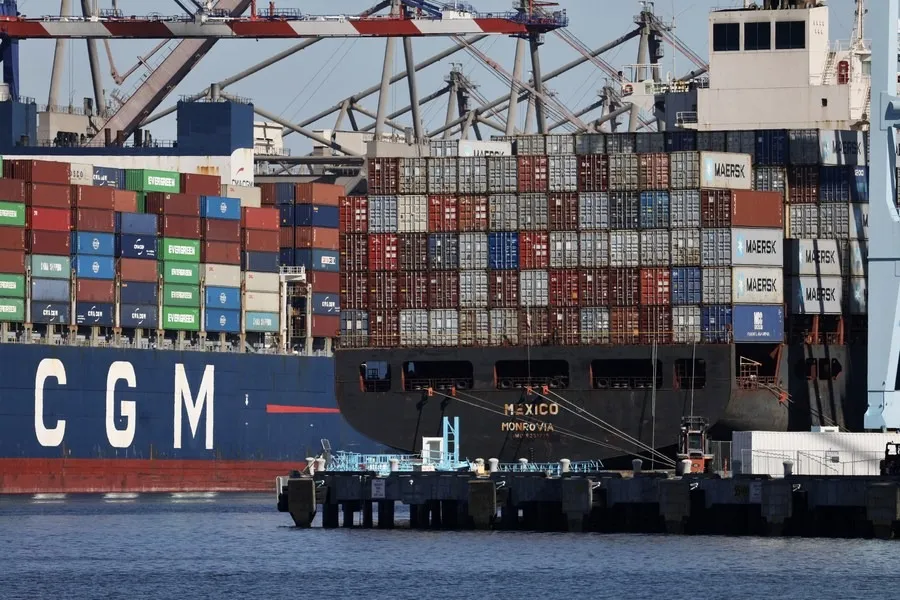
Washington, March 12 : The United States has launched a sweeping trade investigation targeting India and 15 other economies over alleged excess industrial capacity in manufacturing sectors, a move that could eventually lead to tariffs or other trade measures.
The probe, announced by US Trade Representative Jamieson Greer on Wednesday (local time), will examine whether policies in the listed economies unfairly boost production and exports and restrict US commerce.
Speaking on a press call, Greer said the administration believes some trading partners have built industrial capacity beyond what market demand justifies.
“Our view is that key trading partners have developed production capacity that is really untethered from the market incentives of domestic and global demand,” he said.
“This excess capacity leads to, among other factors, overproduction and larger persistent trade surpluses, as well as underutilised and unused capacity, particularly in manufacturing sectors.”
The investigation will be conducted under Section 301 of the Trade Act of 1974, a law that allows Washington to respond to foreign government practices deemed unreasonable or discriminatory if they burden or restrict US commerce.
The economies subject to the probe include China, the European Union, Singapore, Switzerland, Norway, Indonesia, Malaysia, Cambodia, Thailand, Korea, Vietnam, Taiwan, Bangladesh, Mexico, Japan, and India.
Greer said the administration expects the investigation to examine a wide range of practices that may contribute to industrial overcapacity.
“These countries may exhibit, again, signs of excess capacity through a variety of means, their own current account surpluses, their bilateral trade surplus with the United States, underutilised or unused capacity, or overproduction in these economies,” he said.
He added that governments may be encouraging production and exports through policy interventions that distort market signals.
“This can include, for example, promoting production and exports untethered from economic drivers of supply, demand, and investment, including through subsidies,” Greer said.
Other factors cited by officials include state involvement in industries, financial support measures, and market barriers that could encourage production beyond domestic demand.
The Office of the US Trade Representative said it will now begin a formal process involving consultations, public comments, and hearings before reaching any decision.
Under the timeline announced by USTR, written comments and requests to appear at hearings can be submitted after a public docket opens on March 17. To ensure consideration, submissions must be filed by April 15.
Public hearings before the inter-agency Section 301 Committee are scheduled to begin on May 5 in Washington.
After reviewing written submissions, hearing testimony, and consultations with governments under investigation, the USTR will determine whether any foreign policies are actionable under US trade law and whether a response is warranted.
Greer emphasised that the process is only beginning and that the administration will study the evidence before deciding on any action.
“We are going to initiate this investigation… to understand better and address these problems and to also get a very good handle on the drivers of these issues, which may vary from country to country,” he said.
US officials say structural excess capacity in manufacturing has become a growing concern because it can lead to persistent trade surpluses and global production that exceeds demand. Such imbalances can weaken industrial sectors in other economies and discourage domestic investment.
The investigation will examine manufacturing sectors ranging from automobiles and steel to electronics, chemicals, machinery, and solar modules, where policymakers say excess production capacity has become a recurring issue in global trade.
US launches trade probe on India, 15 others
Advertisement