Israel and US control skies of Iran, continue to target over 2,500 military targets: Israeli envoy
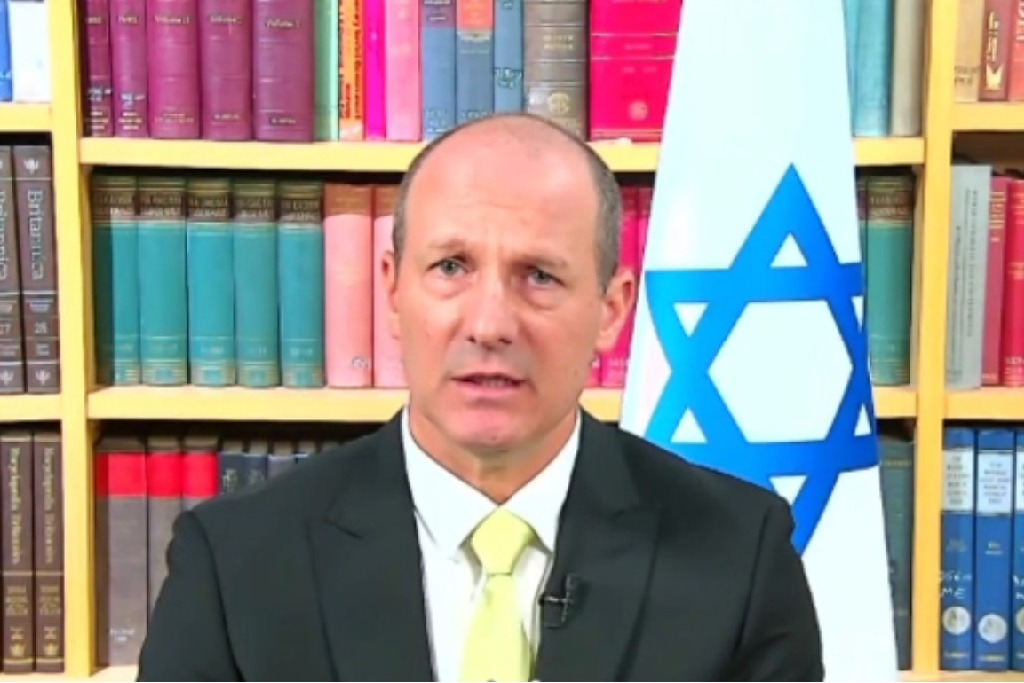
Jerusalem, March 2 : Israel's Ambassador to India, Reuven Azar, on Monday said that Israel and the United States (US) are controlling the skies of Iran and are continuing to target over 2,500 military targets. In an exclusive chat with IANS, he also expressed hope that a regime change will take place in Iran.
Azar stated that Israel has been able to neutralise and intercept majority of missiles that are coming towards the country. He asserted that Israel, just like India, always seeks peace, stability and prosperity in the region. He also spoke about the recent visit of Prime Minister Narendra Modi to Israel.
Excerpts:
IANS: How is the situation in Israel right now following the massive attacks on Iran?
Reuven Azar: The situation is that we are embracing the attacks where we are in Israel, intercepting most of the missiles and drones that are coming both from Iran and since last night also from Hezbollah in the north. Israel is right now controlling the skies of Iran together with the United States and we are continuing to target more than 2,500 military targets. Unfortunately, yesterday we had nine civilians killed as a result of direct hit of ballistic missile in Beit Shemesh and about 50 people injured. But on the positive side, we have managed to neutralise, intercept most of the missiles that are coming into our country.
IANS: Do you think a regime change can happen in Iran?
Reuven Azar: We certainly hope so. I think it's up to the Iranian people to decide. There's no doubt that millions of Iranians have shown their interest to change this regime when they demonstrated a few weeks back. Unfortunately, we saw the cruelty and the ruthlessness of the Iranian regime that killed tens of thousands of innocent civilians. Now, by this attack, we are neutralising not only the capability of the Iranian regime to attack us, but also hitting hard a lot of the headquarters of the Basij, the Revolutionary Guards all around Iran... Hopefully, the Iranian people will get the confidence to go back to the streets and demand a change that they deserve.
IANS: What is your next challenge in Iran, especially after the death of Iranian Supreme Leader Ayatollah Ali Khamenei?
Reuven Azar: Well, the challenge is to continue the degradation of the military capabilities to create a situation in which Iran is no longer capable of attacking Israel and other countries in the region and the American bases, to create a situation in which the rest of the leadership that still is alive will understand that they have to change course unless, because if they don't do so, they will be the next in line.
IANS: How do you view leadership of Prime Minister Modi in the current scenario?
Reuven Azar: We appreciate very much the leadership of Prime Minister Modi, especially his last visit to Israel, in which he felt the warmth of the Israeli people towards India and vice versa. Also, Israelis have felt the warmth and the closeness that we have between our countries, not only in interest, but also in values, in common heritage and this has been a historic landmark in our relations. We feel that India is a partner we can trust, and we, like India, seek peace, seek stability, seek prosperity in our region and we are sure that in the future, we will be able to re-engage in these positive activities as a result of the neutralization of those terrible threats that are coming from the...regime of Iran.
IANS: Can there be boots on ground in Iran too?
Reuven Azar: Israel is at this point taking action from the air, there might be pinpoint necessities for action in order to remove one threat or the other. But, I'm not aware that the major invasion of soldiers, boots on the ground is planned.
IANS: What was your first reaction on Iran's attack on an oil tanker?
Reuven Azar: I think that the Iranians have created escalation that is going to work against them. Their decision to attack civilian targets, including in the United Arab Emirates, Bahrain, and other countries in the region, is creating escalation that is completely unnecessary. They are trying to disrupt oil trade. I think that it will fail because as this military operation continues, their capabilities will be degraded to the extent that they won't be able to create the chaos that they want to create. They won't be able to deter neither the United States, Israel, or the countries in the region from taking action to defend themselves and at the end of the day, we're going to see de-escalation, hopefully, in the coming days or weeks.

Azar stated that Israel has been able to neutralise and intercept majority of missiles that are coming towards the country. He asserted that Israel, just like India, always seeks peace, stability and prosperity in the region. He also spoke about the recent visit of Prime Minister Narendra Modi to Israel.
Excerpts:
IANS: How is the situation in Israel right now following the massive attacks on Iran?
Reuven Azar: The situation is that we are embracing the attacks where we are in Israel, intercepting most of the missiles and drones that are coming both from Iran and since last night also from Hezbollah in the north. Israel is right now controlling the skies of Iran together with the United States and we are continuing to target more than 2,500 military targets. Unfortunately, yesterday we had nine civilians killed as a result of direct hit of ballistic missile in Beit Shemesh and about 50 people injured. But on the positive side, we have managed to neutralise, intercept most of the missiles that are coming into our country.
IANS: Do you think a regime change can happen in Iran?
Reuven Azar: We certainly hope so. I think it's up to the Iranian people to decide. There's no doubt that millions of Iranians have shown their interest to change this regime when they demonstrated a few weeks back. Unfortunately, we saw the cruelty and the ruthlessness of the Iranian regime that killed tens of thousands of innocent civilians. Now, by this attack, we are neutralising not only the capability of the Iranian regime to attack us, but also hitting hard a lot of the headquarters of the Basij, the Revolutionary Guards all around Iran... Hopefully, the Iranian people will get the confidence to go back to the streets and demand a change that they deserve.
IANS: What is your next challenge in Iran, especially after the death of Iranian Supreme Leader Ayatollah Ali Khamenei?
Reuven Azar: Well, the challenge is to continue the degradation of the military capabilities to create a situation in which Iran is no longer capable of attacking Israel and other countries in the region and the American bases, to create a situation in which the rest of the leadership that still is alive will understand that they have to change course unless, because if they don't do so, they will be the next in line.
IANS: How do you view leadership of Prime Minister Modi in the current scenario?
Reuven Azar: We appreciate very much the leadership of Prime Minister Modi, especially his last visit to Israel, in which he felt the warmth of the Israeli people towards India and vice versa. Also, Israelis have felt the warmth and the closeness that we have between our countries, not only in interest, but also in values, in common heritage and this has been a historic landmark in our relations. We feel that India is a partner we can trust, and we, like India, seek peace, seek stability, seek prosperity in our region and we are sure that in the future, we will be able to re-engage in these positive activities as a result of the neutralization of those terrible threats that are coming from the...regime of Iran.
IANS: Can there be boots on ground in Iran too?
Reuven Azar: Israel is at this point taking action from the air, there might be pinpoint necessities for action in order to remove one threat or the other. But, I'm not aware that the major invasion of soldiers, boots on the ground is planned.
IANS: What was your first reaction on Iran's attack on an oil tanker?
Reuven Azar: I think that the Iranians have created escalation that is going to work against them. Their decision to attack civilian targets, including in the United Arab Emirates, Bahrain, and other countries in the region, is creating escalation that is completely unnecessary. They are trying to disrupt oil trade. I think that it will fail because as this military operation continues, their capabilities will be degraded to the extent that they won't be able to create the chaos that they want to create. They won't be able to deter neither the United States, Israel, or the countries in the region from taking action to defend themselves and at the end of the day, we're going to see de-escalation, hopefully, in the coming days or weeks.