Amur falcons tagged in Manipur reach Africa; three birds tracked in Somalia, Zimbabwe & Botswana
Imphal, Feb 27 : Three Amur falcons tagged with satellite transmitters in Manipur in November last year have been tracked to different African countries after completing a record transcontinental journey, officials said on Friday.
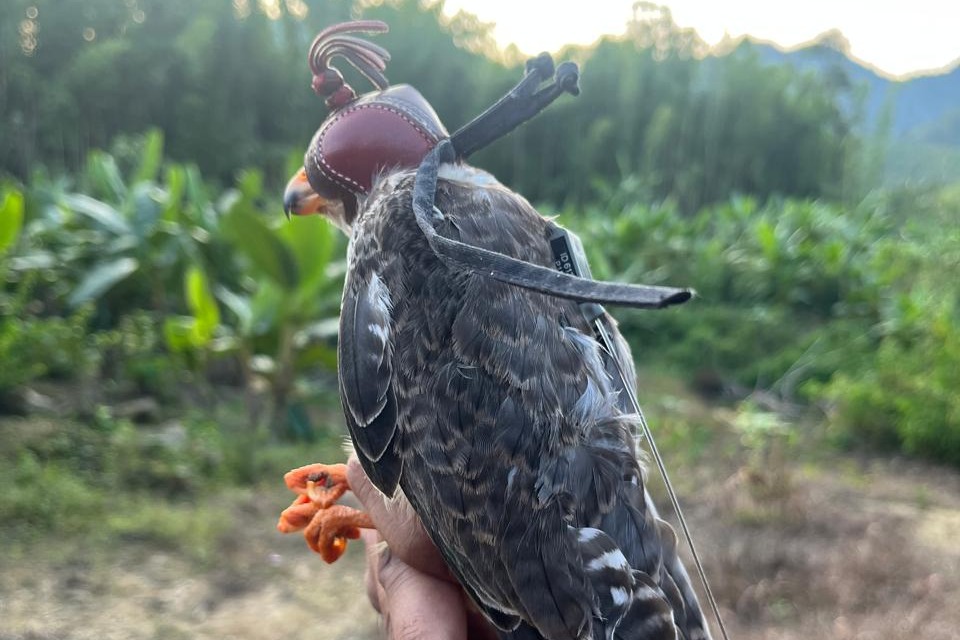
A forest official in Manipur's Tamenglong district said the birds -- Ahu, Alang and Apapang -- were tagged on November 8, 2025, as part of an ongoing satellite-tracking research programme undertaken by the state Forest Department in collaboration with the Wildlife Institute of India (WII).
The three raptors were released from the Chiuluan roosting site by a team of WII scientists, Tamenglong Forest Division officials and village volunteers.
"These tagged Amur falcons reached Africa within a record time of about nine to ten days. Since then, they have been wintering in different African countries," the official told IANS.
According to the latest update from Dr R. Suresh Kumar of WII, all three birds are active and doing well. While Ahu is currently in Somalia, Apapang has been tracked in Zimbabwe and Alang in Botswana.
"Earlier, there were concerns that Ahu might be facing some issues, but it is now confirmed that the bird is active, though largely confined to local movements within Somalia," the official said, quoting the WII scientist.
During the previous wintering cycle, a tagged bird named Chiuluan 2 had begun its northward migration towards its breeding grounds on April 14, 2025.
The satellite-tagging initiative aims to analyse the migratory routes of the Amur falcon (Falco amurensis), a long-distance migratory raptor known for one of the most remarkable journeys in the avian world.
Known locally in Manipur as 'Akhuaipuina' (or 'Kahuaipuina') and as 'Molulem' in neighbouring Nagaland, these birds travel up to 22,000 km annually from their breeding grounds in northern China and southeastern Siberia to southern Africa, before returning in early autumn.
Chiuluan and Guangram villages in Tamenglong district -- which borders Assam and Nagaland -- are among the key roosting sites for the species. Every year, the falcons arrive in large numbers in the forest-rich district, about 145 km from Imphal, typically during the first and second weeks of October.
After roosting for over a month, the birds depart for southern and eastern Africa, halting briefly before flying back to their breeding grounds.
To protect the migratory birds, authorities in Tamenglong and Noney districts impose a total ban on hunting, trapping, killing or selling the falcons during their seasonal stay.
The study programme is being carried out under the guidance of the Union Ministry of Environment, Forest and Climate Change.
Forest officials noted that in 2018, a female falcon tagged in Tamenglong had flown non-stop for five days and eight hours, covering about 5,700 km before landing in Somalia.
To spread awareness about conservation, the Forest Department, with support from local clubs and wildlife groups, organises the annual 'Amur Falcon Festival' during the first and second weeks of November.
Officials in Nagaland said the state also serves as a crucial stopover, with flocks sometimes numbering up to 100,000 birds resting for three to four weeks in districts such as Wokha and adjoining areas near Assam.
The presence of the migratory birds in such large numbers holds significant ecological value, as they help regulate pest populations and contribute to ecological balance.
The Amur falcon is protected under the Wildlife (Protection) Act, 1972, and hunting or possessing the bird or its meat is a punishable offence, carrying imprisonment of up to three years.
Until 2012, thousands of these birds were indiscriminately hunted annually in parts of the Northeast. However, sustained conservation efforts involving local communities and village leaders have resulted in near-zero casualties in Nagaland since 2013.
Forest and Tourism officials said the conservation success has also boosted eco-tourism, with hundreds of visitors gathering every October-November to witness the spectacular roosting phenomenon across parts of Nagaland and adjoining areas.
(Sujit Chakraborty can be contacted at [email protected])
A forest official in Manipur's Tamenglong district said the birds -- Ahu, Alang and Apapang -- were tagged on November 8, 2025, as part of an ongoing satellite-tracking research programme undertaken by the state Forest Department in collaboration with the Wildlife Institute of India (WII).
The three raptors were released from the Chiuluan roosting site by a team of WII scientists, Tamenglong Forest Division officials and village volunteers.
"These tagged Amur falcons reached Africa within a record time of about nine to ten days. Since then, they have been wintering in different African countries," the official told IANS.
According to the latest update from Dr R. Suresh Kumar of WII, all three birds are active and doing well. While Ahu is currently in Somalia, Apapang has been tracked in Zimbabwe and Alang in Botswana.
"Earlier, there were concerns that Ahu might be facing some issues, but it is now confirmed that the bird is active, though largely confined to local movements within Somalia," the official said, quoting the WII scientist.
During the previous wintering cycle, a tagged bird named Chiuluan 2 had begun its northward migration towards its breeding grounds on April 14, 2025.
The satellite-tagging initiative aims to analyse the migratory routes of the Amur falcon (Falco amurensis), a long-distance migratory raptor known for one of the most remarkable journeys in the avian world.
Known locally in Manipur as 'Akhuaipuina' (or 'Kahuaipuina') and as 'Molulem' in neighbouring Nagaland, these birds travel up to 22,000 km annually from their breeding grounds in northern China and southeastern Siberia to southern Africa, before returning in early autumn.
Chiuluan and Guangram villages in Tamenglong district -- which borders Assam and Nagaland -- are among the key roosting sites for the species. Every year, the falcons arrive in large numbers in the forest-rich district, about 145 km from Imphal, typically during the first and second weeks of October.
After roosting for over a month, the birds depart for southern and eastern Africa, halting briefly before flying back to their breeding grounds.
To protect the migratory birds, authorities in Tamenglong and Noney districts impose a total ban on hunting, trapping, killing or selling the falcons during their seasonal stay.
The study programme is being carried out under the guidance of the Union Ministry of Environment, Forest and Climate Change.
Forest officials noted that in 2018, a female falcon tagged in Tamenglong had flown non-stop for five days and eight hours, covering about 5,700 km before landing in Somalia.
To spread awareness about conservation, the Forest Department, with support from local clubs and wildlife groups, organises the annual 'Amur Falcon Festival' during the first and second weeks of November.
Officials in Nagaland said the state also serves as a crucial stopover, with flocks sometimes numbering up to 100,000 birds resting for three to four weeks in districts such as Wokha and adjoining areas near Assam.
The presence of the migratory birds in such large numbers holds significant ecological value, as they help regulate pest populations and contribute to ecological balance.
The Amur falcon is protected under the Wildlife (Protection) Act, 1972, and hunting or possessing the bird or its meat is a punishable offence, carrying imprisonment of up to three years.
Until 2012, thousands of these birds were indiscriminately hunted annually in parts of the Northeast. However, sustained conservation efforts involving local communities and village leaders have resulted in near-zero casualties in Nagaland since 2013.
Forest and Tourism officials said the conservation success has also boosted eco-tourism, with hundreds of visitors gathering every October-November to witness the spectacular roosting phenomenon across parts of Nagaland and adjoining areas.
(Sujit Chakraborty can be contacted at [email protected])