No freebies being given to taxpayers, only to the poor: BJP’s Shahnawaz Hussain on SC’s remarks
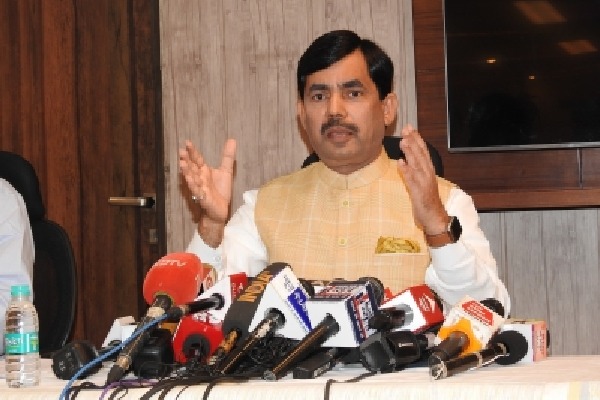
New Delhi, Feb 20 : BJP leader Shahnawaz Hussain on Friday defended welfare schemes for the poor following the Supreme Court’s sharp observations on pre-election “freebies,” asserting that government support is targeted at those in genuine need.
“Those who are below the poverty line, who do not have two proper meals a day, giving them food and taking care of them is important. When the country rises above the poverty line and becomes a developed nation, many such forms of assistance may not be needed. Today, when governments provide such support, they ensure that help reaches the poor. But no ‘freebies’ are being given to taxpayers or those who are financially capable,” Hussain said.
His remarks come after the Supreme Court criticised the growing culture of indiscriminate largesse across states, cautioning that such measures could hamper nation-building and fiscal discipline. The court pulled up the Tamil Nadu government over its policy of providing free electricity while hearing a plea by the Tamil Nadu Power Distribution Corporation Ltd (TNPDCL) challenging a 2024 amendment in the electricity law.
A Bench led by Chief Justice of India Surya Kant, along with Justices Joymalya Bagchi and Vipul M Pancholi, questioned whether states were prioritising short-term political appeasement over long-term infrastructure development.
The Bench observed that while welfare measures for those unable to pay electricity charges or afford education were understandable, blanket subsidies without distinguishing between the needy and the financially capable amounted to appeasement. “What kind of culture are we developing pan-India?” the court asked.
Meanwhile, Samajwadi Party MLA Sachin Yadav also reacted to the court’s remarks by stressing employment generation over subsidies. “Our youth, especially the educated youth, do not want to depend on anyone or live at someone’s mercy. They have talent, they are educated and well-qualified, and they want to work hard and earn jobs on their own merit. The government should, therefore, increase employment opportunities, in both government and private jobs,” Yadav said.
The Supreme Court’s comments have reignited a political debate on welfare policies, with parties defending targeted assistance for the poor.
“Those who are below the poverty line, who do not have two proper meals a day, giving them food and taking care of them is important. When the country rises above the poverty line and becomes a developed nation, many such forms of assistance may not be needed. Today, when governments provide such support, they ensure that help reaches the poor. But no ‘freebies’ are being given to taxpayers or those who are financially capable,” Hussain said.
His remarks come after the Supreme Court criticised the growing culture of indiscriminate largesse across states, cautioning that such measures could hamper nation-building and fiscal discipline. The court pulled up the Tamil Nadu government over its policy of providing free electricity while hearing a plea by the Tamil Nadu Power Distribution Corporation Ltd (TNPDCL) challenging a 2024 amendment in the electricity law.
A Bench led by Chief Justice of India Surya Kant, along with Justices Joymalya Bagchi and Vipul M Pancholi, questioned whether states were prioritising short-term political appeasement over long-term infrastructure development.
The Bench observed that while welfare measures for those unable to pay electricity charges or afford education were understandable, blanket subsidies without distinguishing between the needy and the financially capable amounted to appeasement. “What kind of culture are we developing pan-India?” the court asked.
Meanwhile, Samajwadi Party MLA Sachin Yadav also reacted to the court’s remarks by stressing employment generation over subsidies. “Our youth, especially the educated youth, do not want to depend on anyone or live at someone’s mercy. They have talent, they are educated and well-qualified, and they want to work hard and earn jobs on their own merit. The government should, therefore, increase employment opportunities, in both government and private jobs,” Yadav said.
The Supreme Court’s comments have reignited a political debate on welfare policies, with parties defending targeted assistance for the poor.