US says India key to Pax Silica, critical minerals
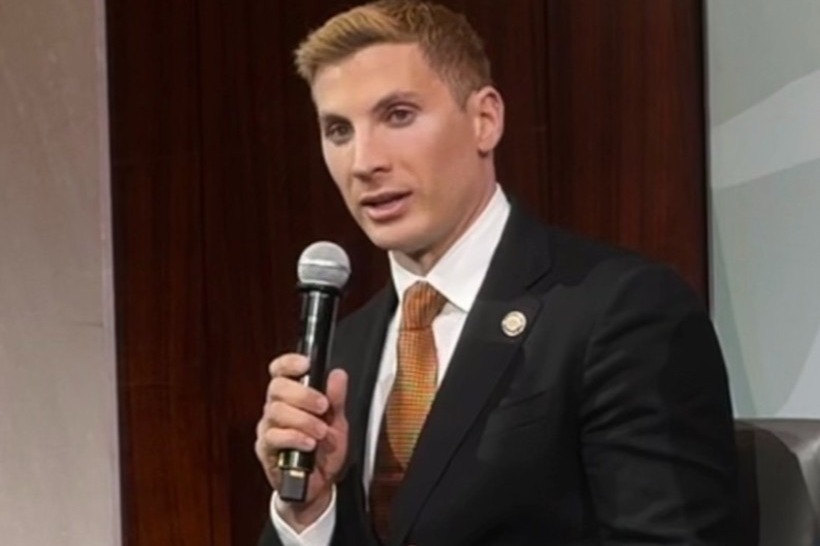
Washington, Feb 5 : India will play a central role in the United States’ Pax Silica framework and its broader critical minerals strategy, a senior US official said, adding that Washington is seeking deeper cooperation with Indo-Pacific partners to secure and diversify global mineral supply chains.
“India is actually slated to be joining (Pax Silica) later this month,” Under Secretary of State for Economic Affairs Jacob Helberg told IANS in response to a question, as Secretary of State Marco Rubio hosted a critical minerals ministerial being attended by leaders from 50 countries, including India -- being represented by External Affairs Minister (EAM) S. Jaishankar.
Helberg said Washington is “very much looking forward” to India’s entry into Pax Silica, noting that the initiative has generated strong interest in India. He pointed to India’s depth of technical talent, describing it as “probably the only other country other than China that can actually rival China with both the breadth and depth of the human capital that China offers.”
The US official said India’s accession would create momentum for closer collaboration between the two countries on joint projects that are “truly mutually beneficial and self-reinforcing.” Such cooperation, he said, could help accelerate American reindustrialisation while leveraging India’s comparative advantages.
“The prosperity of everyday Americans is linked to the Indo-Pacific,” Helberg said, adding that by working with allies and partners in the region, the United States is securing reliable access to critical minerals through diversified and trusted supply chains, as well as transparent and fair markets.
He said that Washington is working with countries across the Indo-Pacific to establish supply chains “that are free from dependences on an unreliable single point of failure, on market manipulation, price coercion, and sudden disruptions.” The effort, he said, is aimed at preventing industrial shutdowns and higher costs that could threaten regional security and prosperity.
Responding to a question on India’s specific role in critical minerals, Helberg said India already has significant strengths. “My understanding is that India already has fairly extensive processing and refining capacity,” he said, adding that this existing infrastructure could be leveraged as part of deeper cooperation between the two countries.
He contrasted India’s pre-existing capabilities with what he described as a “warp speed effort” underway in the United States to build out domestic processing and refining capacity. That push, he said, is being driven by coordinated efforts across multiple US agencies, including commerce and trade-related departments.
Helberg said the ministerial brings together countries that have signed bilateral critical minerals memoranda of understanding with the United States, as well as participants in Pax Silica and the Mineral Security Partnership.
He described the gathering as “the largest ministerial in the State Department’s history,” reflecting a growing consensus that “economic security is national security.”
He said the current global supply chain model is “no longer fit for purpose” and that steps need to be taken to ensure fair, transparent and reliable access to mineral security.
Helberg also pointed to surging global demand driven by what he described as the AI revolution, which he said is fueling record demand for minerals such as cobalt, copper and nickel, as well as for products ranging from smartphones to data centres.
This growing demand, he said, presents opportunities for partner countries to derive economic growth as supply chains become more geographically distributed.
India and the United States have in recent years expanded cooperation on critical and strategic minerals as part of a broader push to strengthen supply chain resilience, support clean energy transitions and reduce vulnerabilities linked to concentrated global production.
Pax Silica is a US-led initiative focused on downstream manufacturing and fabrication ecosystems, particularly in advanced technologies such as semiconductors, while the critical minerals ministerial is focused on upstream mineral security and access across global supply chains.

“India is actually slated to be joining (Pax Silica) later this month,” Under Secretary of State for Economic Affairs Jacob Helberg told IANS in response to a question, as Secretary of State Marco Rubio hosted a critical minerals ministerial being attended by leaders from 50 countries, including India -- being represented by External Affairs Minister (EAM) S. Jaishankar.
Helberg said Washington is “very much looking forward” to India’s entry into Pax Silica, noting that the initiative has generated strong interest in India. He pointed to India’s depth of technical talent, describing it as “probably the only other country other than China that can actually rival China with both the breadth and depth of the human capital that China offers.”
The US official said India’s accession would create momentum for closer collaboration between the two countries on joint projects that are “truly mutually beneficial and self-reinforcing.” Such cooperation, he said, could help accelerate American reindustrialisation while leveraging India’s comparative advantages.
“The prosperity of everyday Americans is linked to the Indo-Pacific,” Helberg said, adding that by working with allies and partners in the region, the United States is securing reliable access to critical minerals through diversified and trusted supply chains, as well as transparent and fair markets.
He said that Washington is working with countries across the Indo-Pacific to establish supply chains “that are free from dependences on an unreliable single point of failure, on market manipulation, price coercion, and sudden disruptions.” The effort, he said, is aimed at preventing industrial shutdowns and higher costs that could threaten regional security and prosperity.
Responding to a question on India’s specific role in critical minerals, Helberg said India already has significant strengths. “My understanding is that India already has fairly extensive processing and refining capacity,” he said, adding that this existing infrastructure could be leveraged as part of deeper cooperation between the two countries.
He contrasted India’s pre-existing capabilities with what he described as a “warp speed effort” underway in the United States to build out domestic processing and refining capacity. That push, he said, is being driven by coordinated efforts across multiple US agencies, including commerce and trade-related departments.
Helberg said the ministerial brings together countries that have signed bilateral critical minerals memoranda of understanding with the United States, as well as participants in Pax Silica and the Mineral Security Partnership.
He described the gathering as “the largest ministerial in the State Department’s history,” reflecting a growing consensus that “economic security is national security.”
He said the current global supply chain model is “no longer fit for purpose” and that steps need to be taken to ensure fair, transparent and reliable access to mineral security.
Helberg also pointed to surging global demand driven by what he described as the AI revolution, which he said is fueling record demand for minerals such as cobalt, copper and nickel, as well as for products ranging from smartphones to data centres.
This growing demand, he said, presents opportunities for partner countries to derive economic growth as supply chains become more geographically distributed.
India and the United States have in recent years expanded cooperation on critical and strategic minerals as part of a broader push to strengthen supply chain resilience, support clean energy transitions and reduce vulnerabilities linked to concentrated global production.
Pax Silica is a US-led initiative focused on downstream manufacturing and fabrication ecosystems, particularly in advanced technologies such as semiconductors, while the critical minerals ministerial is focused on upstream mineral security and access across global supply chains.