New Delhi, Feb 1 : Finance Minister Nirmala Sitharaman’s Budget 2026-2027 speech on Sunday reflected the Centre’s push to strengthen the fisheries sector and a robust support for animal husbandry in rural and peri-urban areas to spur farm sector growth.
India's fisheries and animal husbandry sectors are vital pillars of rural livelihoods and national food security, contributing significantly to the agricultural GDP and employment.
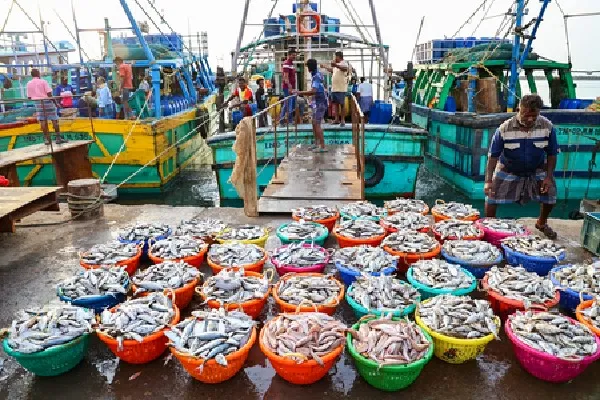
As part of increasing farmers’ income, the Budget includes provisions for the integrated development of 500 reservoirs and ‘Amrit Sarovars’. This is aimed at strengthening the fisheries value chain in coastal areas and enabling market linkages involving startups and women-led groups, together with Fish Farmers Producer Organisations.
Such reservoirs will support irrigation while enabling fish cultivation. It will help create additional sources of income, especially for smallholding or landless farmers, to diversify. Integrated management will also encourage efficiency in the use of water and climate resilience in regions with variable rain.
Budget 2026-2027 has thus laid further emphasis on fisheries in coastal ecosystems, focusing on sustainability, stock management and infrastructure support.
Investments in landing centres, cold chains, and processing facilities are expected to improve outputs and price realisation for those involved in the sector.
Meanwhile, to spur marine trade competitiveness, fish caught in the Exclusive Economic Zone and high seas by Indian fishing vessels are treated as duty-free when brought into Indian ports, and treated as exports when landed at foreign ports. Also, there is an increase in the value limit of duty-free imports of specified inputs from one to three per cent of the free on board value of seafood products exported during the preceding financial year.
Animal husbandry will also be among the key areas for increasing farmers’ income.
To provide quality employment opportunities in rural and peri-urban areas, the government will initiate several measures. These include support to the sector in entrepreneurship development through a credit-linked subsidy programme, scaling up and modernisation of livestock enterprises, enhance creation of livestock, dairy and poultry-focused integrated-value chains, and encourage creation of livestock farmer producers’ organisations.
The Budget has rolled out a credit‑linked subsidy to spur entrepreneurship in animal husbandry. The scheme is aimed at small and medium enterprises in dairy, poultry and related activities, making it easier to start and scale businesses and attracting private investment.
It also backs modernisation of livestock infrastructure with better breeding centres, improved feed systems, stronger animal health services and upgraded cold‑chain logistics. These upgrades are designed to move animal rearing away from subsistence and into organised, market‑oriented enterprises.
Building robust dairy and poultry value chains is central to the rural growth plan. By boosting collection, processing and marketing facilities, the Budget hopes to raise efficiency, cut waste and give farmers a bigger share of value‑added returns.
Credit and enterprise support aim to turn livestock rearing and fish processing into viable small businesses. Greater production and value‑chain investment can improve the availability of protein‑rich foods and reduce seasonal price swings for the consumer.
Overall, Budget 2026 ties reservoirs, fisheries, and livestock into the growth story for agriculture. By linking water assets with allied sectors and entrepreneurship, the plan aims to broaden farmers’ income streams, shield rural households from climate and price shocks, and lift productivity across the countryside.
The Finance Minister has delivered a budget in keeping with India’s stride towards Viksit Bharat 2047, signalling a clear policy aimed at the future for sustainable gains in agriculture, which will not only come from crops but also the allied sectors.
Budget 2026 has reframed water bodies, fisheries and livestock as central to farm‑sector transformation, where much will depend on reservoir development and intensified aquaculture, with regional support to manage water quality, biodiversity and disease risks. Success will depend on state coordination, clear tenure rules for reservoir use, and timely credit disbursal. Additional support will be required with reliable cold chains and market access.
Union Budget 2026: Strengthening fisheries, animal husbandry take centre stage in farm sector growth